

Prerequisites
The connector should already be set up, with a Connector Profile and a Linked Account. See Getting Started on the Jira Service Management connector page.Retrieve the Native Webhook URL
Each linked account has its own Native Webhook URL. Jira sends events to this URL.
Copy the Native Webhook URL
The Native Webhook URL is generated once an account has been linked.
- Open the linked account in StackOne.
- Copy the value from Native Webhook URL.
- Repeat these steps for each Jira site you connect, as every linked account has a different URL.
Create the webhook in Jira
Register the Native Webhook URL as a webhook in your Jira site and select the events StackOne should receive.
Open System settings
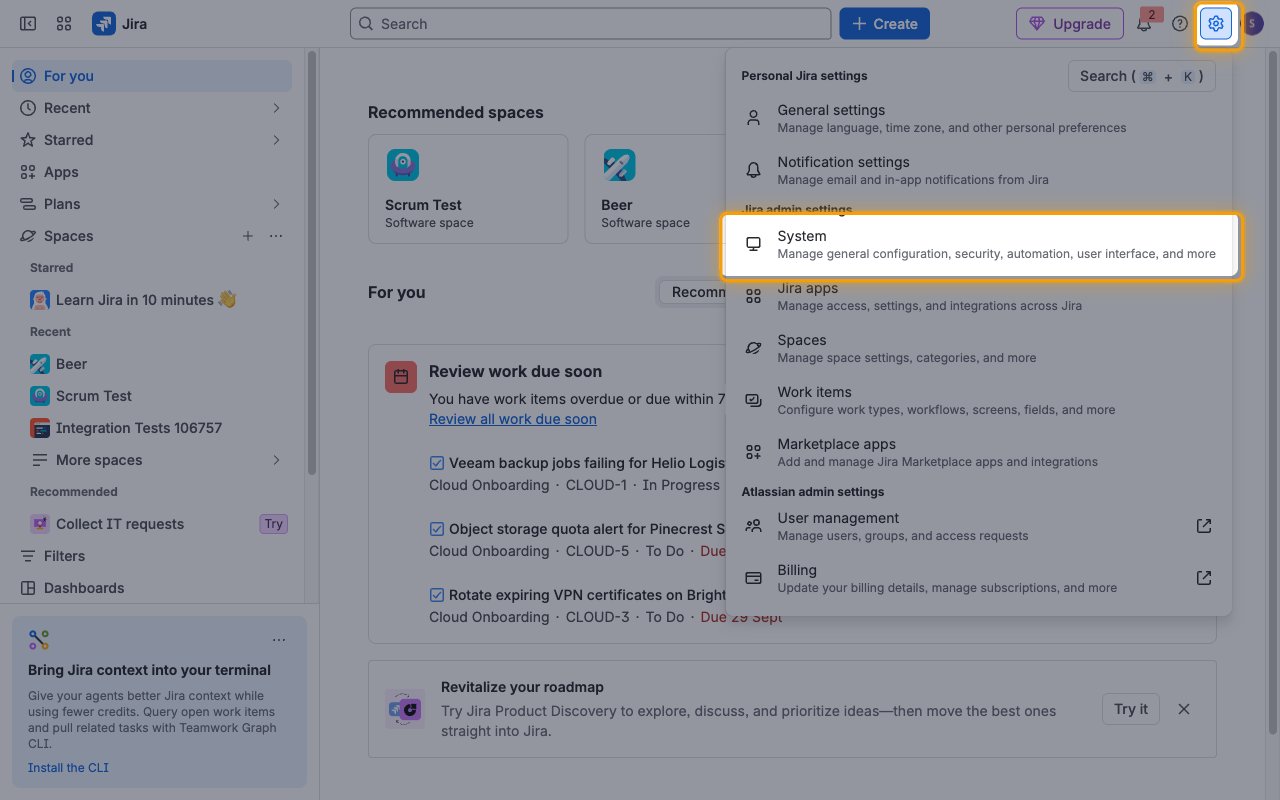
Sign in to your Jira site as a Jira administrator. Click the Settings icon in the top bar, then under Jira admin settings click System.
Open WebHooks
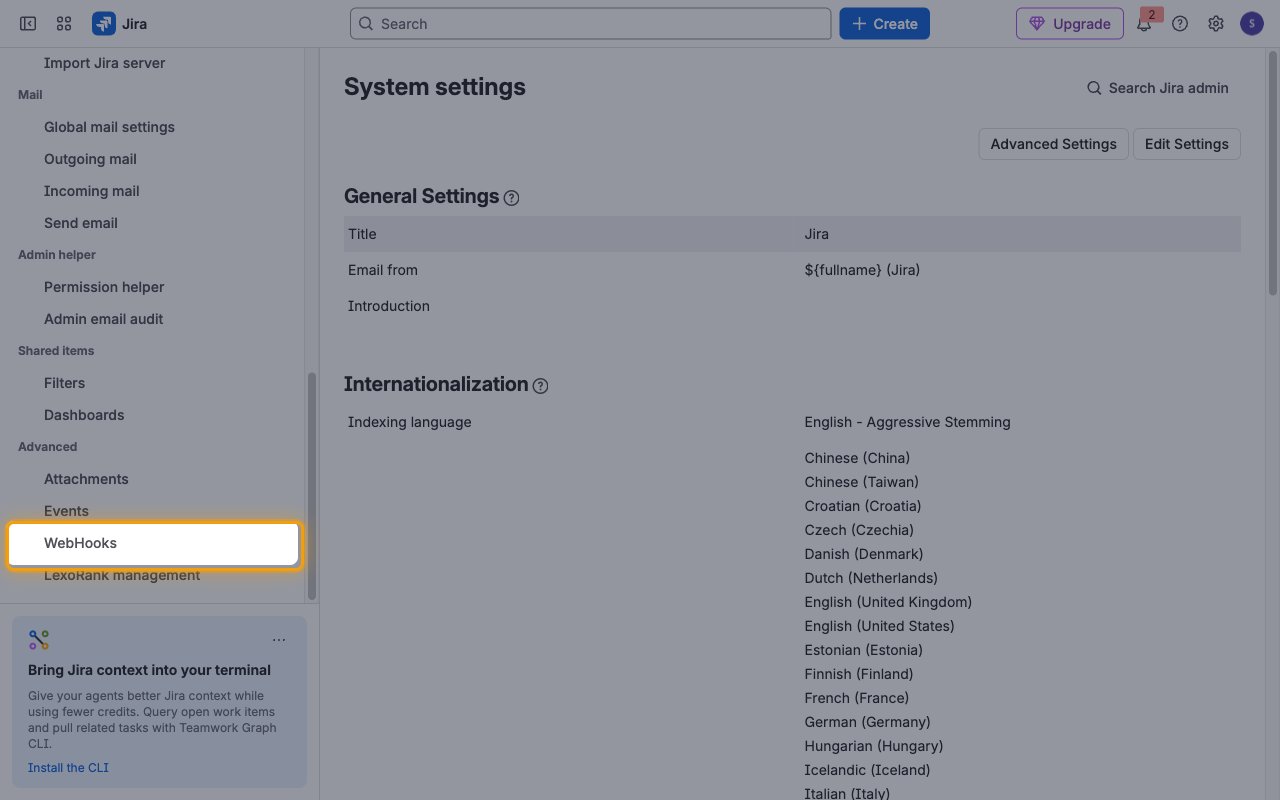
In the System settings sidebar, scroll to Advanced and click WebHooks.
Create a webhook
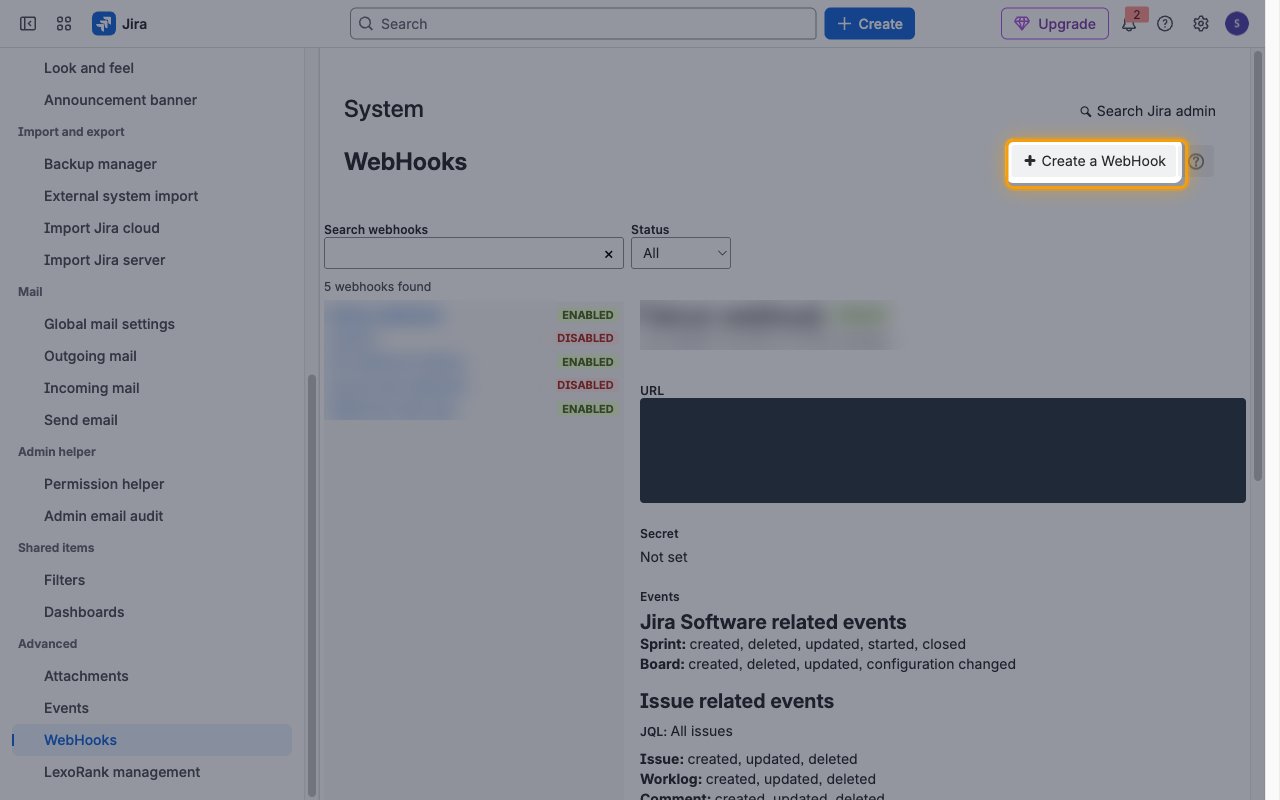
On the WebHooks page, click Create a WebHook.
Enter the name and URL
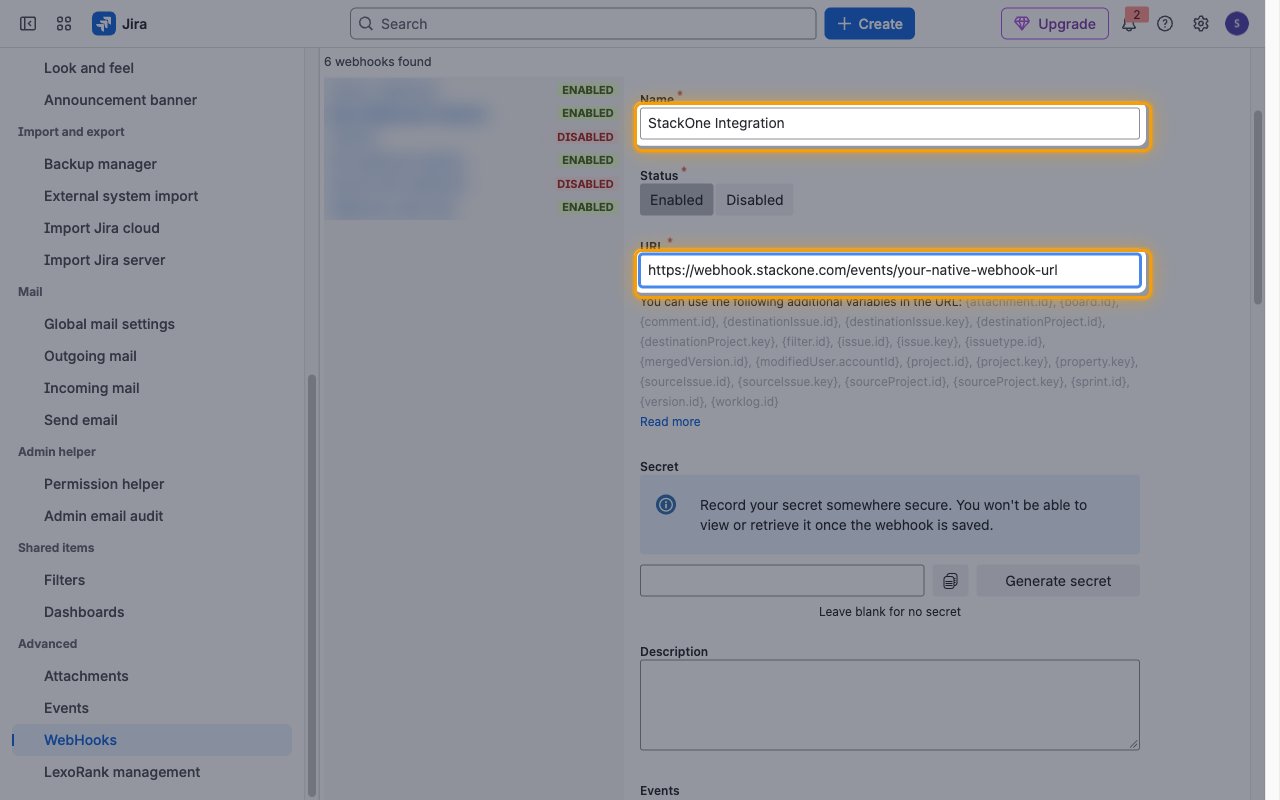
Fill in the webhook details.
- Enter a Name, for example
StackOne Integration. - Leave Status set to Enabled.
- Paste the Native Webhook URL into URL.
- Leave Secret empty — StackOne identifies the account from the Native Webhook URL.
Enter a JQL filter for your service projects
Under Issue related events, enter a JQL query to send only events triggered by matching work items. Without a query, the webhook sends events for All issues in every project, including non-service projects.
- Example query:
project = SD— replaceSDwith your service project key. - To include several service projects:
project in (SD, ITS). - The JQL filter does not apply to events under the Issue link column.
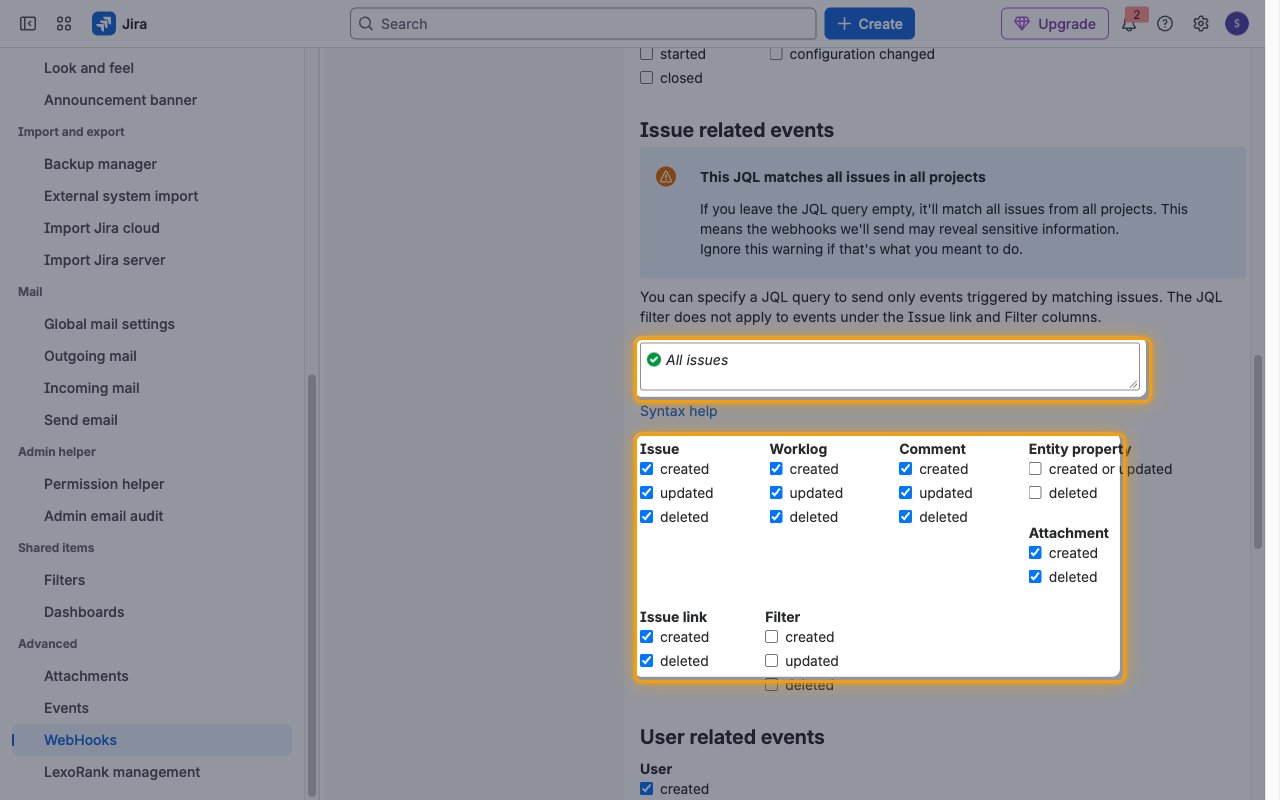
Select issue related events
Tick the checkboxes for the events you enabled in StackOne.
- Issue — created, updated, deleted.
- Worklog — created, updated, deleted.
- Comment — created, updated, deleted.
- Attachment — created, deleted.
- Issue link — created, deleted.
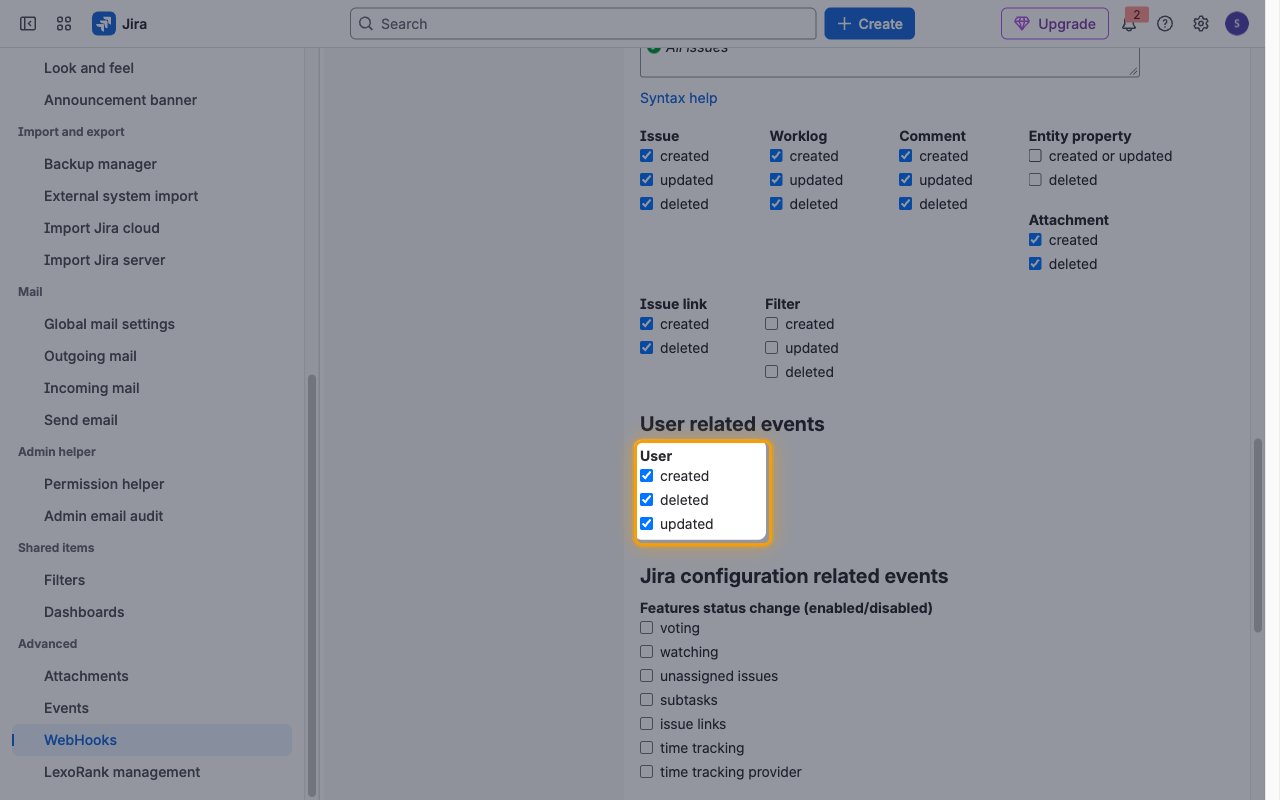
Select user related events
Under User related events, tick User created, deleted, and updated if you enabled the user events in StackOne.
Save the webhook
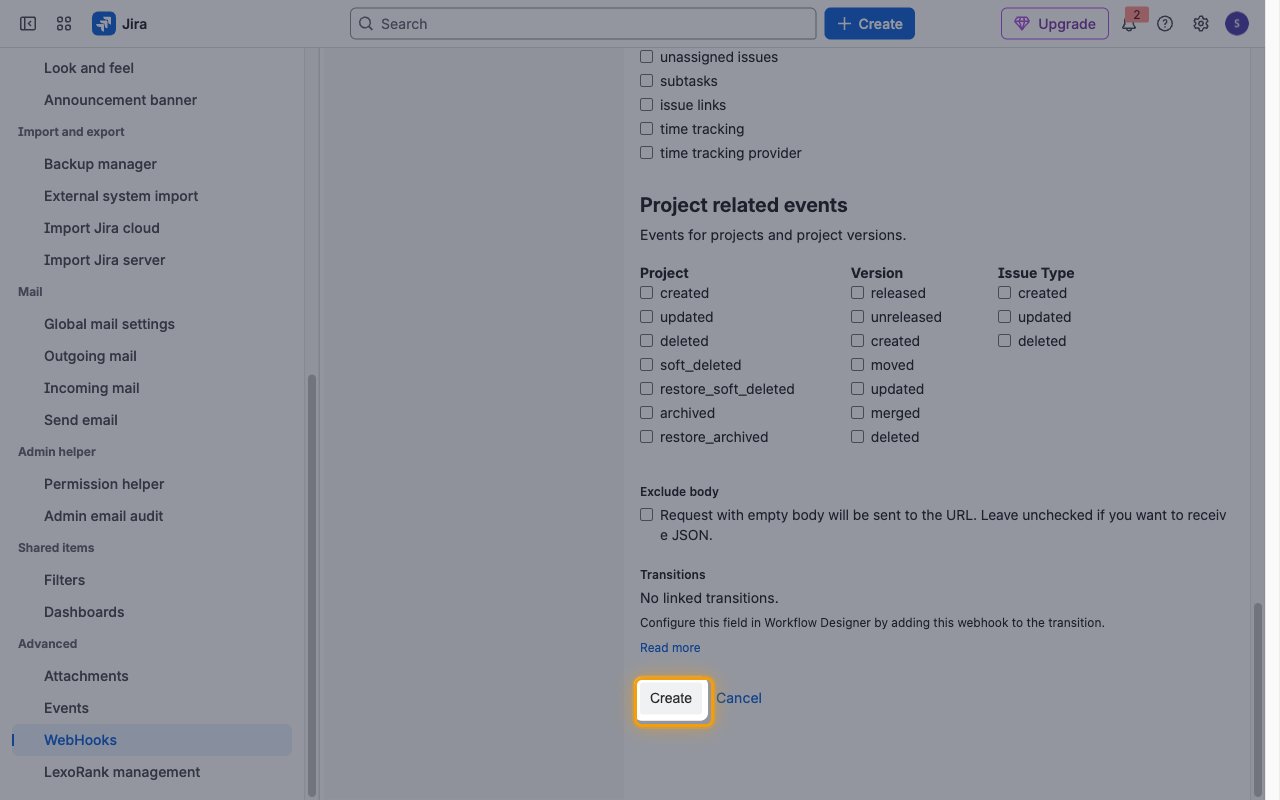
Leave Exclude body unchecked so Jira sends the JSON payload, then click Create.
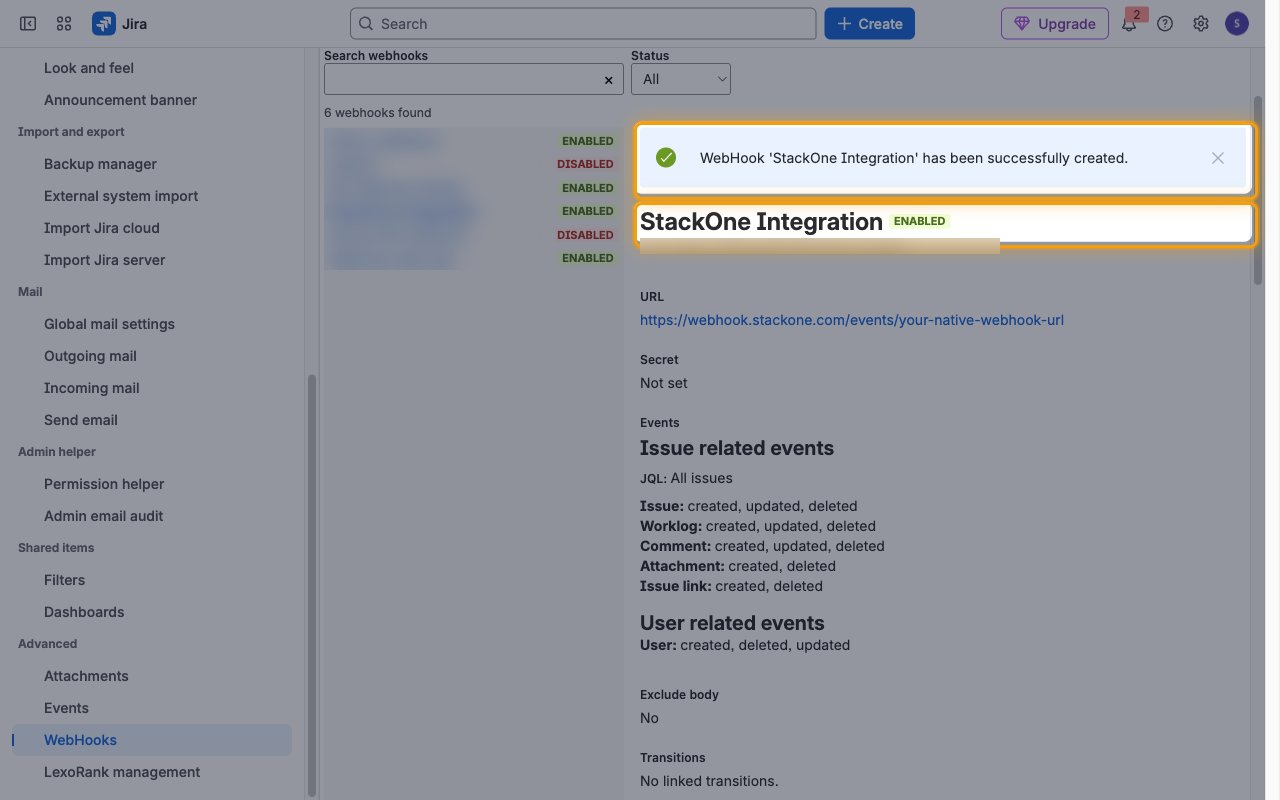
Confirm the webhook is enabled
Jira shows the message WebHook ‘StackOne Integration’ has been successfully created. and the webhook is listed as ENABLED with the selected events.
Available webhook events
The following Jira Service Management events can be enabled. Only events selected in StackOne are handled, and Jira only sends events ticked on the webhook.
Request events
Events related to customer requests (Jira work items in service projects).
- Request Created (
jira:issue_created) — Fired when a customer request is created from the portal, email, API, or by an agent - Request Updated (
jira:issue_updated) — Fired when a request changes, including status transitions, assignee changes, and field edits - Request Deleted (
jira:issue_deleted) — Fired when a request is deleted
Comment events
Events related to public replies and internal notes on requests.
- Comment Created (
comment_created) — Fired when a public reply or internal note is added to a request - Comment Updated (
comment_updated) — Fired when a comment on a request is edited - Comment Deleted (
comment_deleted) — Fired when a comment is deleted from a request
Attachment events
Events related to files attached to requests.
- Attachment Created (
attachment_created) — Fired when a file is attached to a request - Attachment Deleted (
attachment_deleted) — Fired when an attachment is removed from a request
Issue link events
Events related to links between work items, such as an incident linked to a problem.
- Issue Link Created (
issuelink_created) — Fired when a link is created between two work items - Issue Link Deleted (
issuelink_deleted) — Fired when a link between two work items is removed
Worklog events
Events related to time logged against requests.
- Worklog Created (
worklog_created) — Fired when an agent logs time on a request - Worklog Updated (
worklog_updated) — Fired when a time log on a request is edited - Worklog Deleted (
worklog_deleted) — Fired when a time log is deleted from a request
User events
Events related to users on the Jira site, including agents and portal-only customers.
- User Created (
user_created) — Fired when a user or portal customer is created on the site - User Updated (
user_updated) — Fired when a user profile on the site changes - User Deleted (
user_deleted) — Fired when a user is removed from the site
Delivery format
Details of how Jira delivers events to StackOne.
One event per request
Each webhook request carries a single event. The event name is in the webhookEvent field and the event time is in timestamp (epoch milliseconds). Portal customers appear with accountType set to customer in the user object.
Site-wide scope
User events are site-wide and are not filtered by the JQL query, so they fire for every user on the Jira site.