

Prerequisites
The connector should already be set up, with a Connector Profile and a Linked Account. See Getting Started on the Zoho BugTracker connector page.Retrieve the StackOne Native Webhook URL
The Native Webhook URL is generated once a Zoho BugTracker account has been linked. Every webhook below uses this URL.
- Open the linked account in StackOne.
- Copy the value from Native Webhook URL.
- Paste the URL exactly as copied, including its
tokenquery parameter. Zoho sends the webhook parameters in the request body, so nothing is appended to the URL.
Send issue events from a project
Zoho BugTracker only calls a webhook from a business rule. Create one webhook and one business rule per issue event, in each project. The webhook’s parameters define the payload, so use the parameter names below exactly.
Sign in to Zoho BugTracker
Sign in to your Zoho BugTracker account as a portal Owner, Admin or Manager.
- Use your data center’s domain if it isn’t
zoho.com, for examplehttps://bugtracker.zoho.inorhttps://bugtracker.zoho.eu. - Click the gear icon to open Setup.
Open the project's webhooks
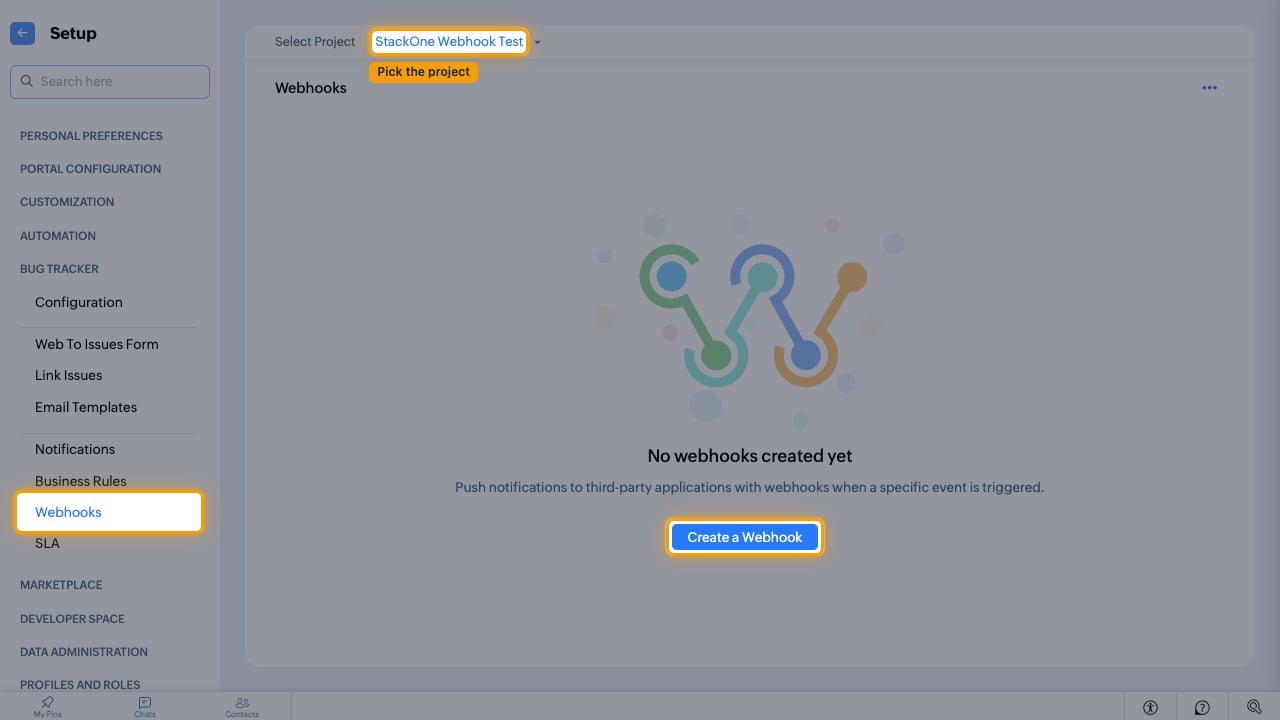
In Setup, go to BUG TRACKER > Webhooks.
- Choose the project in Select Project.
- Click Create a Webhook.
- The BUG TRACKER section only appears once the portal has at least one project.
Name the webhook and paste the URL
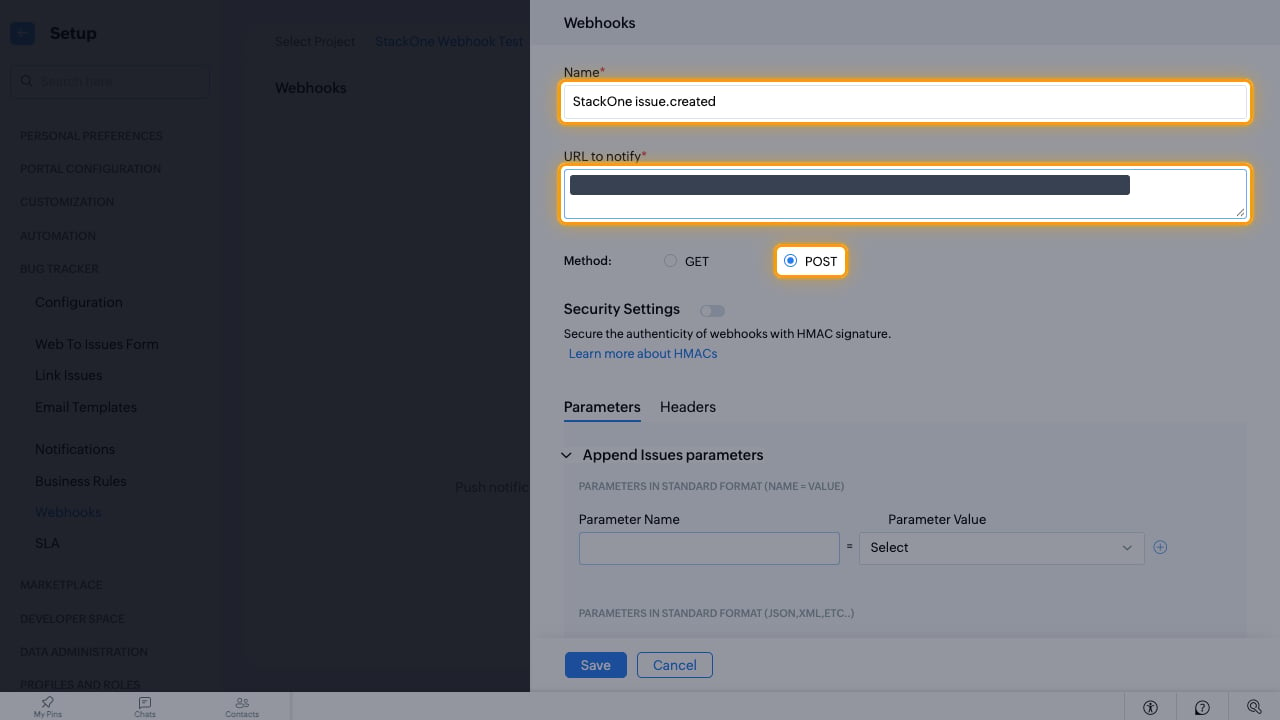
Fill in the webhook details.
- Name:
StackOne issue.created(one webhook per event, named after its event code) - Paste the Native Webhook URL into URL to notify.
- Leave Method set to POST.
- Leave Security Settings off.
Add the issue parameters
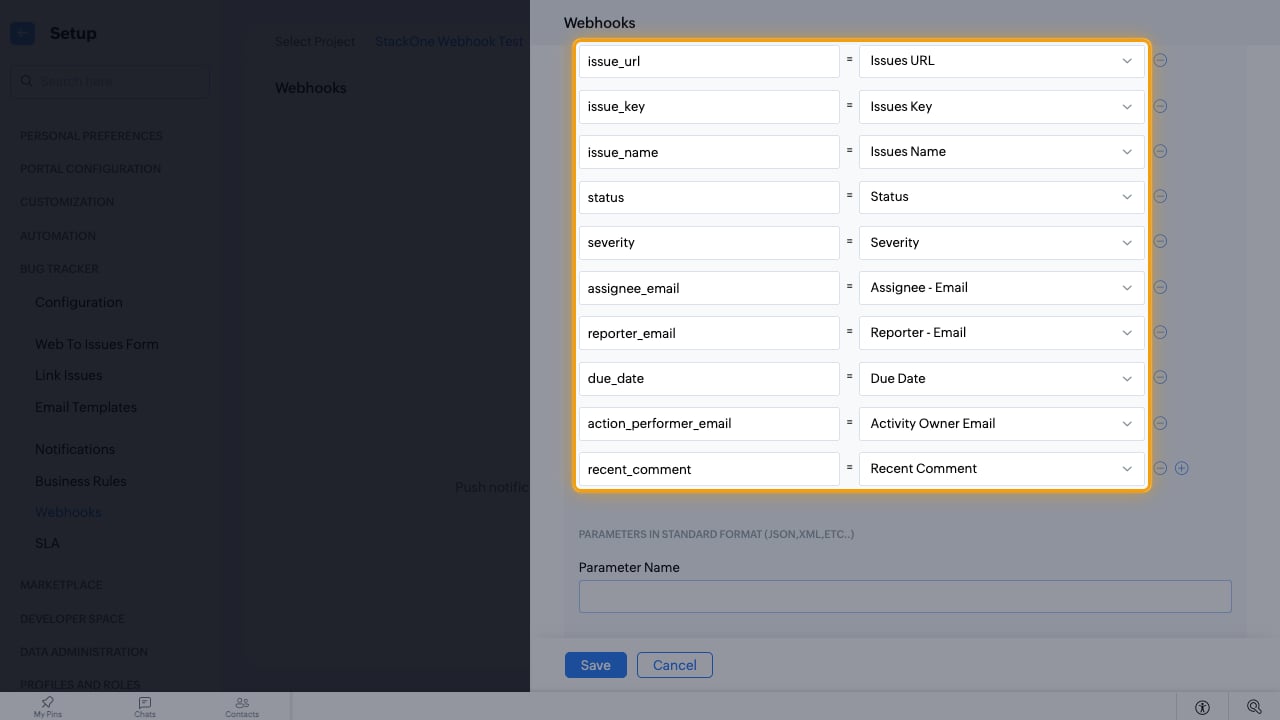
Under Append Issues parameters > Parameters in standard format (Name = Value), add these ten rows. Type the Parameter Name and pick the Parameter Value; click the plus icon to add each new row.
issue_url= Issues URLissue_key= Issues Keyissue_name= Issues Namestatus= Statusseverity= Severityassignee_email= Assignee - Emailreporter_email= Reporter - Emaildue_date= Due Dateaction_performer_email= Activity Owner Emailrecent_comment= Recent Comment- StackOne reads the issue ID from
issue_url, so that row is required.
Add the event code and save
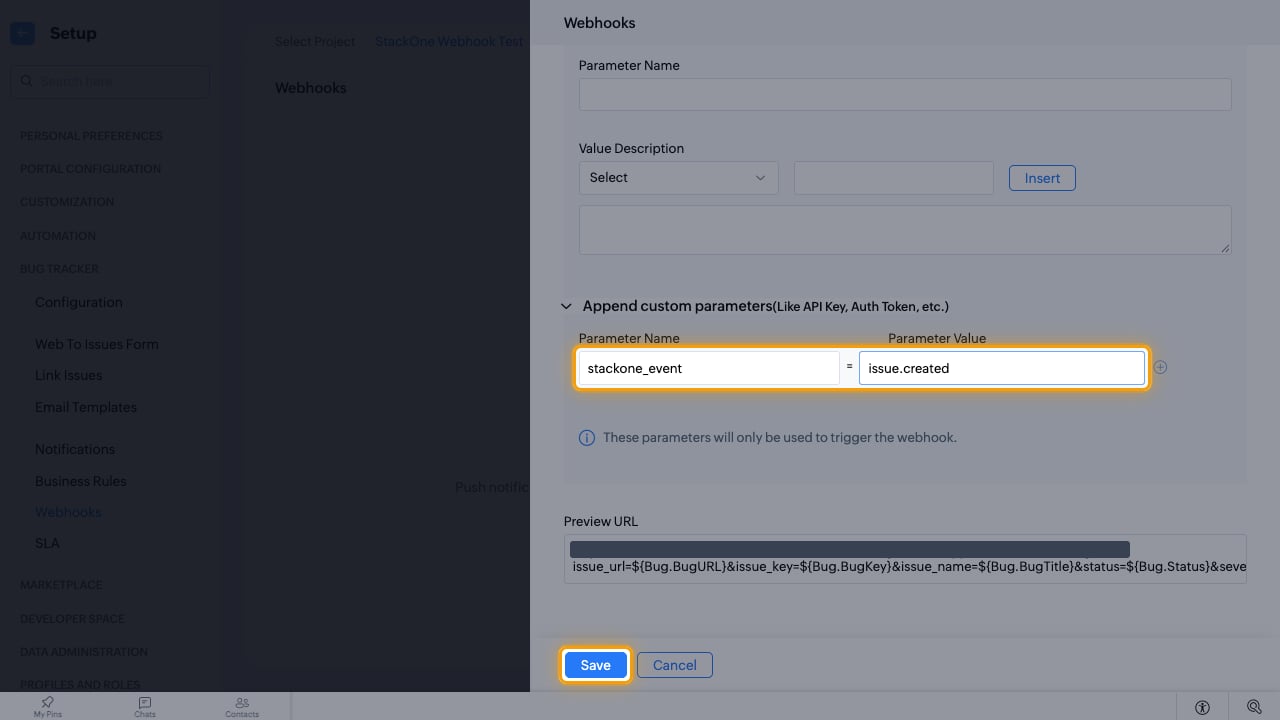
Under Append custom parameters(Like API Key, Auth Token, etc.), add one row that tells StackOne which event this webhook carries.
- Parameter Name:
stackone_event - Parameter Value: the event code, for example
issue.created(see Available webhook events) - Click Save.
Create a business rule
Go to BUG TRACKER > Business Rules for the same project and click Create a Business rule.
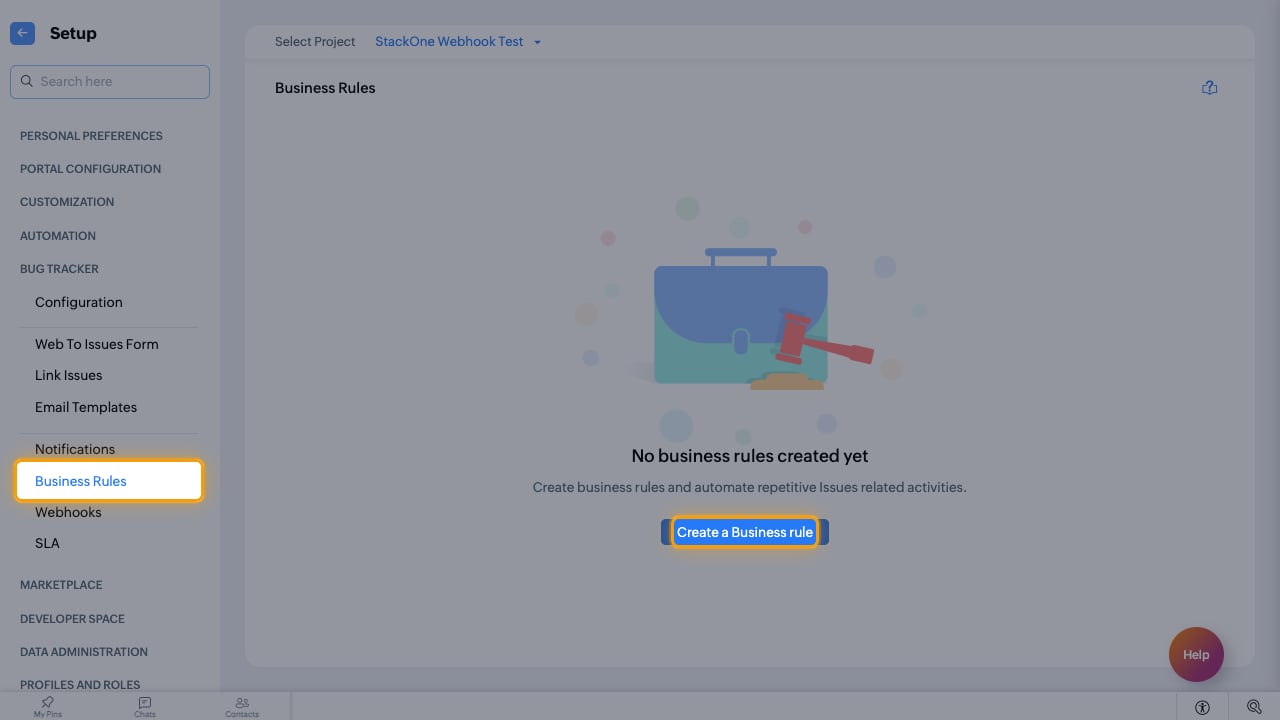
Choose when the rule runs
On 1. Rule Details, enter a Name (for example StackOne issue.created) and pick the Execute On option for the event.
issue.created: Issues Creationissue.updated: Issues Updationissue.trashed: Issues Trashissue.comment_added: New Comment- Click Next.
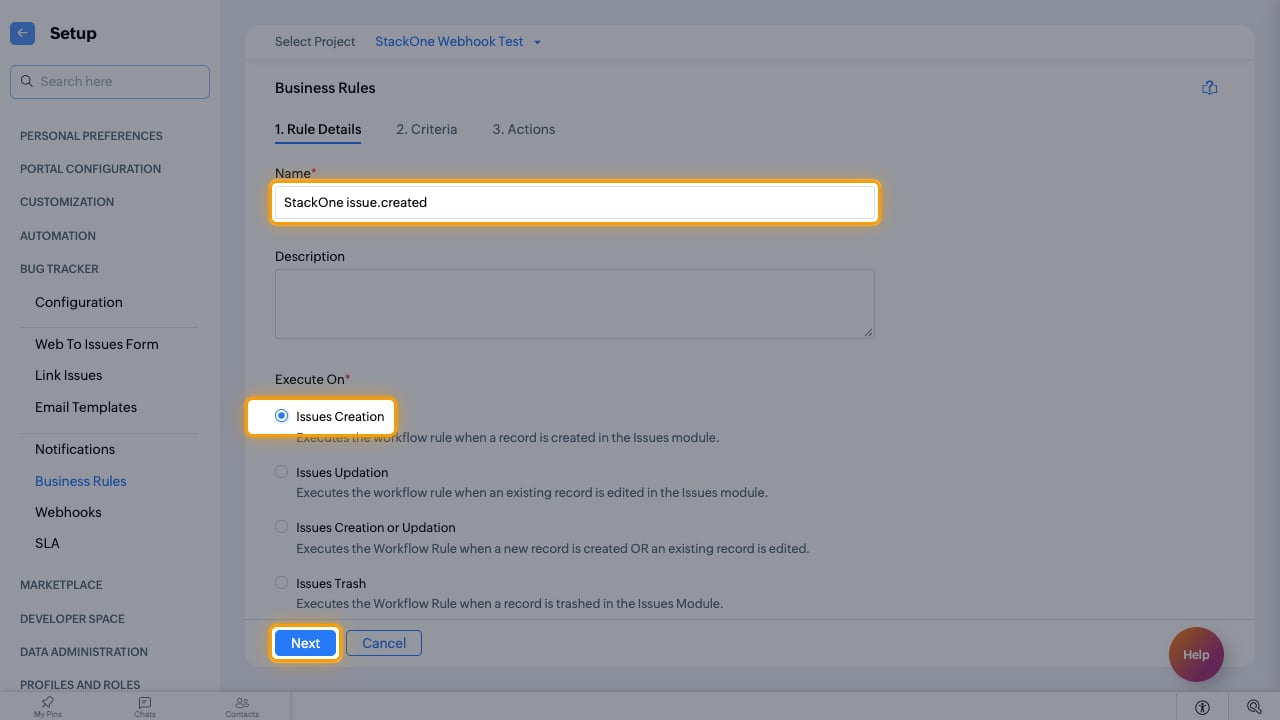
Pick the field for field-change events
For the four field-change events, choose Field Update and select the field in the first dropdown.
issue.status_changed: Statusissue.assignee_changed: Assigneeissue.severity_changed: Severityissue.due_date_changed: Due Date
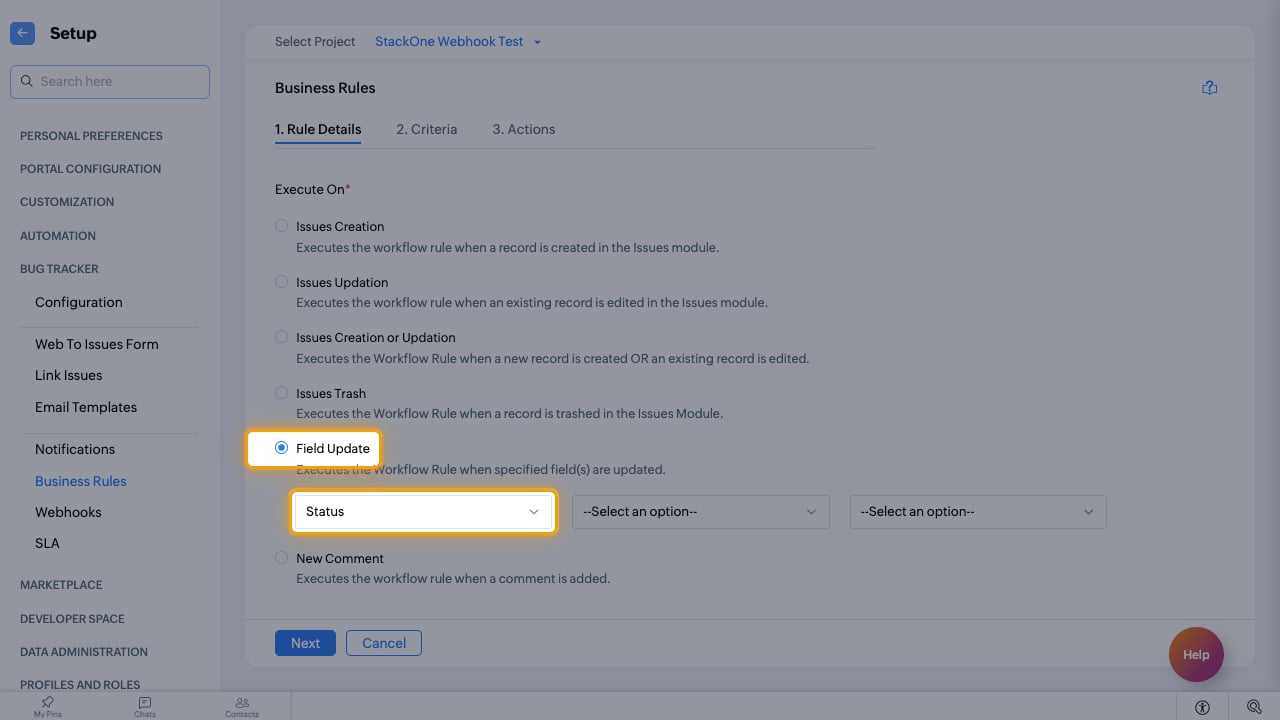
Add a criteria row
On 2. Criteria, a rule needs at least one condition. Add one that every issue matches, for example Issues Name Is Not StackOne-ignore, then click Next.
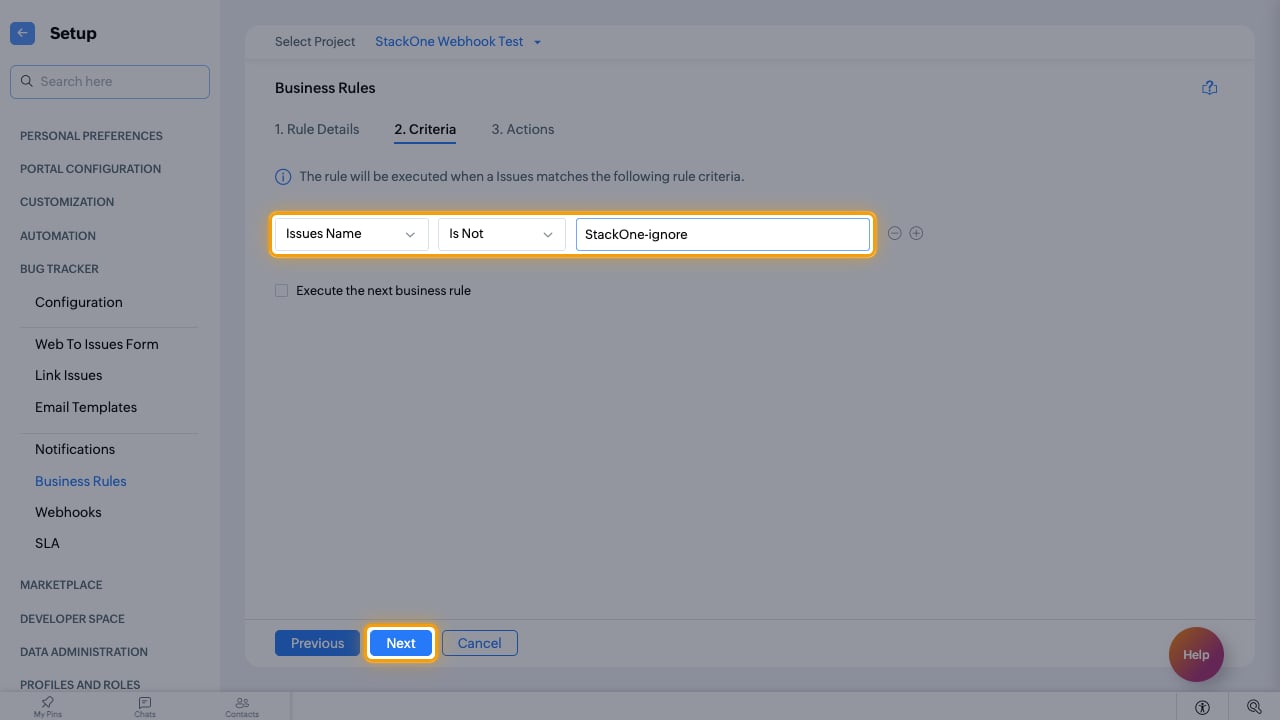
Select the webhook and save
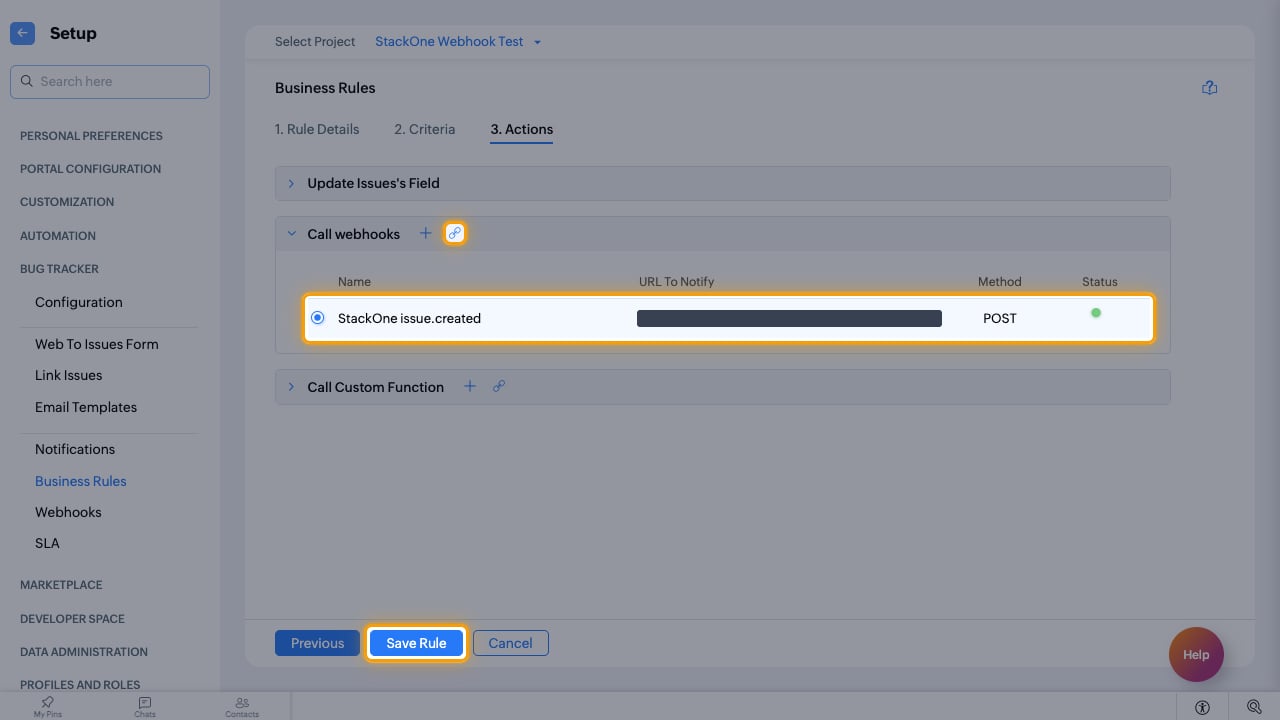
On 3. Actions, expand Call webhooks and click the link icon to list existing webhooks.
- Select the webhook you created for this event.
- Click Save Rule.
- Repeat the webhook and rule for every issue event you want, changing the name, the
stackone_eventvalue and the trigger each time.
Send project, phase and user events
Project, phase and user events come from portal-wide workflow rules. Create one webhook and one workflow rule per module (Projects, Phases, Users). Each rule lists every trigger for its module, and StackOne tells the events apart by the activity type Zoho sends.
Open the automation webhooks
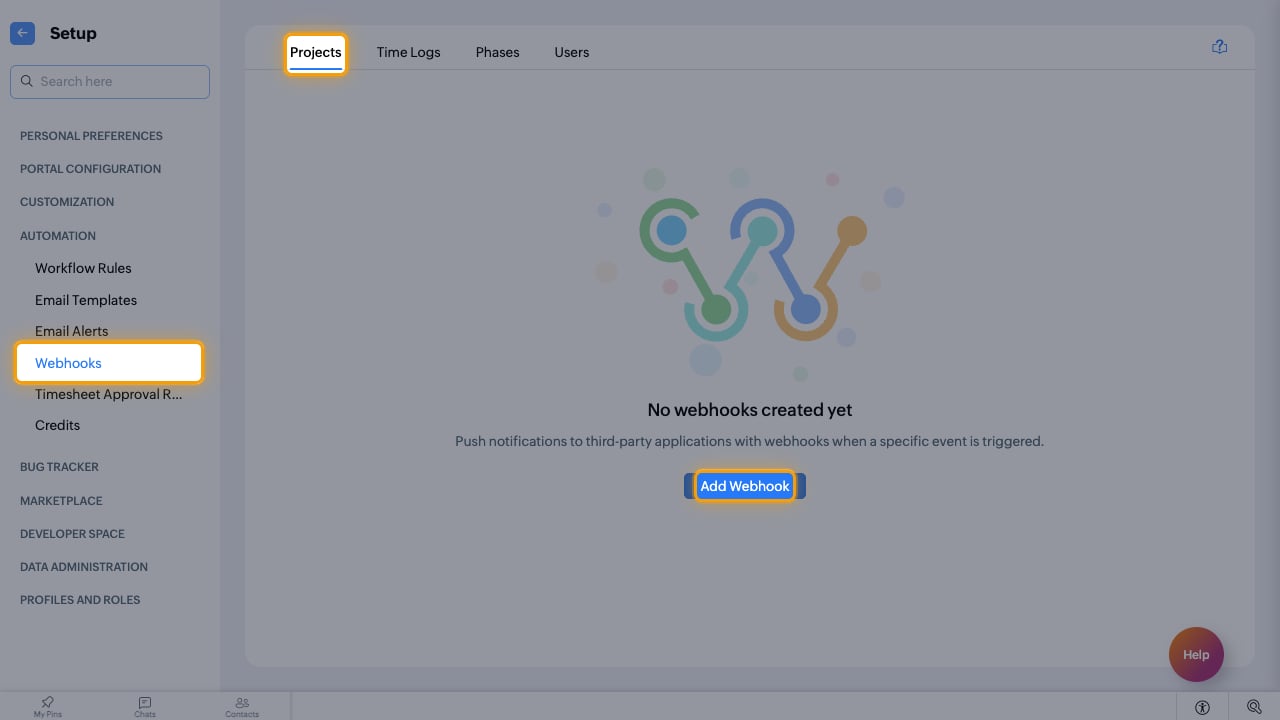
In Setup, go to AUTOMATION > Webhooks, open the module tab (Projects, Phases or Users) and click Add Webhook.
Name the webhook and select POST
Fill in the webhook details.
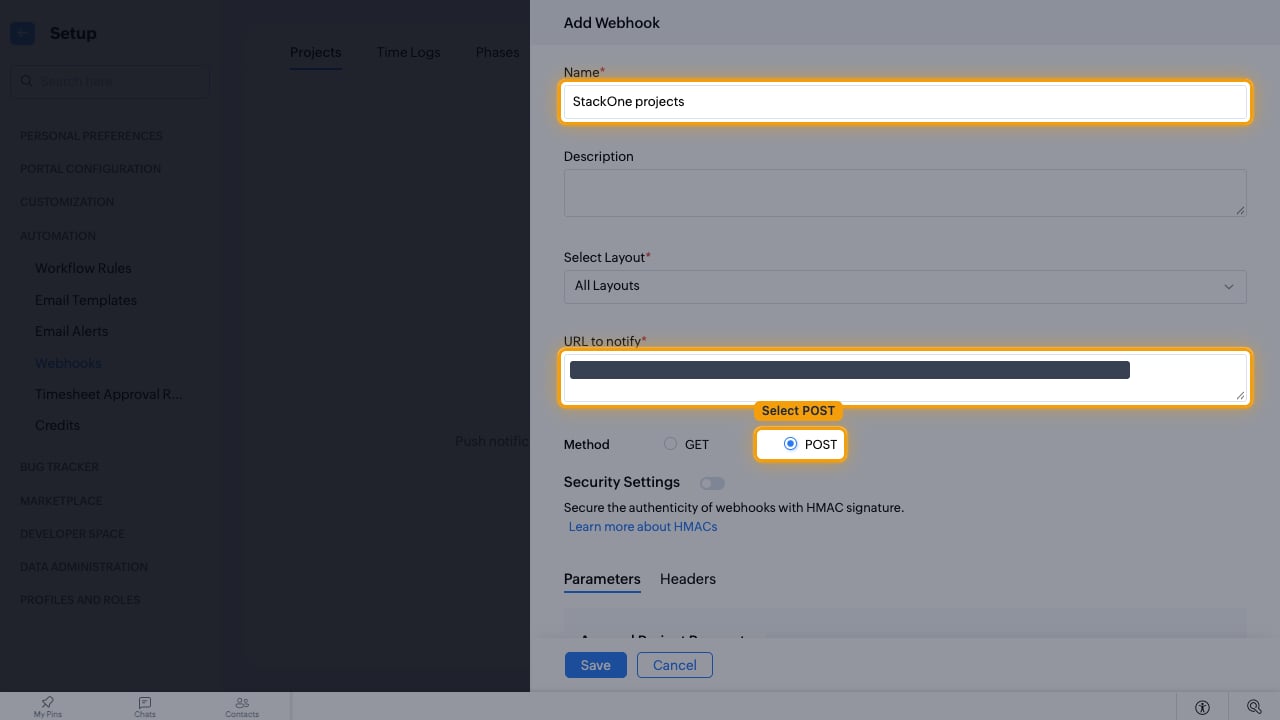
- Name: for example
StackOne projects - Paste the Native Webhook URL into URL to notify.
- Set Method to POST. This form defaults to GET, which StackOne cannot read.
Add the module parameters
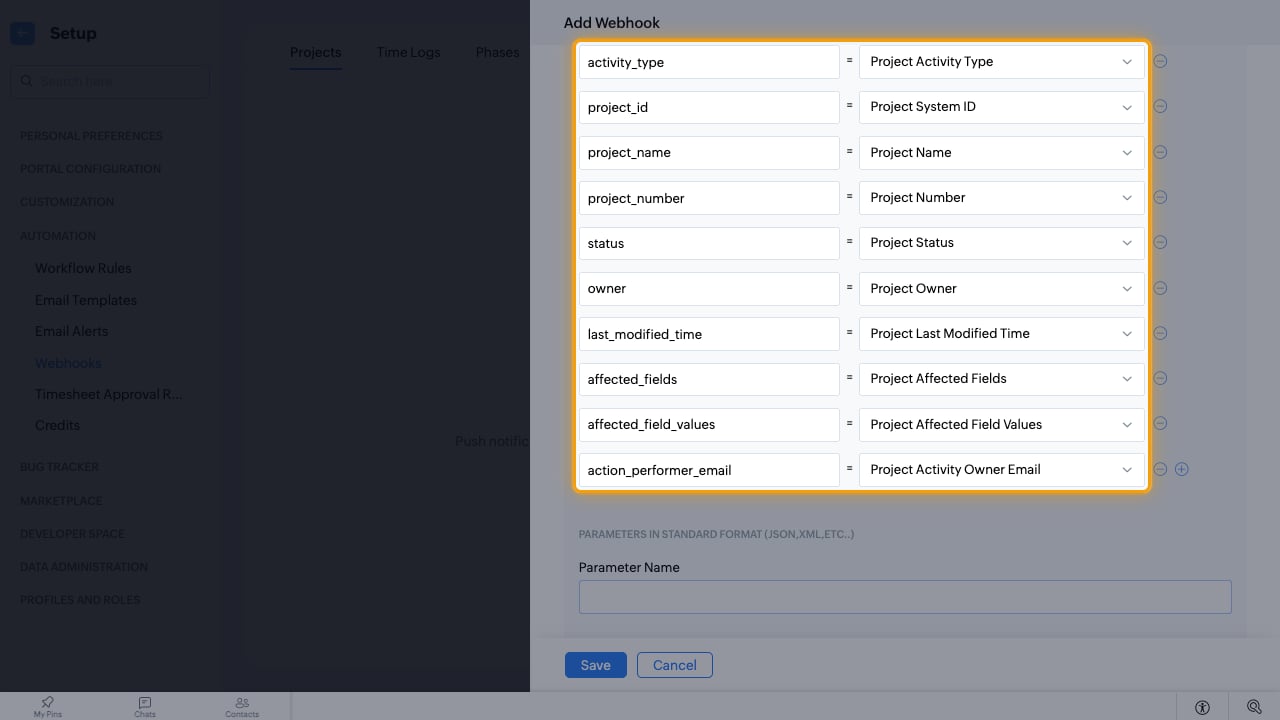
Add these rows under Parameters in standard format (Name = Value), picking the value from the dropdown. Each module has its own list.
- Projects:
activity_type= Project Activity Type,project_id= Project System ID,project_name= Project Name,project_number= Project Number,status= Project Status,owner= Project Owner,last_modified_time= Project Last Modified Time,affected_fields= Project Affected Fields,affected_field_values= Project Affected Field Values,action_performer_email= Project Activity Owner Email - Phases:
activity_type= Phase Activity Type,phase_id= Phase System ID,phase_name= Phase Name,project_id= Project System ID,status= Phase Status,owner= Phase Owner,start_date= Phase Start Date,end_date= Phase End Date,affected_field_values= Phase Affected Field Values,action_performer_email= Phase Activity Owner Email - Users:
activity_type= Users Activity Type,first_name= Users First Name,last_name= Users Last Name,role_id= Users Role,profile_id= Users Portal Profile,user_status= Users User Status,invitation_status= Users Invitation Status,employee_id= Users Employee ID,teams= Users Teams,action_performer_email= Users Activity Owner Email
Add the module code and save
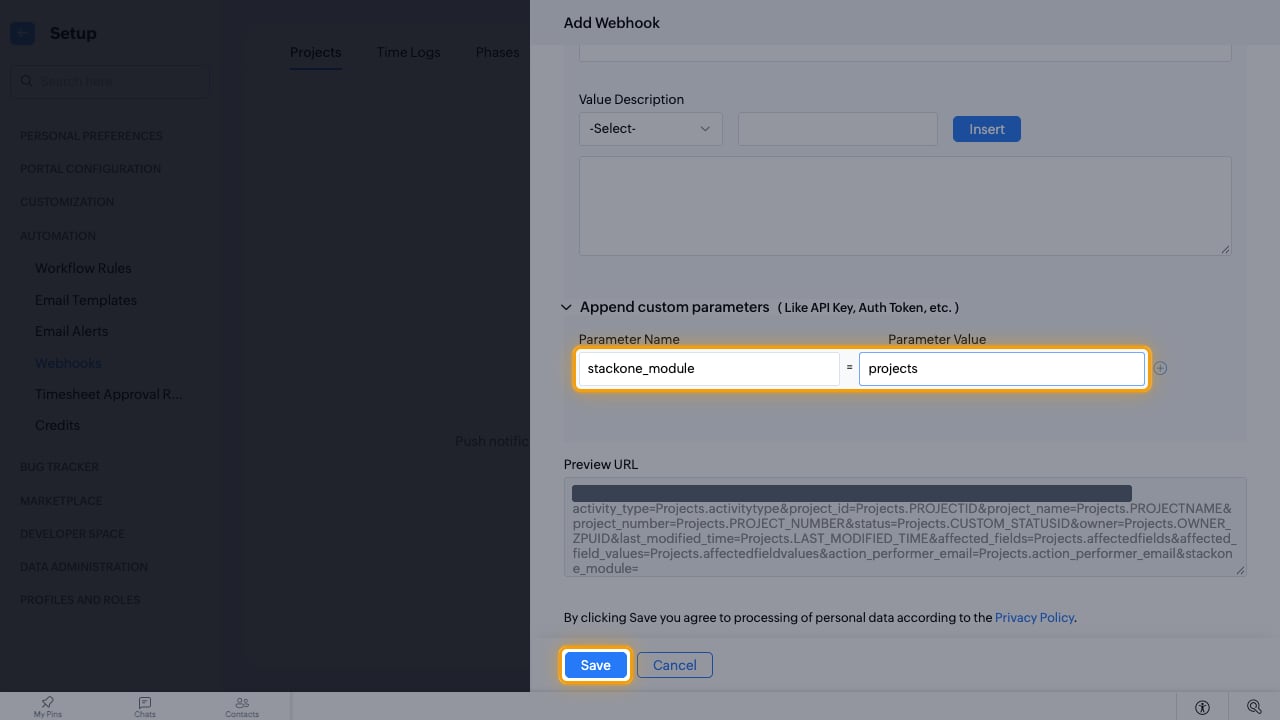
Under Append custom parameters, add one row that tells StackOne which module this webhook carries.
- Parameter Name:
stackone_module - Parameter Value:
projects,phasesorusers - Click Save.
Create a workflow rule
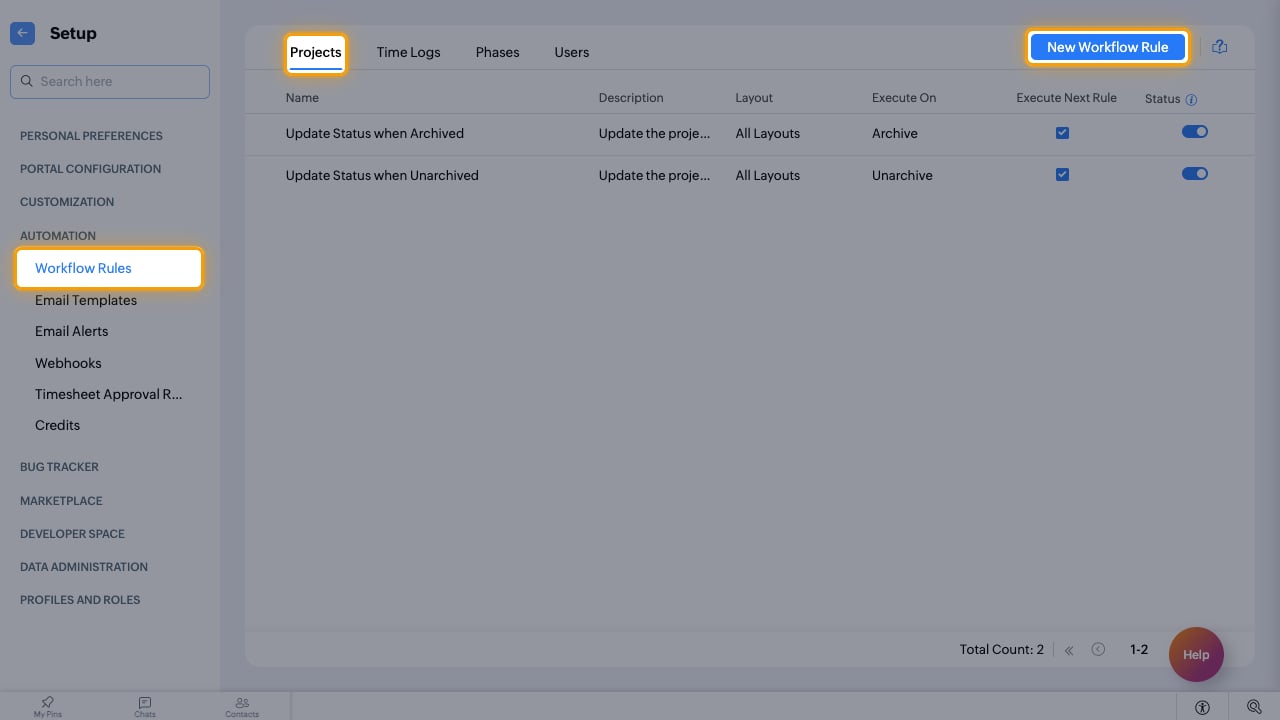
Go to AUTOMATION > Workflow Rules, open the same module tab and click New Workflow Rule.
Add a row for every trigger
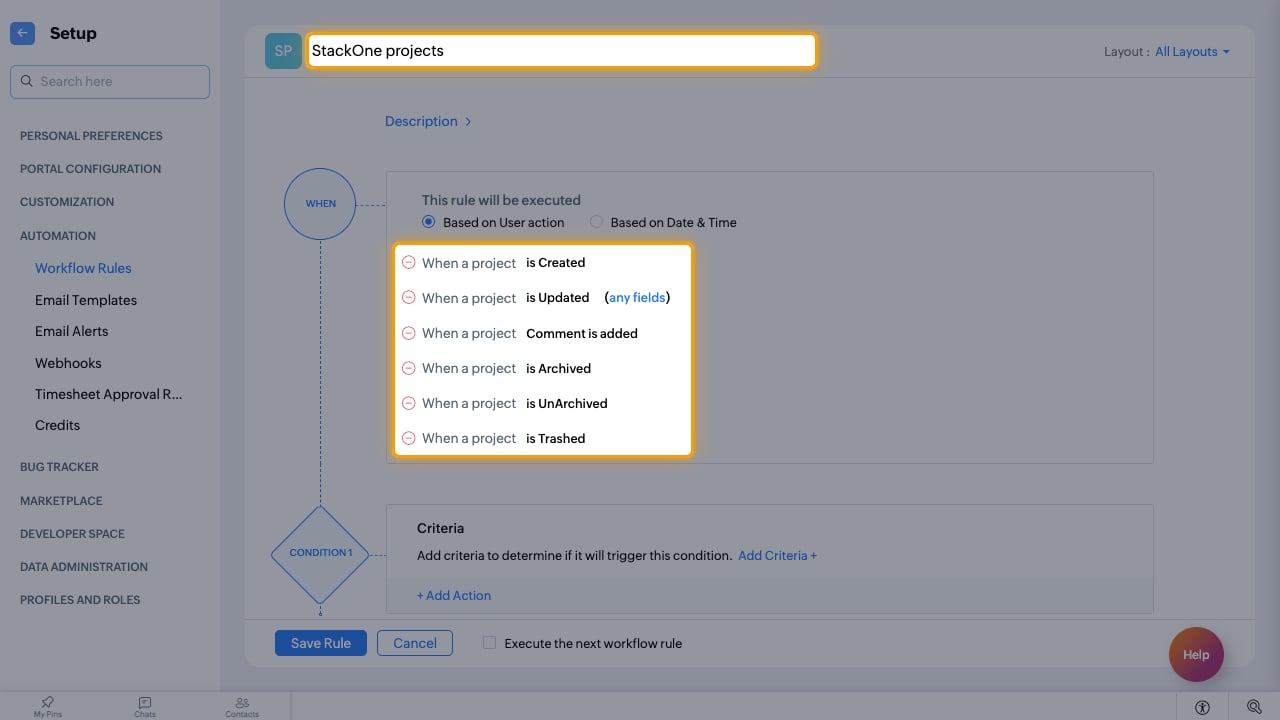
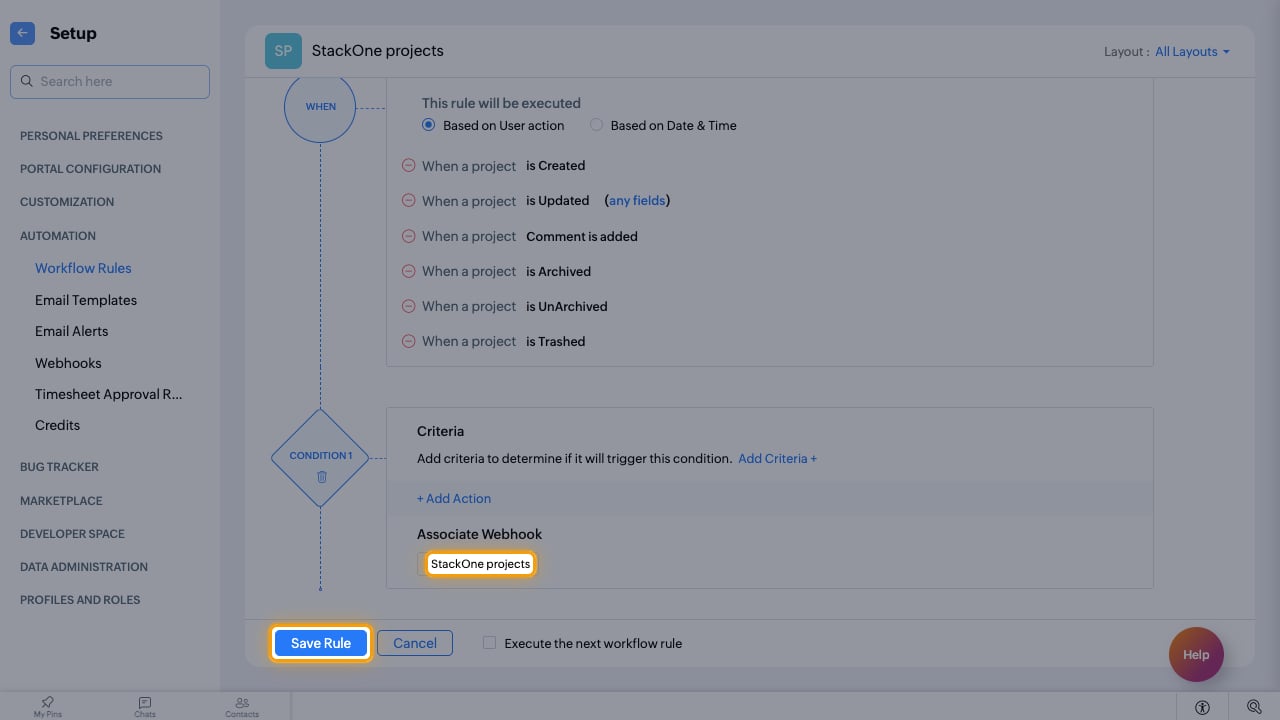
Enter the rule name, keep Based on User action, and click Add Row until every trigger for the module is listed.
- Projects: is Created, is Updated, Comment is added, is Archived, is UnArchived, is Trashed
- Phases: is Created, is Updated, is Commented on, is Trashed
- Users: is Invited, is Updated, is Deactivated, is Deleted
- Leave the criteria empty so the rule runs for every record.
Add the Associate Webhook action
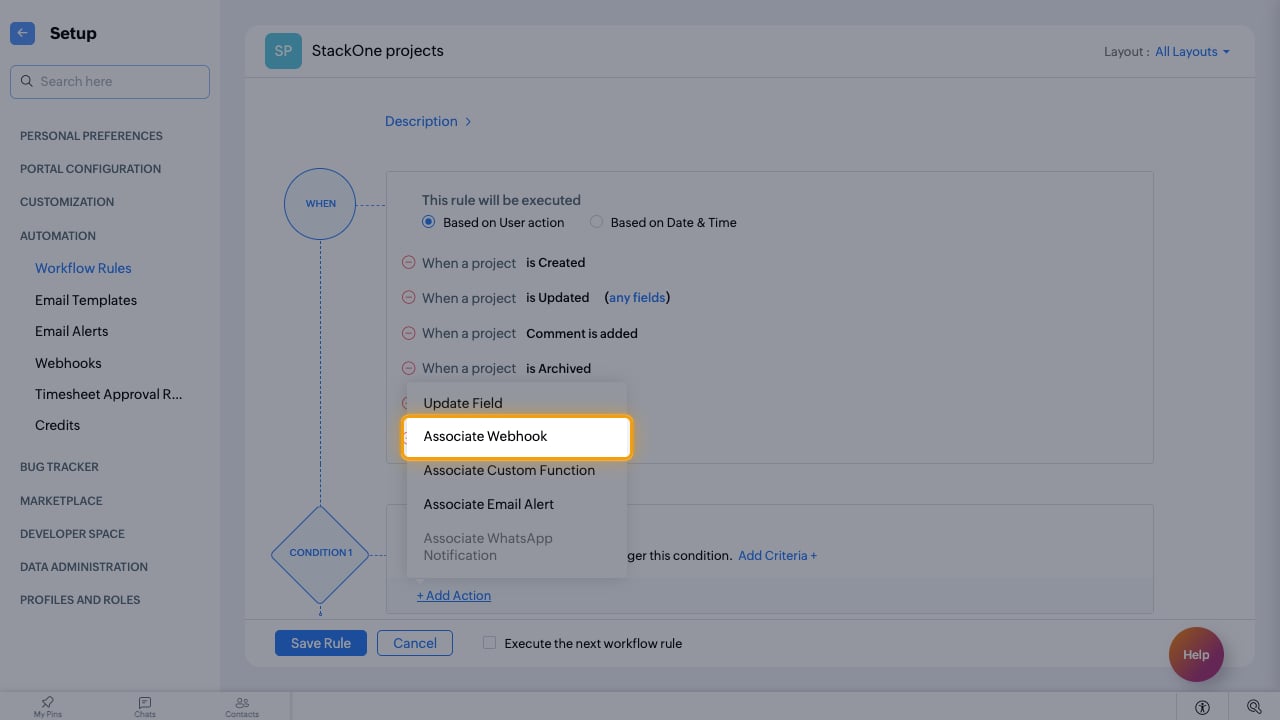
Click + Add Action and choose Associate Webhook.
Select the module's webhook
Tick the webhook you created for this module and click Associate.
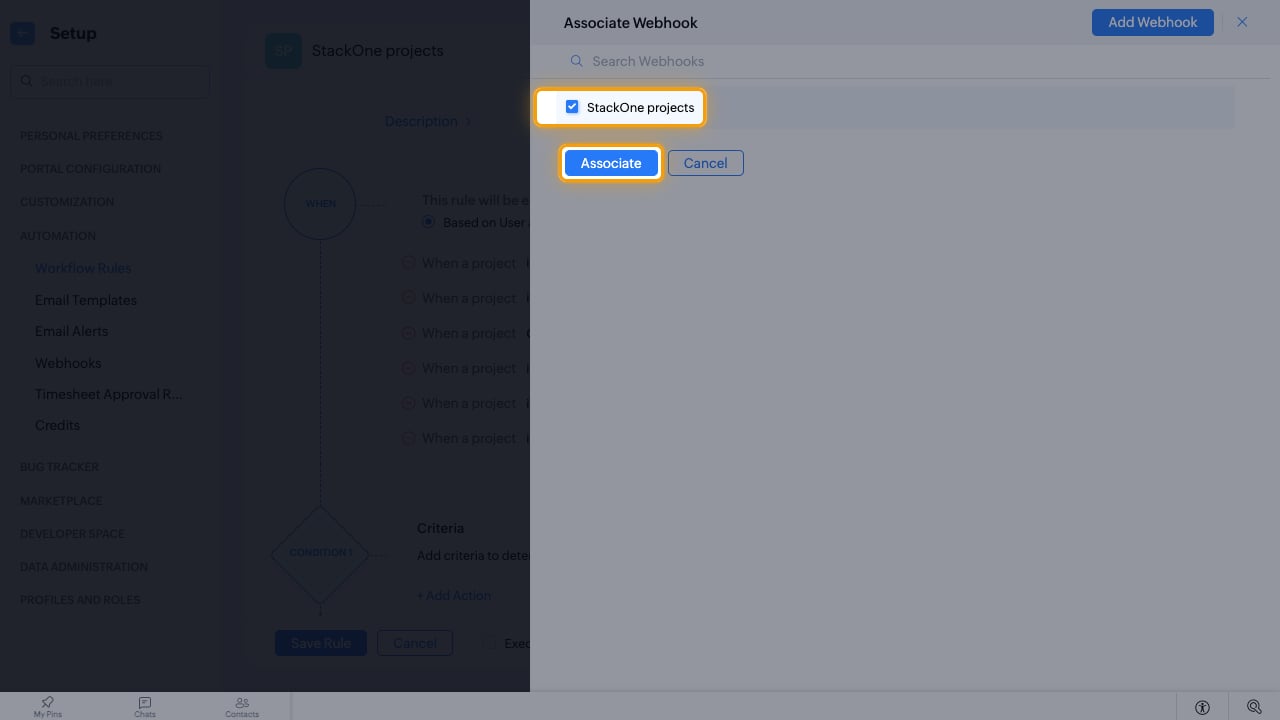
Save the rule
Click Save Rule, then click Save in the Attention! prompt that says the rule applies to all projects.
- Repeat the webhook and rule for each module you want events from.
Available webhook events
Zoho BugTracker sends only the events you configured above. Each issue event needs its own webhook and business rule in every project; project, phase and user events need one webhook and workflow rule per module.
Issue events
Events for issues (bugs) in a project. The webhook’s stackone_event value is the code in backticks.
- Issue Created (
issue.created) — Fired when an issue is created in the project - Issue Updated (
issue.updated) — Fired when an existing issue is edited - Issue Trashed (
issue.trashed) — Fired when an issue is moved to the trash - Issue Comment Added (
issue.comment_added) — Fired when a comment is added to an issue - Issue Status Changed (
issue.status_changed) — Fired when an issue’s status changes - Issue Assignee Changed (
issue.assignee_changed) — Fired when an issue is reassigned - Issue Severity Changed (
issue.severity_changed) — Fired when an issue’s severity changes - Issue Due Date Changed (
issue.due_date_changed) — Fired when an issue’s due date changes
Project events
Events for projects across the portal (stackone_module = projects).
- Project Created (
project.created) — Fired when a project is created - Project Updated (
project.updated) — Fired when a project is edited, including status changes made through the API - Project Comment Added (
project.comment_added) — Fired when a comment is added to a project - Project Archived (
project.archived) — Fired when a project is archived in the Zoho UI - Project Unarchived (
project.unarchived) — Fired when an archived project is restored in the Zoho UI - Project Trashed (
project.trashed) — Fired when a project is moved to the trash
Phase events
Events for phases (milestones) across the portal (stackone_module = phases).
- Phase Created (
phase.created) — Fired when a phase is created - Phase Updated (
phase.updated) — Fired when a phase is edited - Phase Comment Added (
phase.comment_added) — Fired when a comment is added to a phase - Phase Trashed (
phase.trashed) — Fired when a phase is moved to the trash
User events
Events for portal users (stackone_module = users). Zoho sends no user ID or email for these events.
- User Invited (
user.invited) — Fired when a user is invited to the portal - User Updated (
user.updated) — Fired when a portal user is updated - User Deactivated (
user.deactivated) — Fired when a portal user is deactivated - User Deleted (
user.deleted) — Fired when a user is deleted from the portal
Delivery format
Details of how Zoho BugTracker delivers events to StackOne.
Form-encoded payloads
Zoho sends one event per request as application/x-www-form-urlencoded fields named after the parameters above. Values Zoho cannot fill arrive as None, - or Unassigned, and dates use the portal’s date format rather than ISO 8601.
Event IDs
Issue events use the issue ID taken from issue_url, project and phase events use project_id and phase_id, and user events use employee_id when set and the first name otherwise.