

Prerequisites
The connector should already be set up, with a Connector Profile and a Linked Account. See Getting Started on the Wrangle connector page.StackOne webhook URL
Wrangle sends ticket activity to the StackOne Native Webhook URL of the linked account. Copy it before you configure Wrangle.
Retrieve StackOne Native Webhook URL
The Native Webhook URL is generated once an account has been linked.
- Open the linked account in StackOne.
- Copy the value from Native Webhook URL.
- The URL already identifies the linked account, so there is nothing else to enter in StackOne.
- The URL ends in a
tokenthat authenticates deliveries for this account. Treat it like a password and only paste it into Wrangle.
Enable the events in StackOne
On the same linked account, open the Events tab.
- Enable Ticket Created and Ticket Updated, and link each one to the StackOne webhook that should receive it.
- Only events enabled here are delivered to your integration.
Webhook setup in Wrangle
Create one webhook in the Wrangle web app that points at the Native Webhook URL. Wrangle has no API for webhook subscriptions, so this is done by hand.
Sign in to Wrangle
Sign in to your Wrangle account.
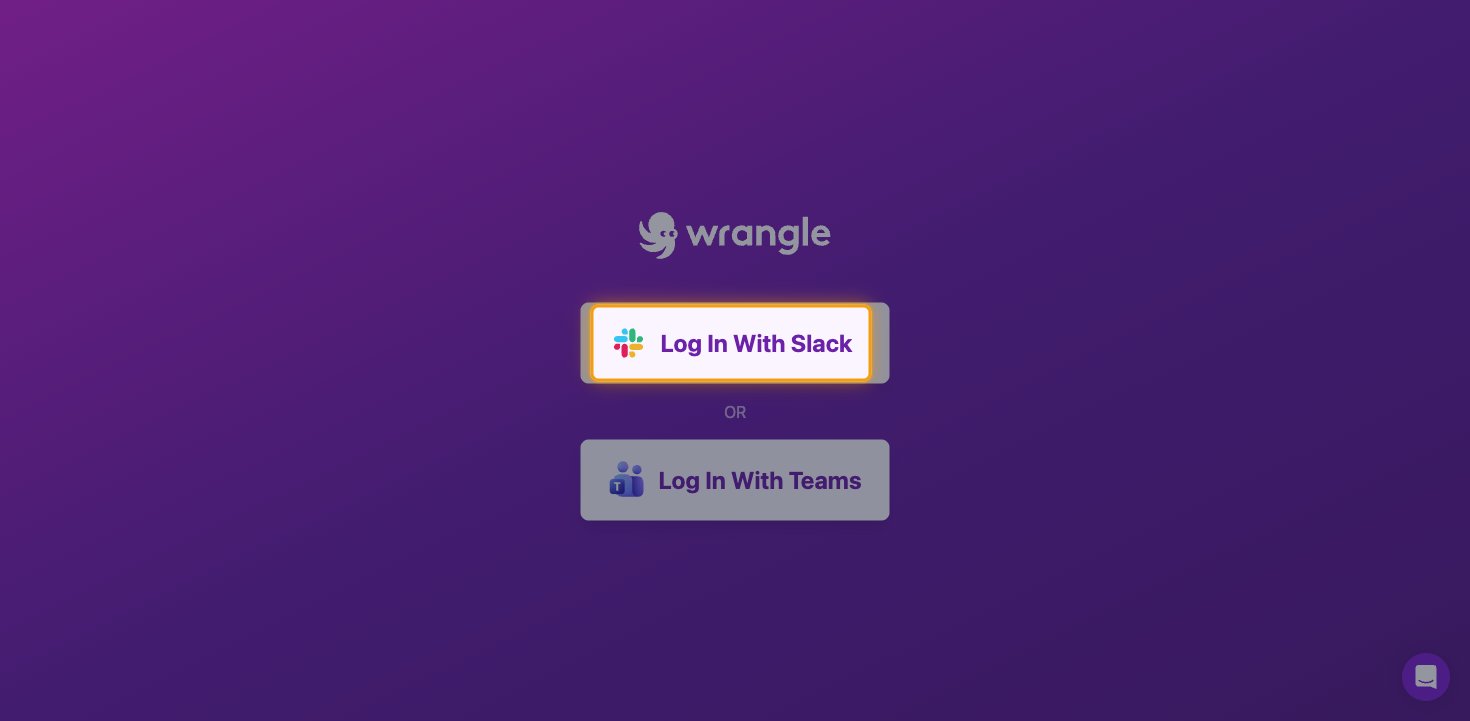
- Click Log In With Slack, or Log In With Teams if your organization uses Microsoft Teams.
Approve the Wrangle app in Slack
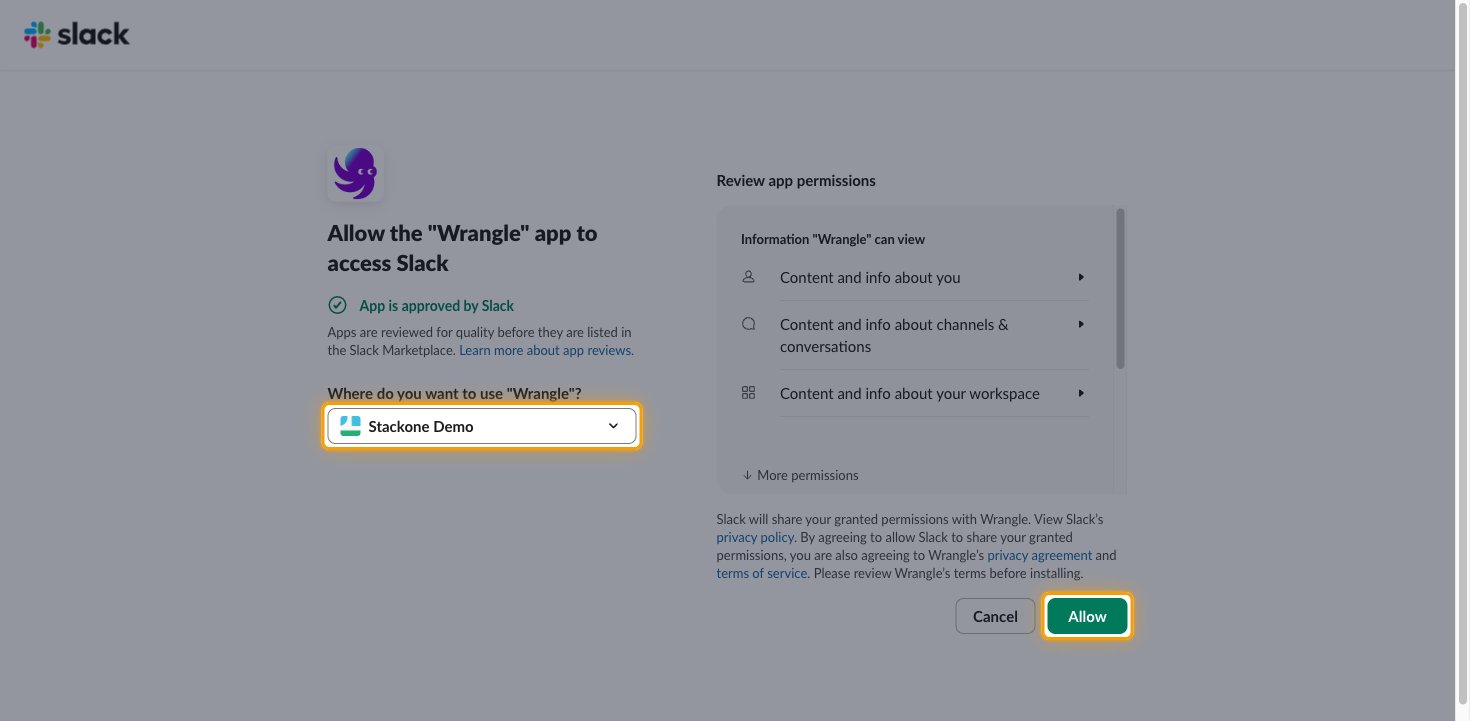
If Slack shows Allow the “Wrangle” app to access Slack, confirm the workspace and allow access.
- Under Where do you want to use “Wrangle”?, choose the workspace you use with Wrangle.
- Click Allow.
Open the Webhooks page
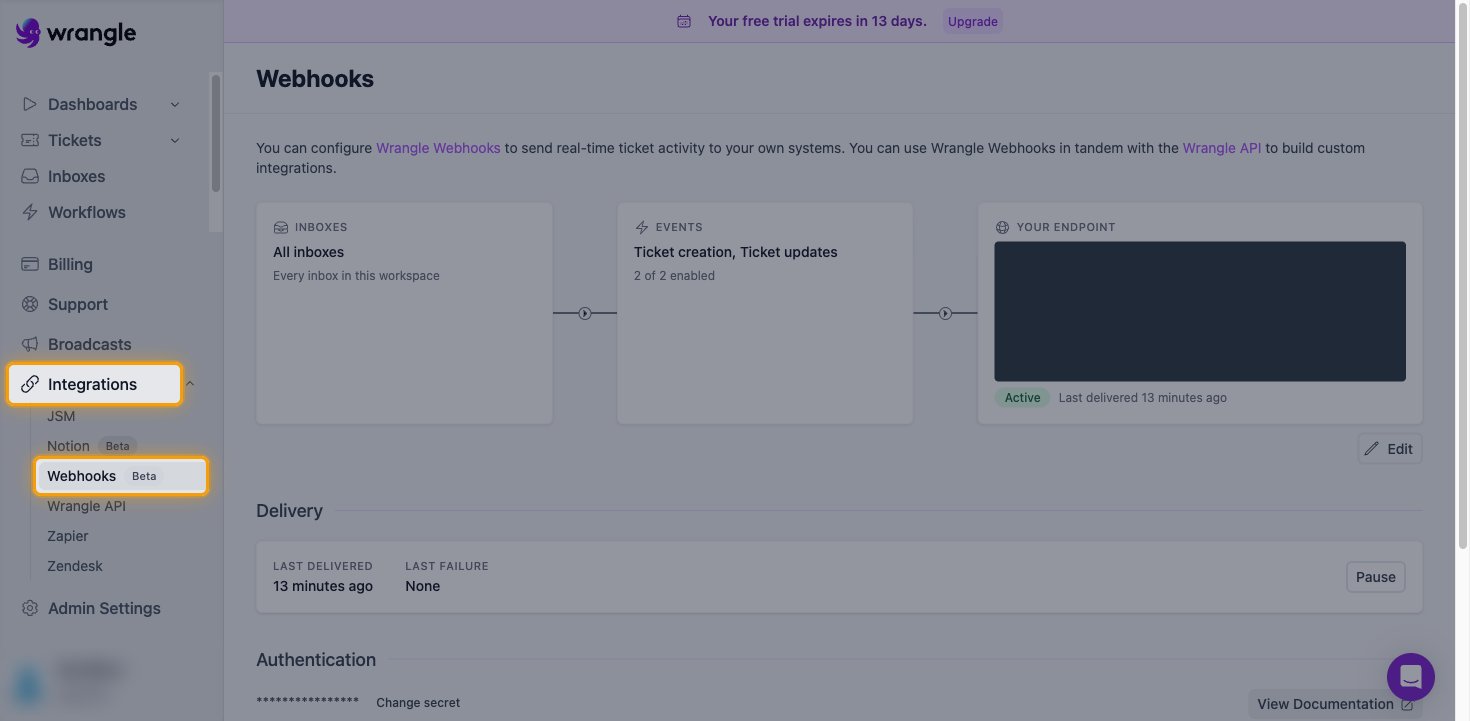
In the sidebar, expand Integrations and click Webhooks.
- Wrangle shows a single webhook. If Your endpoint already shows a URL, click Edit and replace the Webhook URL instead of creating a new webhook.
Start a new webhook
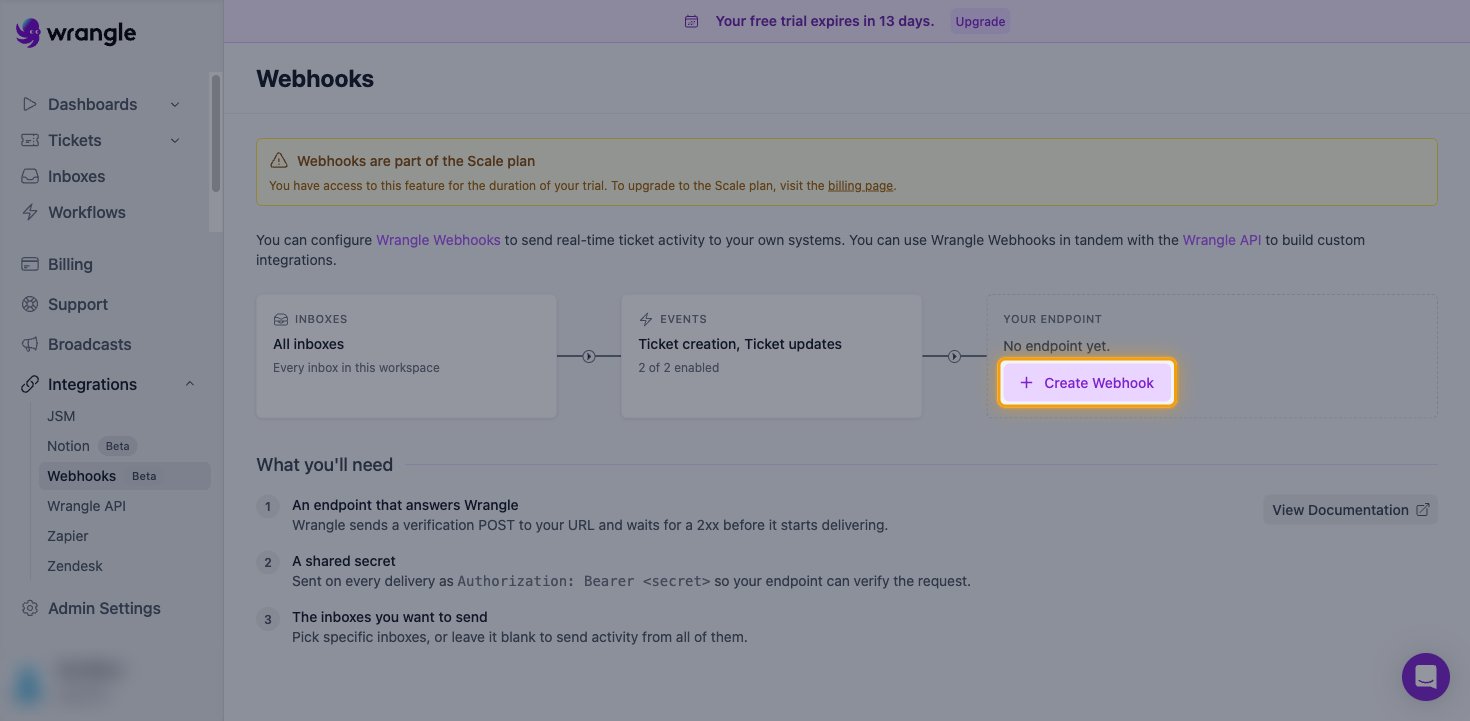
Under Your endpoint, Wrangle shows No endpoint yet. until a webhook exists. Click Create Webhook.
- The Webhooks are part of the Scale plan banner appears during the free trial. You have access to webhooks for the duration of the trial.
Enter the webhook URL and secret
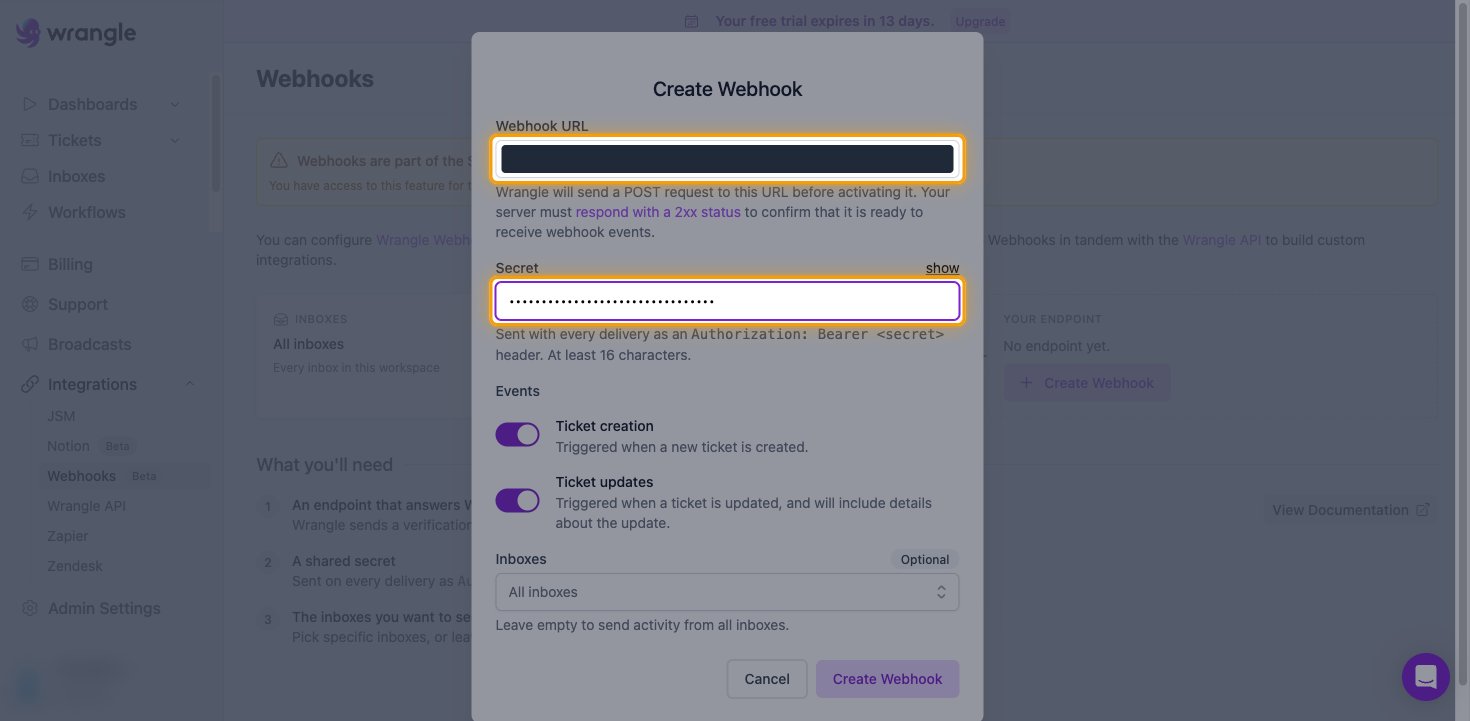
In the Create Webhook dialog, paste the StackOne Native Webhook URL into Webhook URL.
- Wrangle sends a verification POST to the URL before activating it. StackOne answers it automatically.
- In Secret, enter a random value of at least 16 characters. Wrangle sends it on every delivery as
Authorization: Bearer <secret>. - StackOne identifies the account from the Native Webhook URL, so the secret is not entered in StackOne. Store it securely in case you need to change it later.
Choose events and inboxes
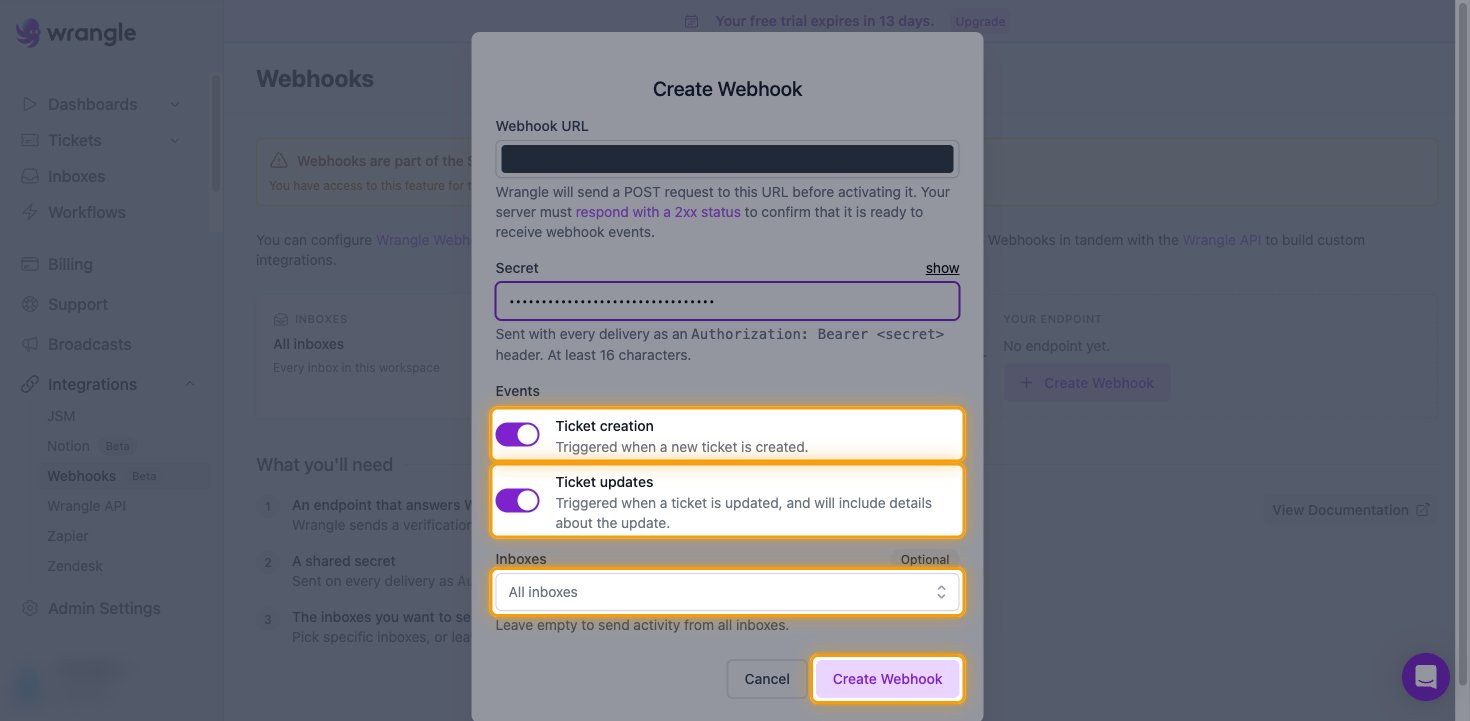
Under Events, leave Ticket creation and Ticket updates switched on.
- Leave Inboxes set to All inboxes to send activity from every inbox, or pick specific inboxes. Inboxes marked as confidential are only included when you select them explicitly.
- Click Create Webhook.
Confirm the webhook is active
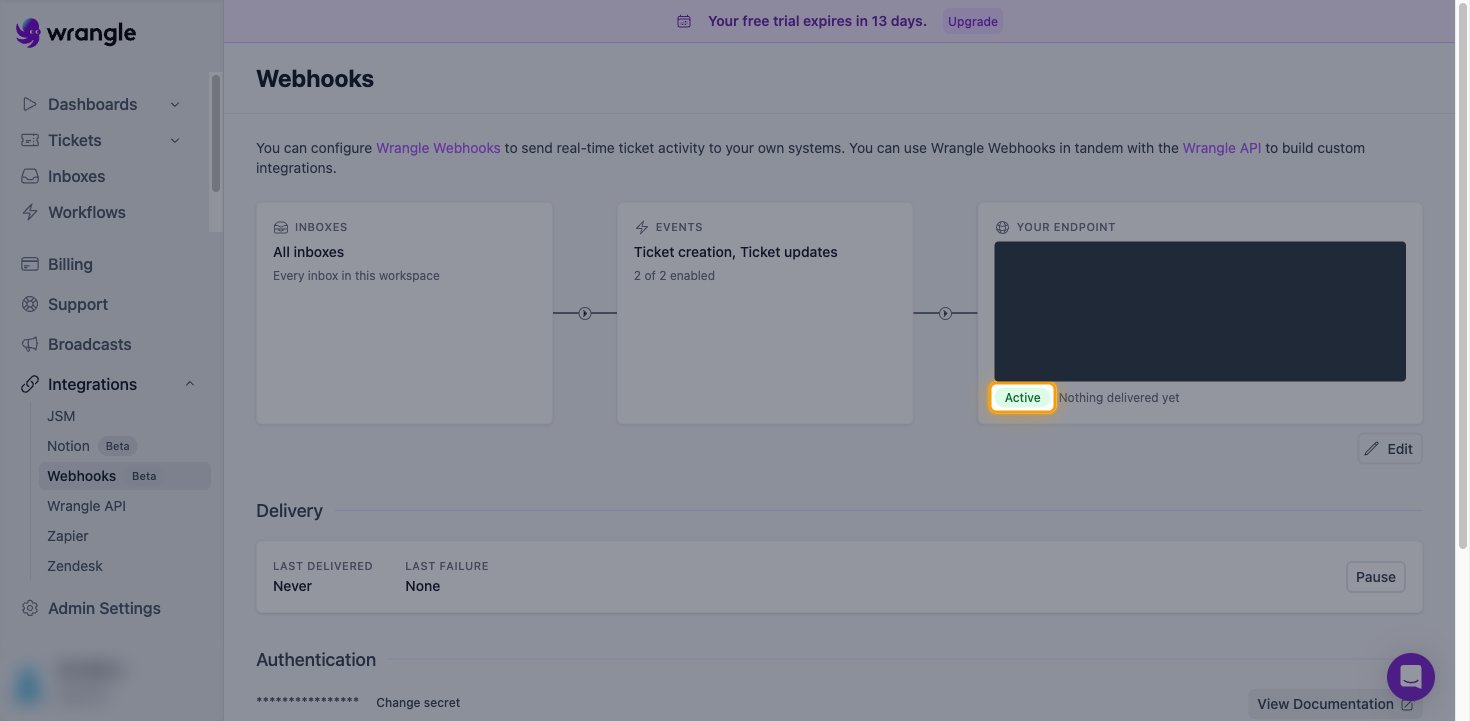
After Wrangle verifies the URL, Your endpoint shows Active.
- The status reads Nothing delivered yet until the first ticket is created or updated.
- The Delivery section shows Last delivered and Last failure for troubleshooting.
Available webhook events
The following Wrangle events can be enabled. Only events selected in StackOne are delivered to your integration, and Wrangle only sends the event types switched on in its webhook.
Ticket events
Events related to tickets in your Wrangle inboxes.
- Ticket Created (
ticket.created) — Fired when a new ticket is created in Wrangle, including tickets created through the Wrangle API - Ticket Updated (
ticket.updated) — Fired when a ticket changes. TheeventTypesfield lists every change in the delivery
Verification
Handles requests from Wrangle that are not ticket activity.
- Webhook Active Check — Acknowledges the verification request Wrangle sends when a webhook is created or edited (its
activityTypeiswebhookValidation), and any other request that is not ticket activity. It does not deliver an event
Delivery format
Wrangle sends one request per ticket activity. Each request carries occurredAt, activityType and the full ticket under ticket, in the same shape the get_ticket action returns. The event’s record ID is the Wrangle ticket ID.
- A single Ticket Updated delivery can carry more than one change, listed in
eventTypes. The ticket reflects its state after the change; previous values are not included. - Possible
eventTypesvalues:ASSIGNMENT_CHANGE,CSAT_SUBMISSION,DESCRIPTION_CHANGE,FOLLOWER_ADDED_VIA_MENTION,FOLLOWER_CHANGE,INBOX_CHANGE,NAME_CHANGE,PRIORITY_CHANGE,STATUS_CHANGE,TAGS_CHANGE,TICKET_CLAIM,WORKFLOW_SUGGEST - Deleting a ticket does not send an event.