

Prerequisites
The connector should already be set up, with a Connector Profile and a Linked Account. See Getting Started on the Hive connector page.How Hive webhooks are set up
StackOne creates and manages the Hive webhooks automatically when the account is connected, and removes them when the account is disconnected. There is nothing to configure in Hive and no URL to paste.
- StackOne creates one Hive webhook per event you enable, because each Hive webhook listens for a single trigger.
- The webhooks are created in the workspace named by the Workspace ID field and cover every project in that workspace.
- Only the events you enable in StackOne are registered in Hive and delivered.
Find your Workspace ID
Every Hive webhook belongs to one workspace, so StackOne needs to know which workspace to watch. The ID is on the same API info page that shows the API Key and User ID used to connect Hive.
Open the workspace you want events from
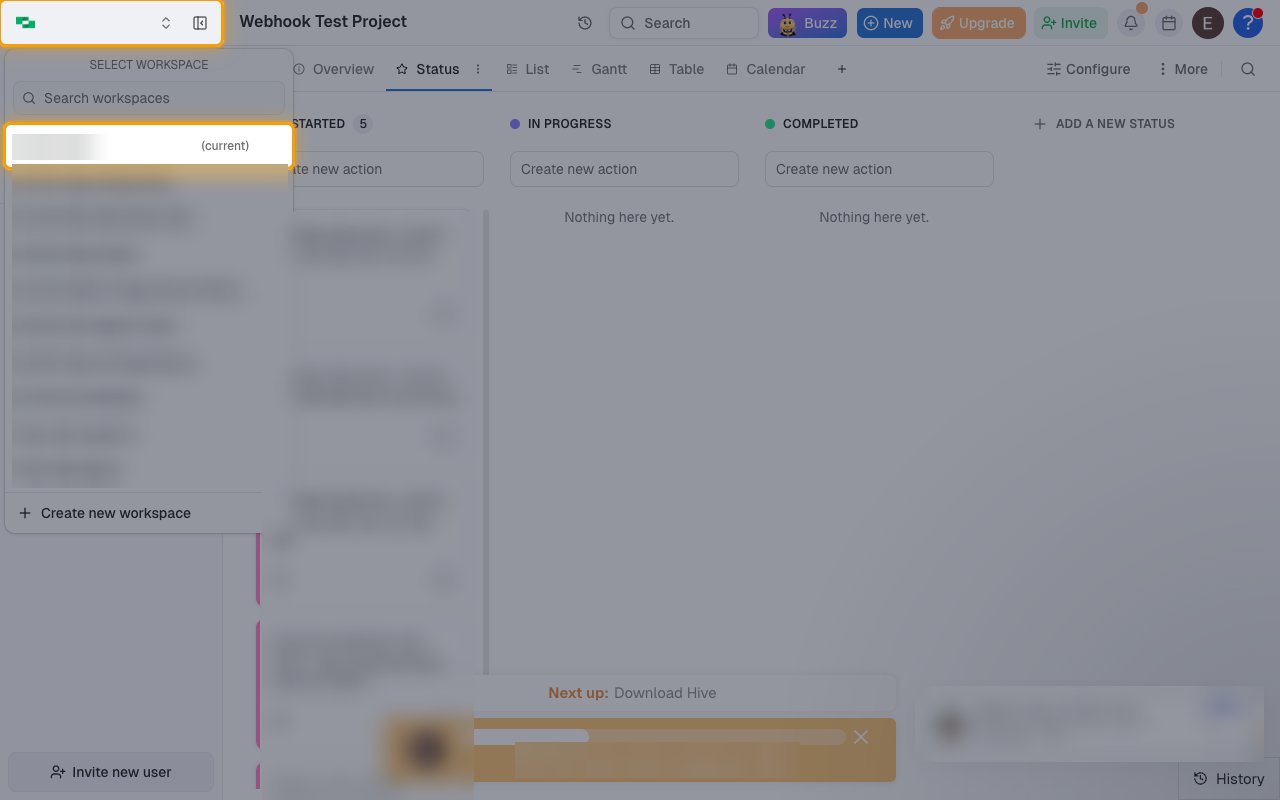
Sign in to your Hive account. Click the workspace switcher at the top of the left sidebar and select the workspace under Select workspace. The workspace you have open is marked (current).
- The API info page shows the ID of the workspace you currently have open, so switch to the right workspace first if you belong to more than one.
Open your profile settings
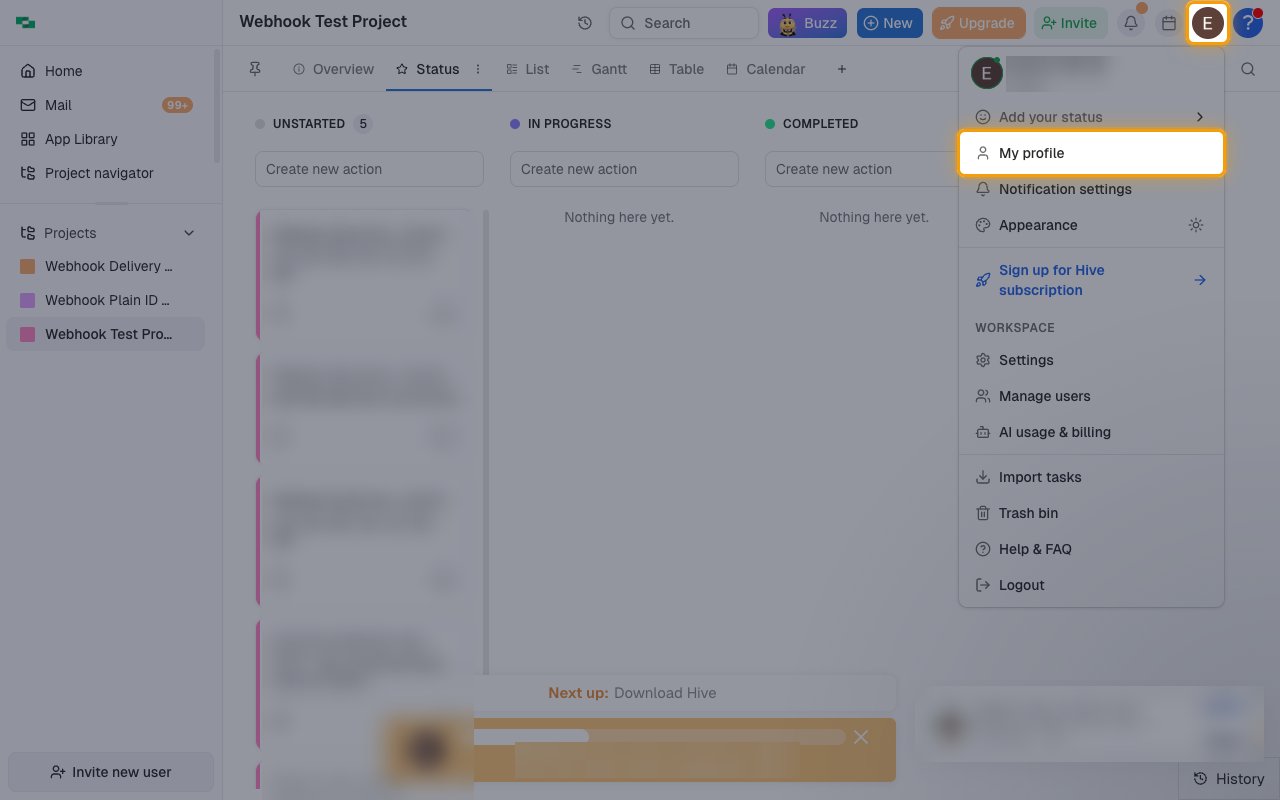
Click your profile avatar in the top-right corner and select My profile.
Open the API info page
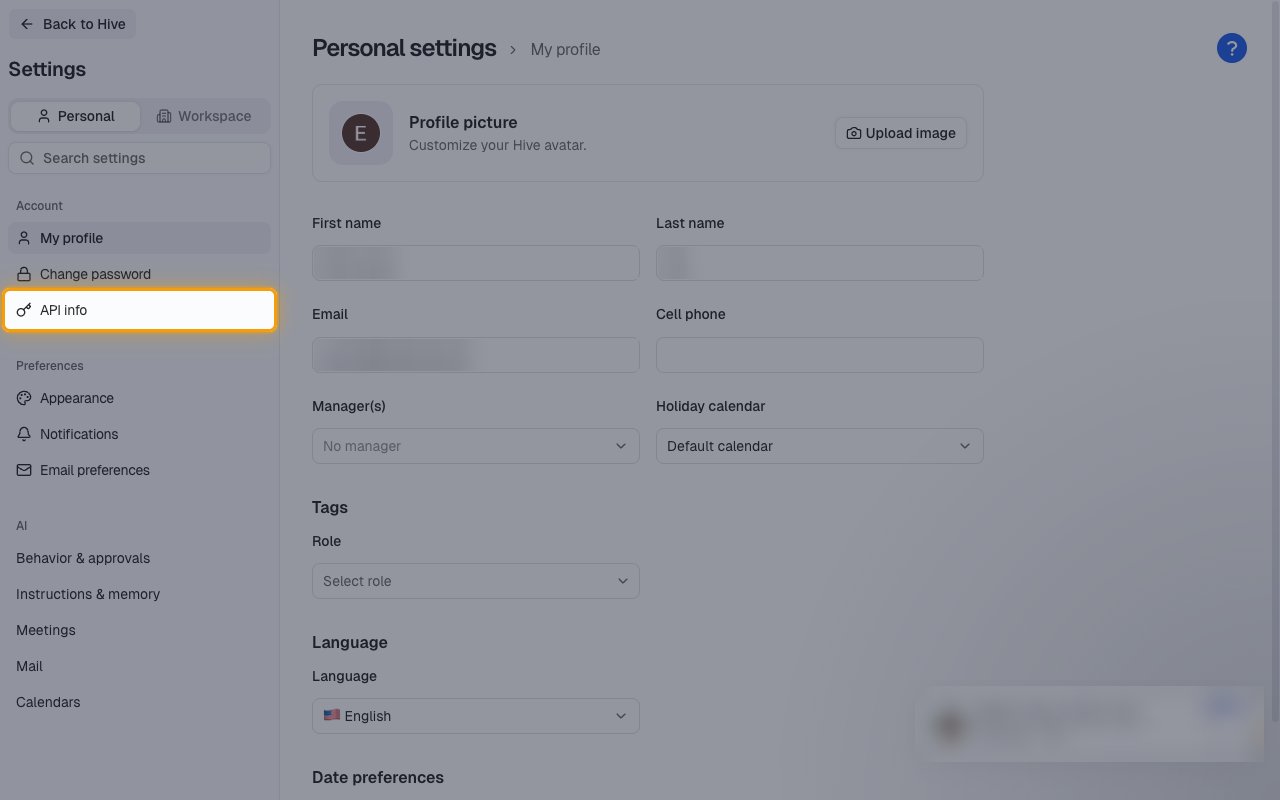
In the Settings sidebar, under Account, click API info.
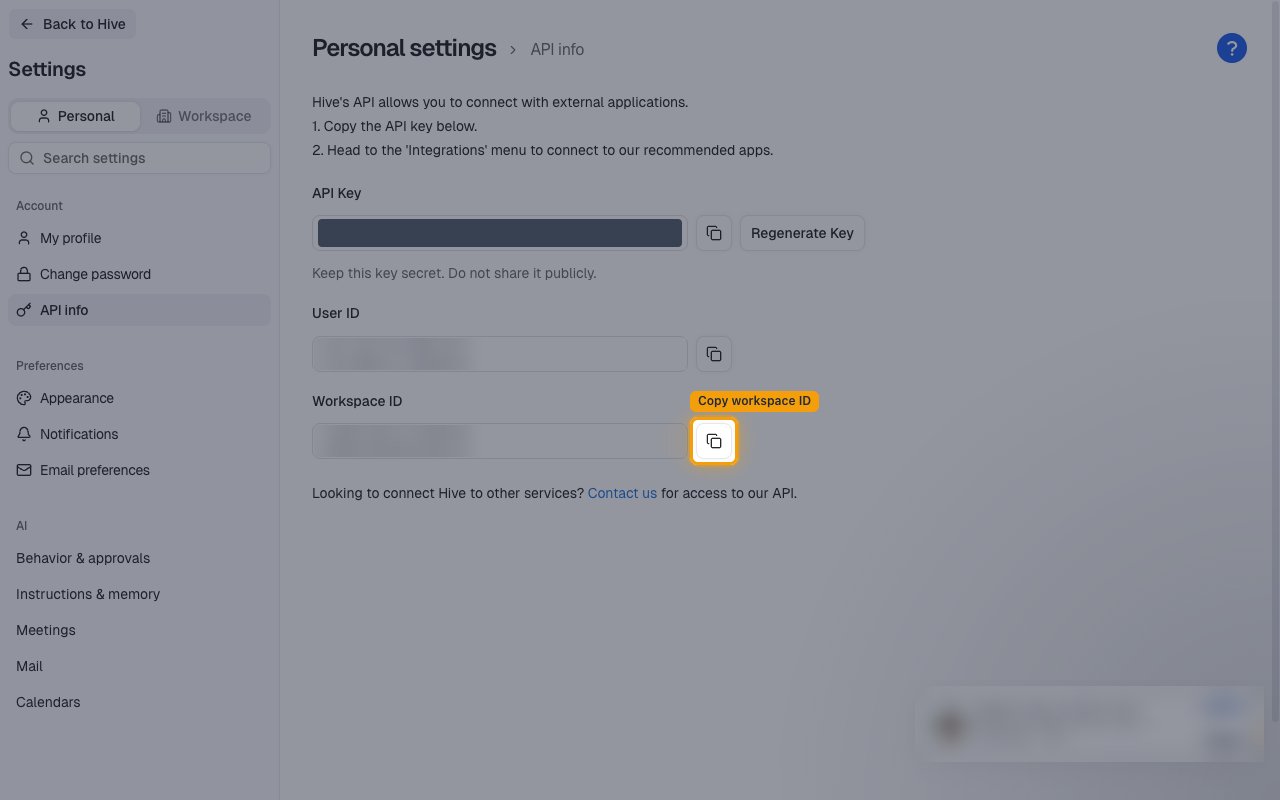
Copy the Workspace ID
Click the copy button beside Workspace ID and paste the value into the Workspace ID field on the Linked Account in StackOne.
- Add the Workspace ID before you enable events, so StackOne can create the webhooks when events are turned on.
- Leave the field empty if you only use Hive actions and do not need webhook events.
Check the webhooks in Hive
After you enable events, you can confirm in Hive that StackOne created the webhooks. This is optional.
Open the webhook settings
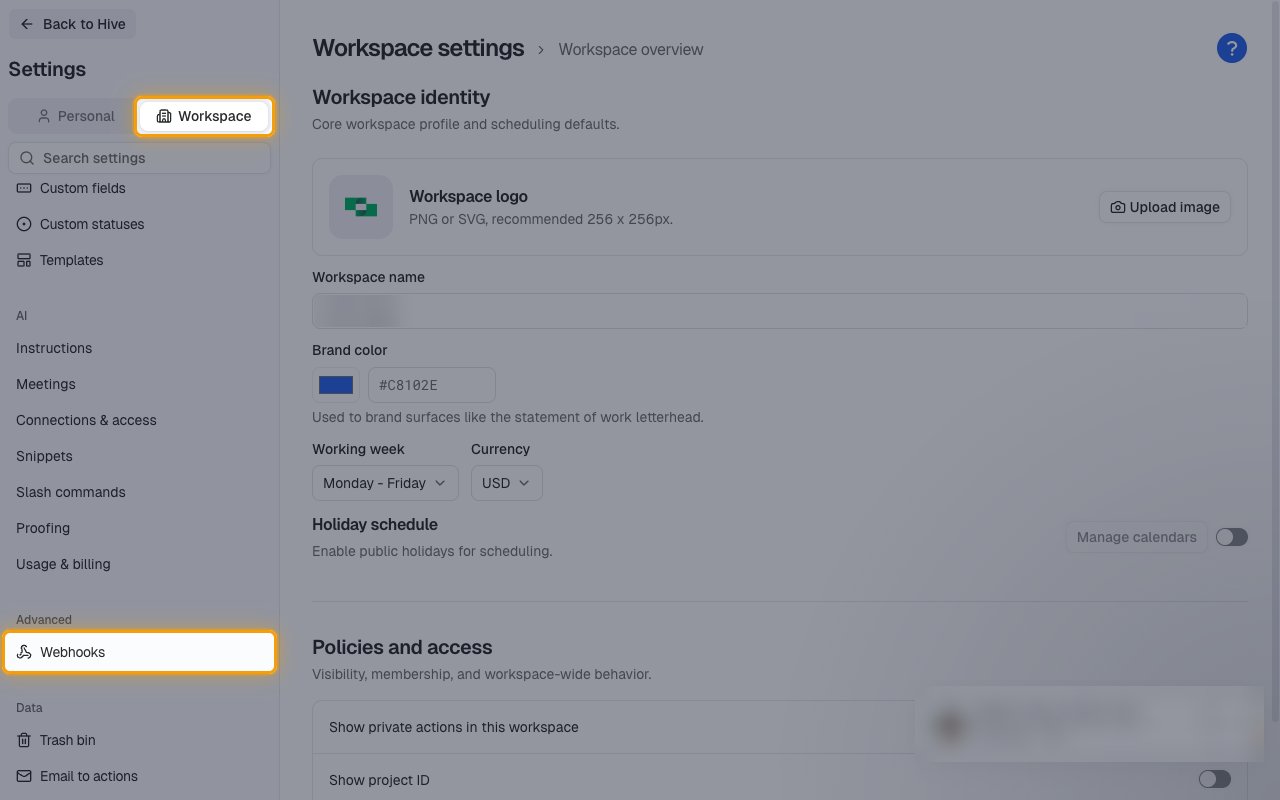
In the Settings sidebar, select the Workspace tab and click Webhooks under Advanced.
Confirm the StackOne webhooks
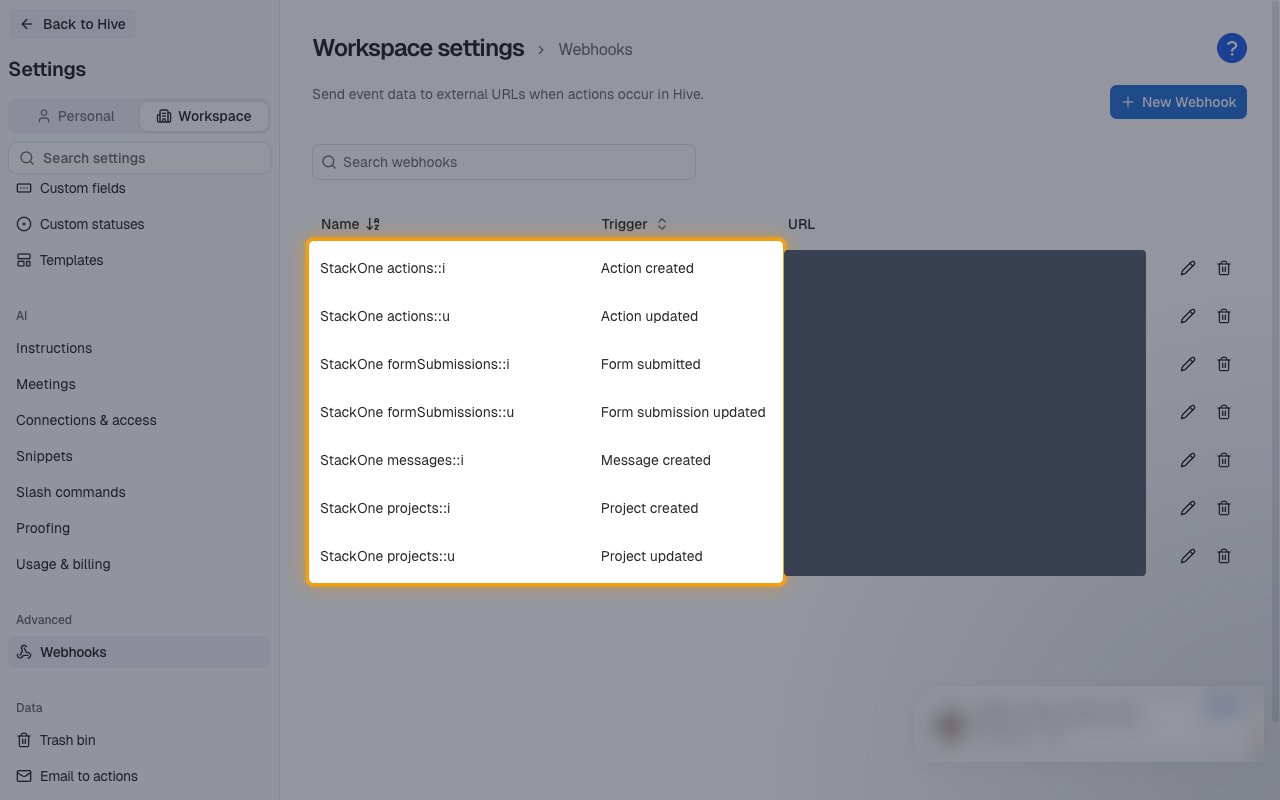
The Webhooks page lists one webhook per event you enabled. Each one is named after its event code, for example StackOne actions::i with the trigger Action created.
- Do not edit or delete these webhooks. StackOne manages them and removes them when the account is disconnected.
Available webhook events
The following Hive events can be enabled. Only events selected in StackOne are registered in Hive and delivered — Hive will not send events that are not subscribed.
Action events
Events on actions (tasks) in the workspace.
- Action created (
actions::i) — Fired when an action (task) is created in the workspace - Action updated (
actions::u) — Fired when any field of an action (task) is updated
Project events
Events on projects in the workspace.
- Project created (
projects::i) — Fired when a project is created in the workspace - Project updated (
projects::u) — Fired when any field of a project is updated
Form submission events
Events on form submissions in the workspace.
- Form submitted (
formSubmissions::i) — Fired when a form in the workspace is submitted - Form submission updated (
formSubmissions::u) — Fired when a submitted form entry is updated
Message events
Events on messages in the workspace. Hive stores comments on actions as messages, so comments fire these events too.
- Message created (
messages::i) — Fired when a comment is added to an action or a message is posted in a chat group or channel
Delivery format
Details of how Hive delivers events to StackOne.
JSON payloads
Hive delivers each event as its own HTTP POST with a JSON body carrying the trigger, the webhook owner, the webhook id, and the full affected record (under a key named after the record type, such as action, project, formSubmission or message) in its current state. Deliveries are not batched.
No signature
Hive does not sign deliveries and has no verification handshake.