

Prerequisites
The connector should already be set up, with a Connector Profile and a Linked Account. See Getting Started on the Employment Hero connector page.Retrieve the Native Webhook URL
The Native Webhook URL is generated once an account has been linked.
- Open the linked account in StackOne.
- Copy the value from Native Webhook URL.
Add a webhook in Employment Hero
Register the Native Webhook URL as a webhook in the Employment Hero Developer Portal and select the events to send.
Open the Developer Portal
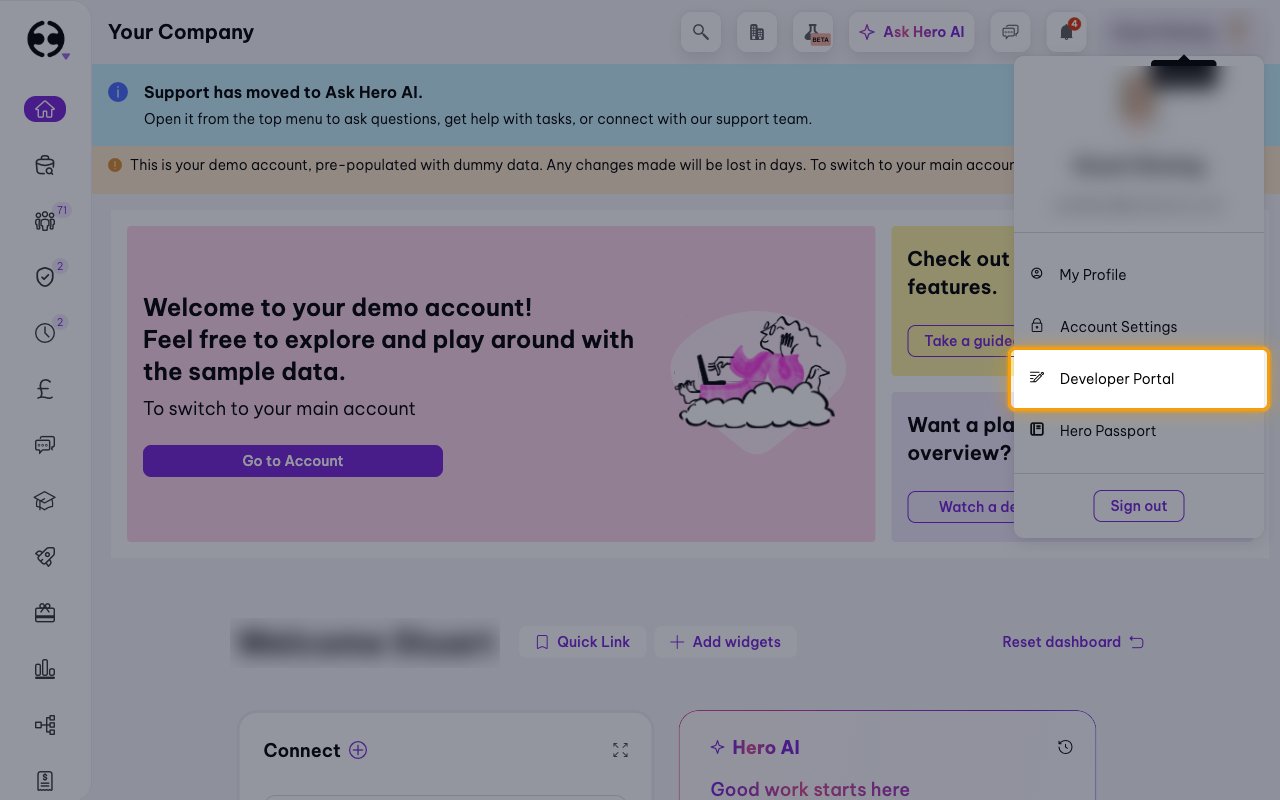
Sign in to your Employment Hero account, click your profile name in the top right corner and select Developer Portal.
Open My Webhooks
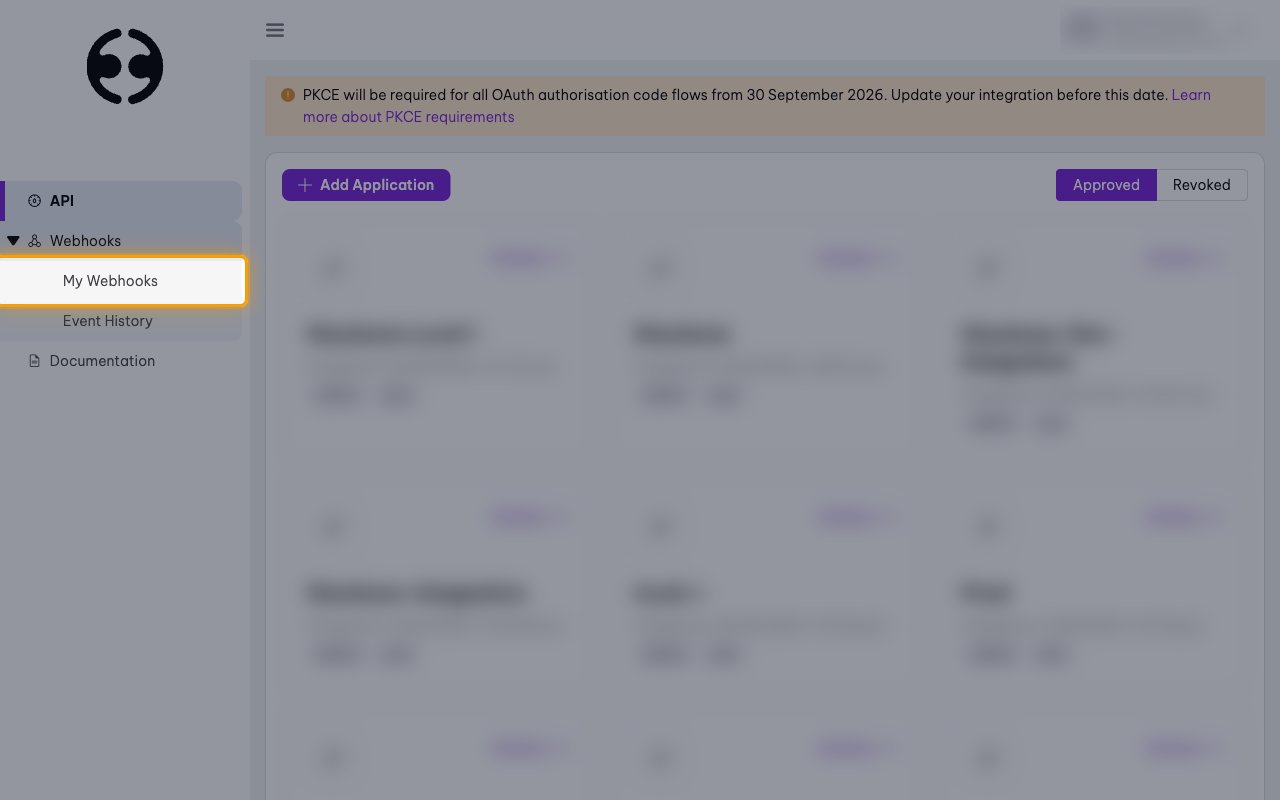
In the sidebar, expand Webhooks and click My Webhooks.
Add a webhook
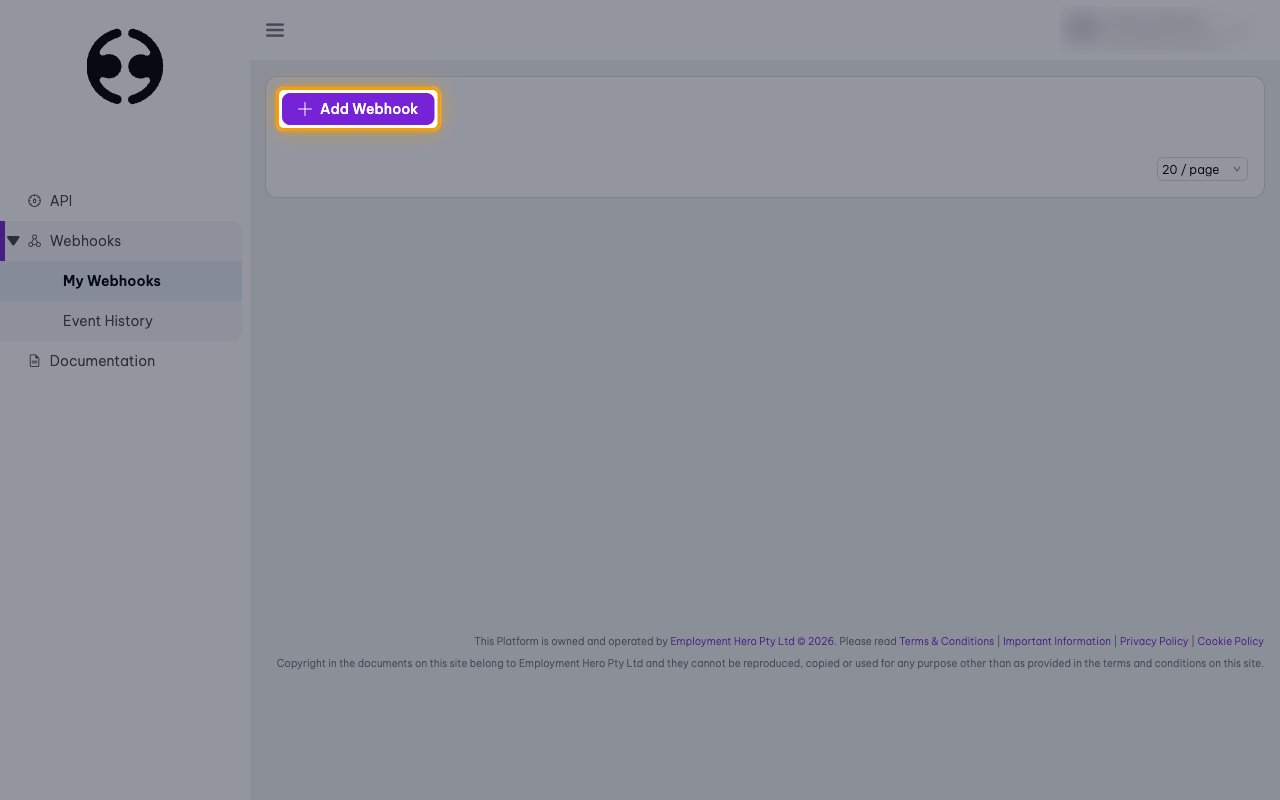
Click Add Webhook.
Enter the webhook details
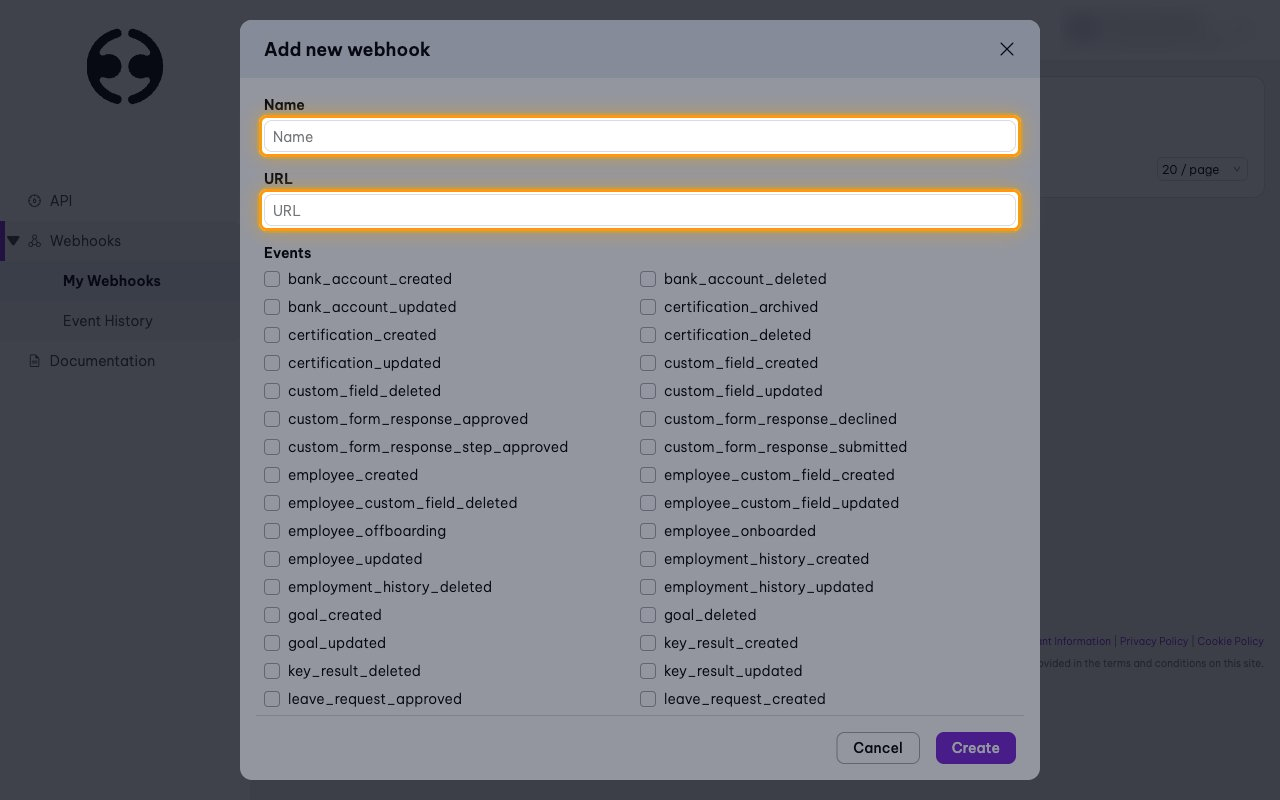
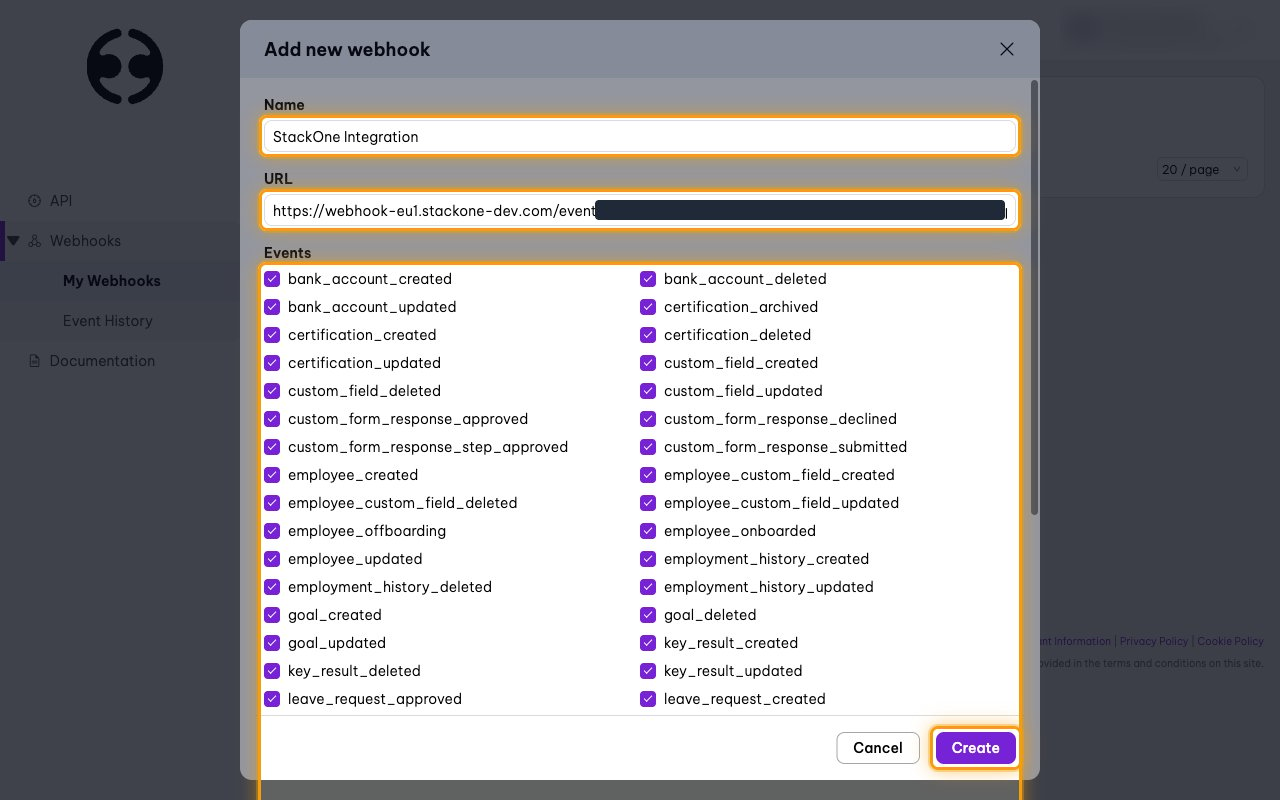
In the Add new webhook dialog, fill in the Name and URL fields.
- Name: any name you choose — for example,
StackOne Integration - URL: the Native Webhook URL copied from StackOne
Select events and create the webhook
Under Events, tick every event you enabled in StackOne, then click Create.
- Employment Hero only sends the events ticked here.
- Changes made later through Edit take effect immediately.
Review the webhook
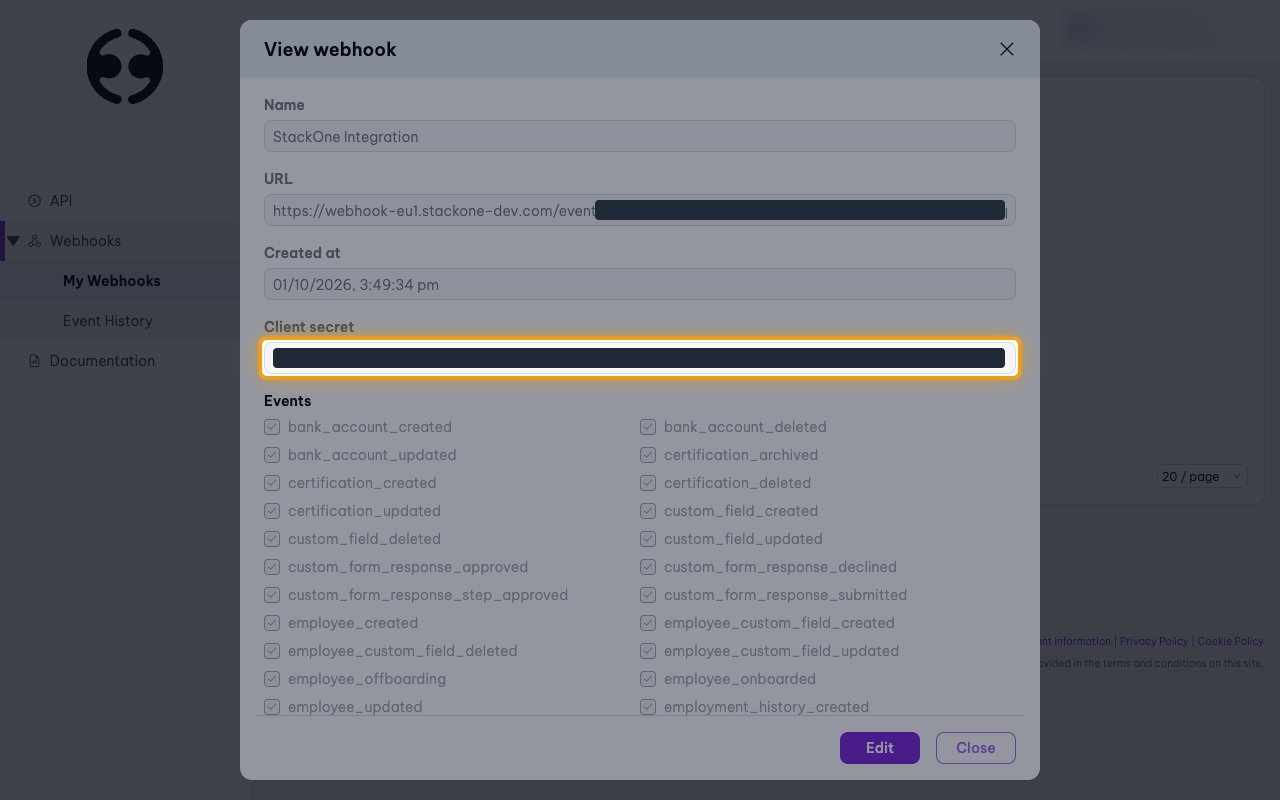
The View webhook dialog opens with the saved settings. The Client secret is the key Employment Hero uses to sign each request in the X-EmploymentHero-Signature header. StackOne does not need it.
- Click Close to return to My Webhooks.
Confirm the webhook is listed
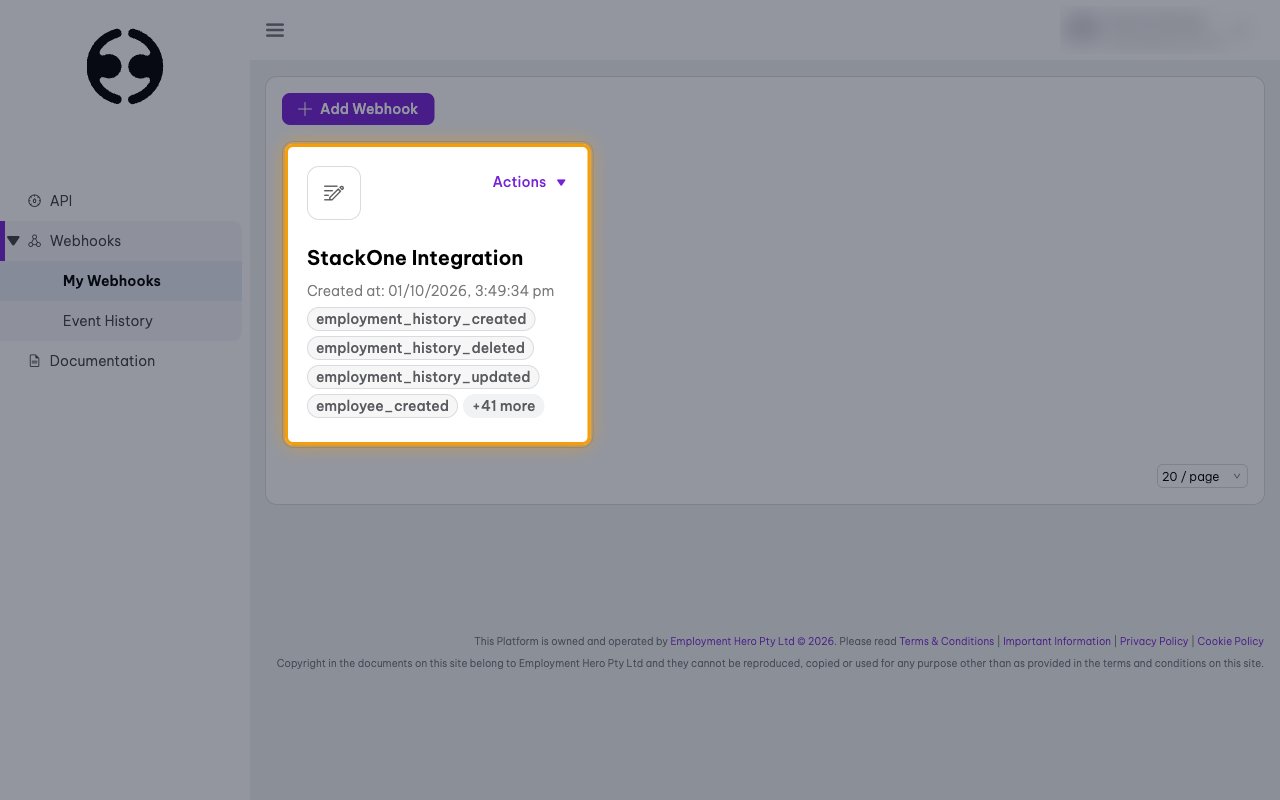
The webhook appears on My Webhooks with its name, creation time and selected events.
- Deliveries can be checked under Webhooks > Event History.
Available webhook events
The following Employment Hero events can be enabled. Only events selected in StackOne are processed, and Employment Hero only sends the events ticked on the webhook.
Employee events
Events related to employee records.
- Employee Created (
employee_created) — Fired when a new employee is created - Employee Onboarded (
employee_onboarded) — Fired when an employee completes onboarding - Employee Updated (
employee_updated) — Fired when an employee’s details are updated - Employee Offboarding (
employee_offboarding) — Fired when an employee is put into offboarding
Bank account events
Events related to employee bank accounts.
- Bank Account Created (
bank_account_created) — Fired when a bank account is added to an employee - Bank Account Updated (
bank_account_updated) — Fired when an employee’s bank account is updated - Bank Account Deleted (
bank_account_deleted) — Fired when an employee’s bank account is deleted
Employment history events
Events related to employment history entries.
- Employment History Created (
employment_history_created) — Fired when an employment history entry is created - Employment History Updated (
employment_history_updated) — Fired when an employment history entry is updated - Employment History Deleted (
employment_history_deleted) — Fired when an employment history entry is deleted
Custom field events
Events related to custom field definitions and the values held against employees.
- Employee Custom Field Created (
employee_custom_field_created) — Fired when a custom field value is set on an employee - Employee Custom Field Updated (
employee_custom_field_updated) — Fired when an employee’s custom field value changes - Employee Custom Field Deleted (
employee_custom_field_deleted) — Fired when an employee’s custom field value is removed - Custom Field Created (
custom_field_created) — Fired when a custom field definition is created - Custom Field Updated (
custom_field_updated) — Fired when a custom field definition is updated - Custom Field Deleted (
custom_field_deleted) — Fired when a custom field definition is deleted
Leave request events
Events related to leave requests.
- Leave Request Created (
leave_request_created) — Fired when a leave request is submitted - Leave Request Updated (
leave_request_updated) — Fired when a leave request is edited - Leave Request Approved (
leave_request_approved) — Fired when a leave request is approved - Leave Request Declined (
leave_request_declined) — Fired when a leave request is declined - Leave Request Deleted (
leave_request_deleted) — Fired when a leave request is deleted
Timesheet entry events
Events related to timesheet entries.
- Timesheet Entry Created (
timesheet_entry_created) — Fired when a timesheet entry is created - Timesheet Entry Updated (
timesheet_entry_updated) — Fired when a timesheet entry is updated - Timesheet Entry Deleted (
timesheet_entry_deleted) — Fired when a timesheet entry is deleted
Certification events
Events related to certifications and the certifications assigned to employees.
- Certification Created (
certification_created) — Fired when a certification is created in the organisation - Certification Updated (
certification_updated) — Fired when a certification is updated - Certification Deleted (
certification_deleted) — Fired when a certification is deleted - Certification Archived (
certification_archived) — Fired when a certification is archived - Member Certification Created (
member_certification_created) — Fired when a certification is assigned to an employee - Member Certification Updated (
member_certification_updated) — Fired when an employee’s certification is updated - Member Certification Approved (
member_certification_approved) — Fired when an employee’s certification is approved - Member Certification Declined (
member_certification_declined) — Fired when an employee’s certification is declined - Member Certification Expired (
member_certification_expired) — Fired when an employee’s certification expires - Member Certification Archived (
member_certification_archived) — Fired when an employee’s certification is archived - Member Certification Deleted (
member_certification_deleted) — Fired when an employee’s certification is deleted
Custom form response events
Events related to custom form responses.
- Custom Form Response Submitted (
custom_form_response_submitted) — Fired when a custom form response is submitted - Custom Form Response Approved (
custom_form_response_approved) — Fired when a custom form response is fully approved - Custom Form Response Declined (
custom_form_response_declined) — Fired when a custom form response is declined - Custom Form Response Partially Approved (
custom_form_response_step_approved) — Fired when one approval step of a custom form response is approved; the payload carries approver_id and decliner_id but no form_id
Goal and key result events
Events related to goals and their key results.
- Goal Created (
goal_created) — Fired when a goal is created - Goal Updated (
goal_updated) — Fired when a goal is updated, including archive and unarchive - Goal Deleted (
goal_deleted) — Fired when a goal is deleted - Key Result Created (
key_result_created) — Fired when a key result is added to a goal - Key Result Updated (
key_result_updated) — Fired when a key result is updated, including archive and unarchive - Key Result Deleted (
key_result_deleted) — Fired when a key result is deleted
Delivery format
Details of how Employment Hero delivers events to StackOne.
One event per request
Each request is a JSON object with event (the event code, for example leave_request_approved) and data (the affected record). StackOne routes each delivery on event and uses data.id as the record id.
Retries
If the URL does not respond with HTTP 200, Employment Hero retries up to 3 times and then marks the event as failed in Event History.