

Register an Internal Application on the Egnyte Developer Portal
To connect Egnyte with StackOne using the Resource Owner Password Credentials grant, you need to create an Internal Application on the Egnyte Developer Portal. This will generate the API Key and API Secret required for integration, which map to client_id and client_secret in the token request.
Sign in to the Egnyte Developer Portal
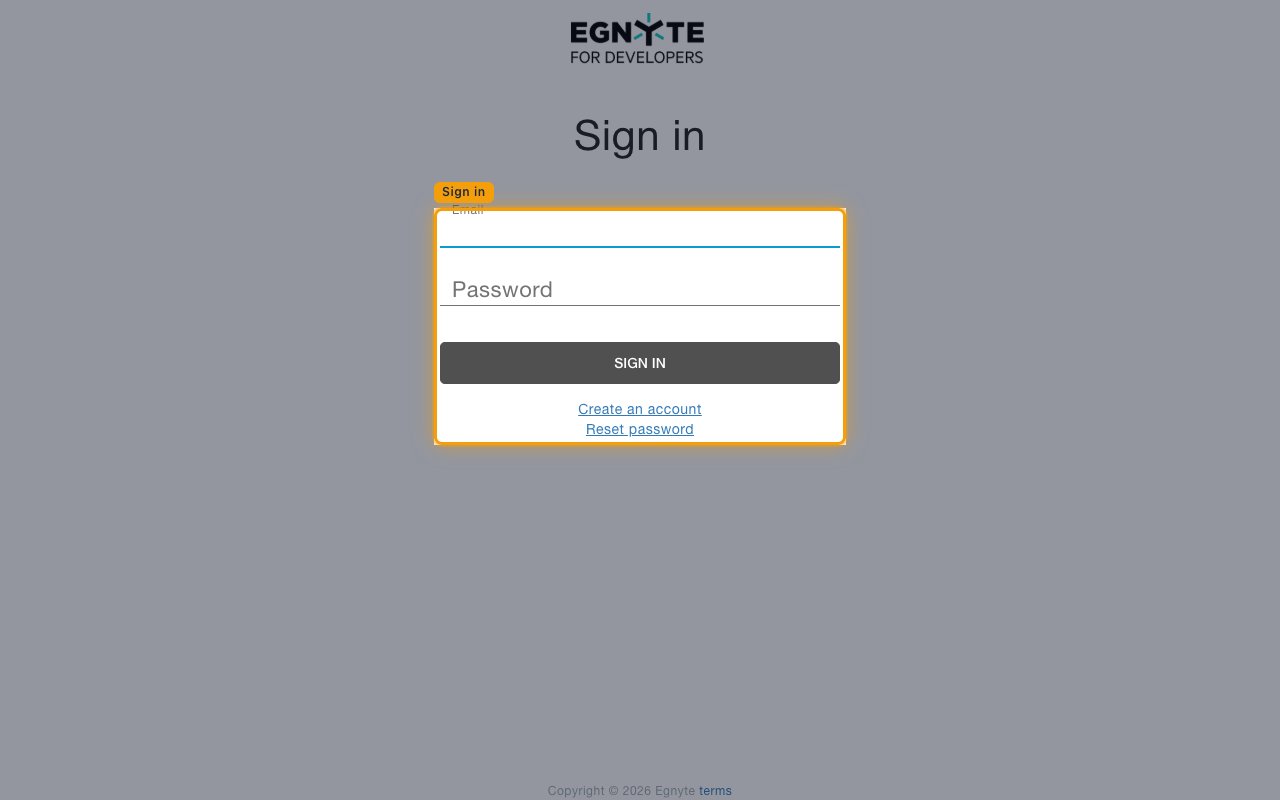
Open your browser and navigate to the Egnyte Developer Portal. Click Sign In in the top-right corner, then enter your Email and Password and click SIGN IN. Use an account tied to an active Egnyte Domain Admin — API keys requested by a non-admin will be declined.
Open the Apps page
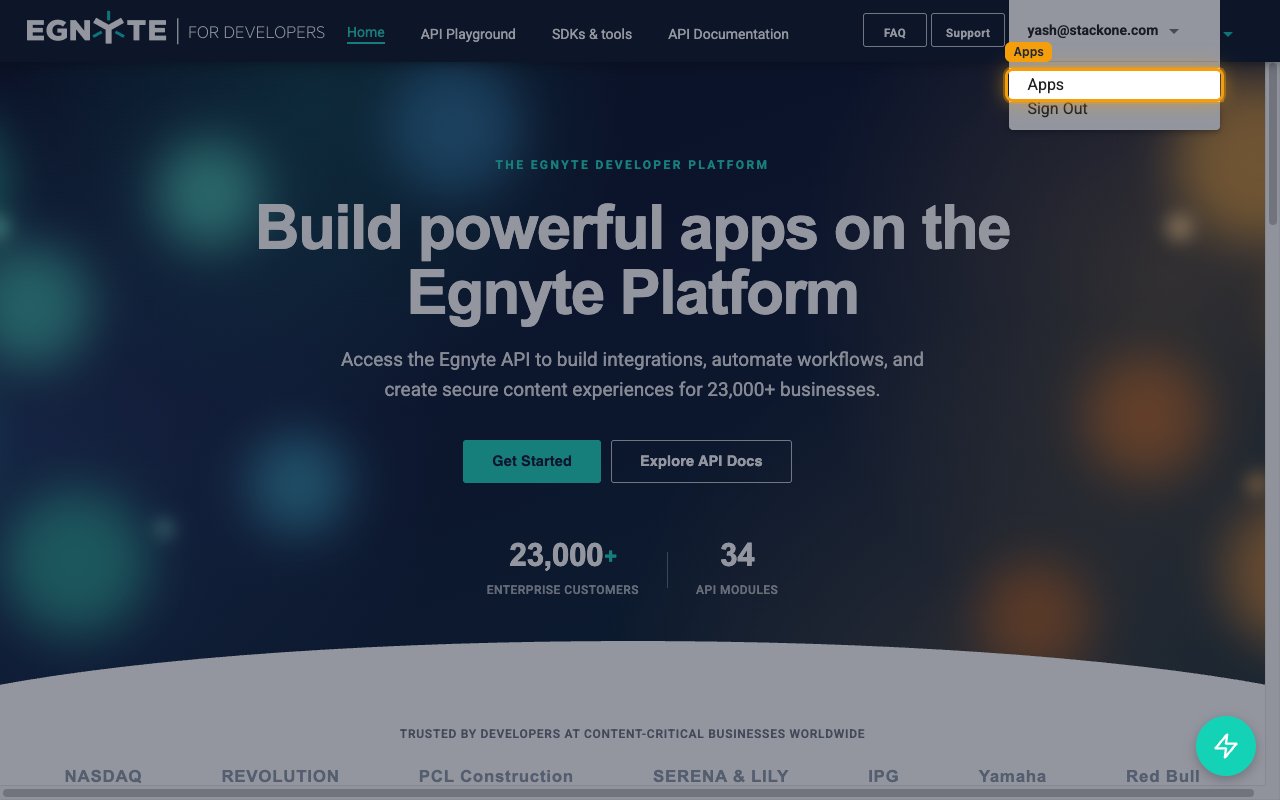
Click your account email in the top-right corner to open the account dropdown, then click Apps. You land on the My Apps page.
Create a new App
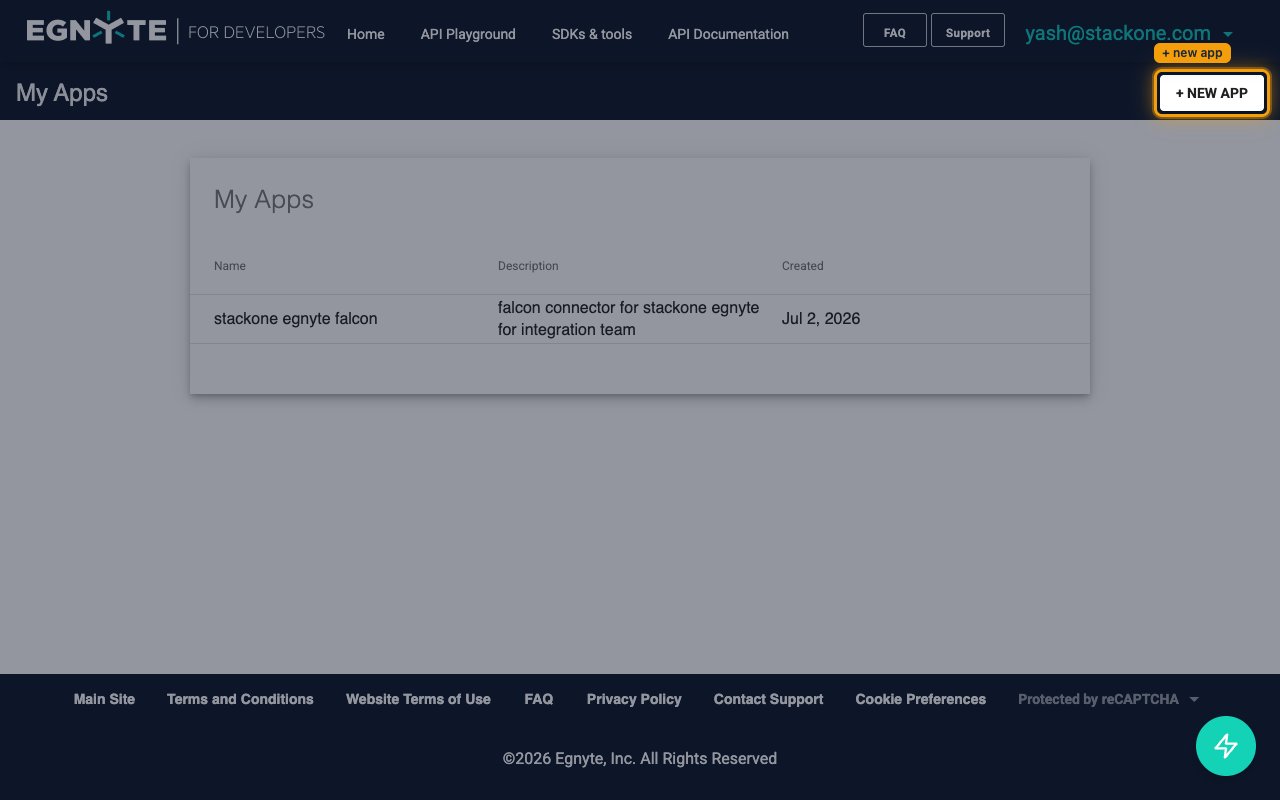
On the My Apps page, click + NEW APP in the top-right corner to open the New App form.
Fill in the app details
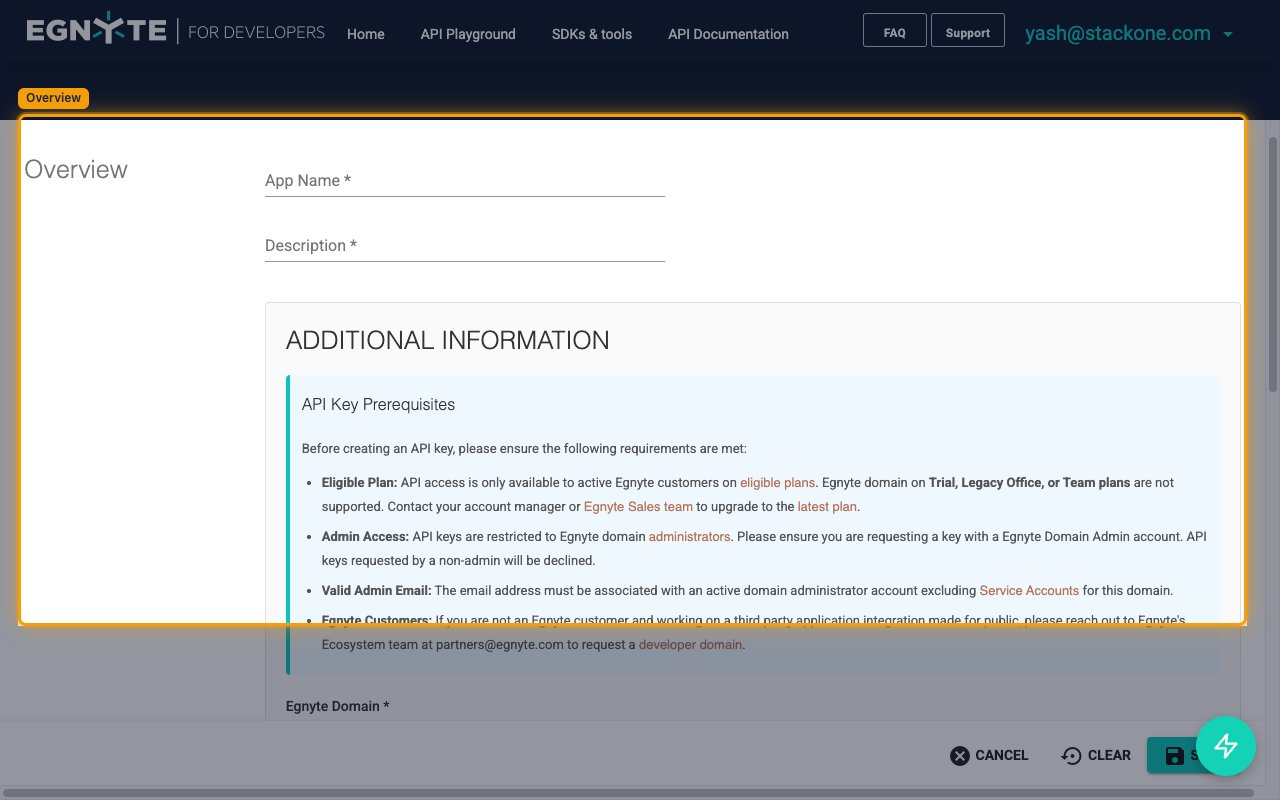
Complete the Overview section of the New App form. The Registered OAuth
Redirect URI field is not required for Internal Applications — leave it blank — and
Current User Base and Platform can stay at their defaults.
- App Name — a display name for the app (for example,
Internal Integration). - Description — a short description of the integration.
- Egnyte Domain — the customer’s Egnyte subdomain, without the
.egnyte.comsuffix. For example, fromhttps://acme.egnyte.comenteracme. Trial domains are not eligible for API keys. - App Icon URL (optional) — URL to an image file (PNG, max 100px by 100px).
- Type — choose Internal Application (own company use only). This enables the Resource Owner Password Credentials grant on the issued key. The Redirect URI is only used by Publicly Available Application — leave it blank here.
Request access to the APIs
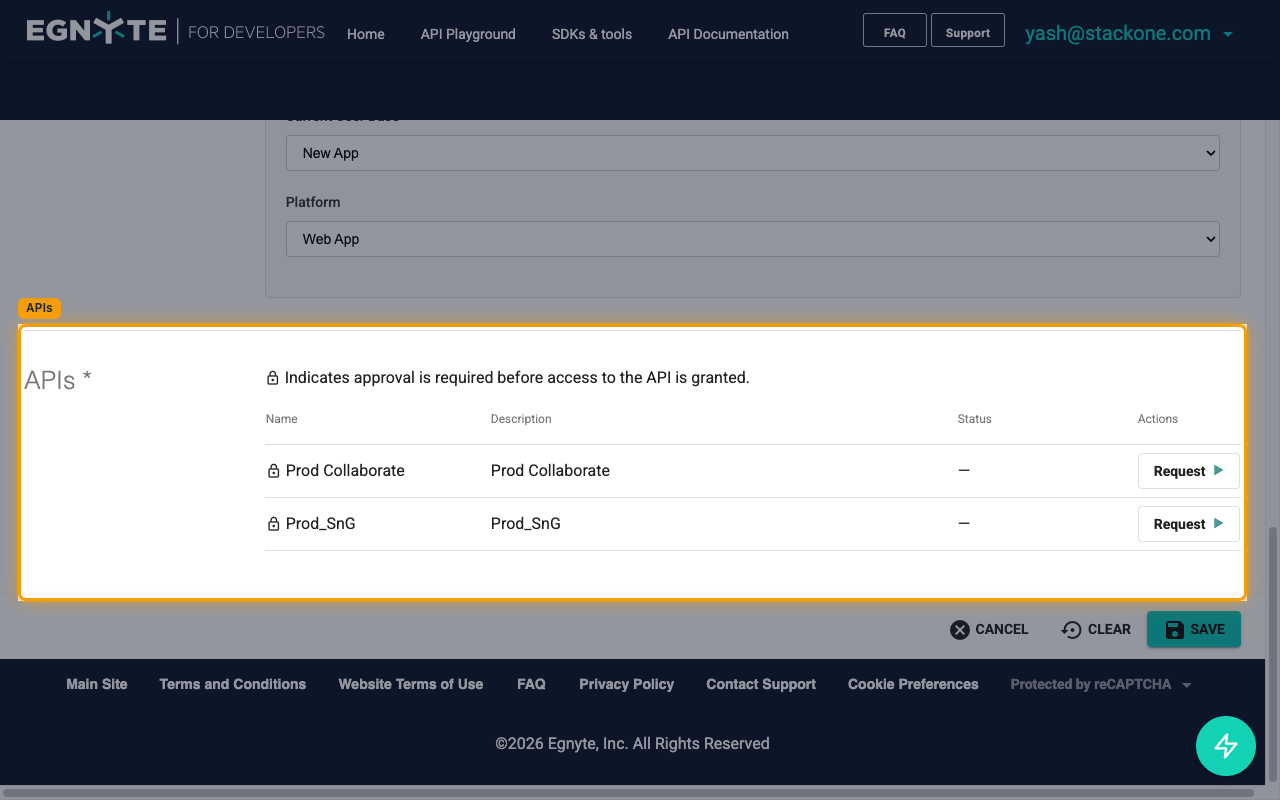
Scroll to the APIs section and click Request on the row for Prod Collaborate — this API grouping covers filesystem, comments, links, permissions, users, groups, search, trash, and events. Also request Prod_SnG if the integration needs Secure & Govern APIs. Enable the scopes required for your use case:
Save the app
Click SAVE at the bottom-right of the form. For Internal Applications Egnyte issues the API Key and API Secret immediately with Status: Approved — no external review queue applies to internal keys on eligible plans.
Copy the API Key and API Secret from Egnyte
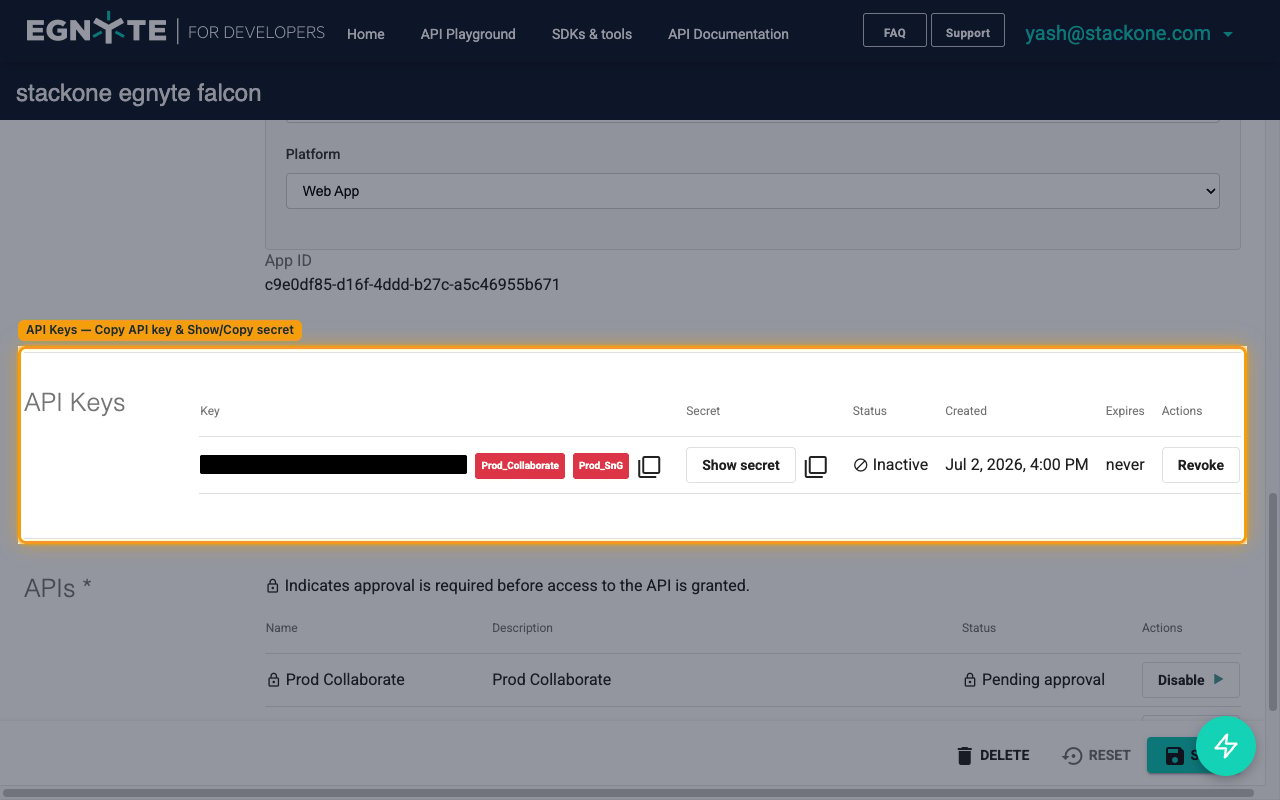
Open the app from My Apps and scroll to the API Keys section.
- In the Key column, click Copy API key — sent as
client_idin the token request. - In the Secret column, click Show secret, then click the copy icon — sent as
client_secret. All Egnyte keys issued after January 2015 require a secret.
Paste the credentials on the StackOne Linked Account
Enter the values copied from Egnyte.
- Egnyte API Key → StackOne Client ID.
- Egnyte API Secret → StackOne Client Secret.
Find the Egnyte Domain
Every Egnyte account is scoped to a unique subdomain of egnyte.com. StackOne needs that subdomain to build the token URL (https://{domain}.egnyte.com/puboauth/token) and every subsequent API endpoint.
Sign in to the Egnyte account
Open https://<customer-domain>.egnyte.com in your browser — this is the same subdomain entered as Egnyte Domain on the New App form in the previous section (e.g. acme → https://acme.egnyte.com).
Locate the Egnyte subdomain
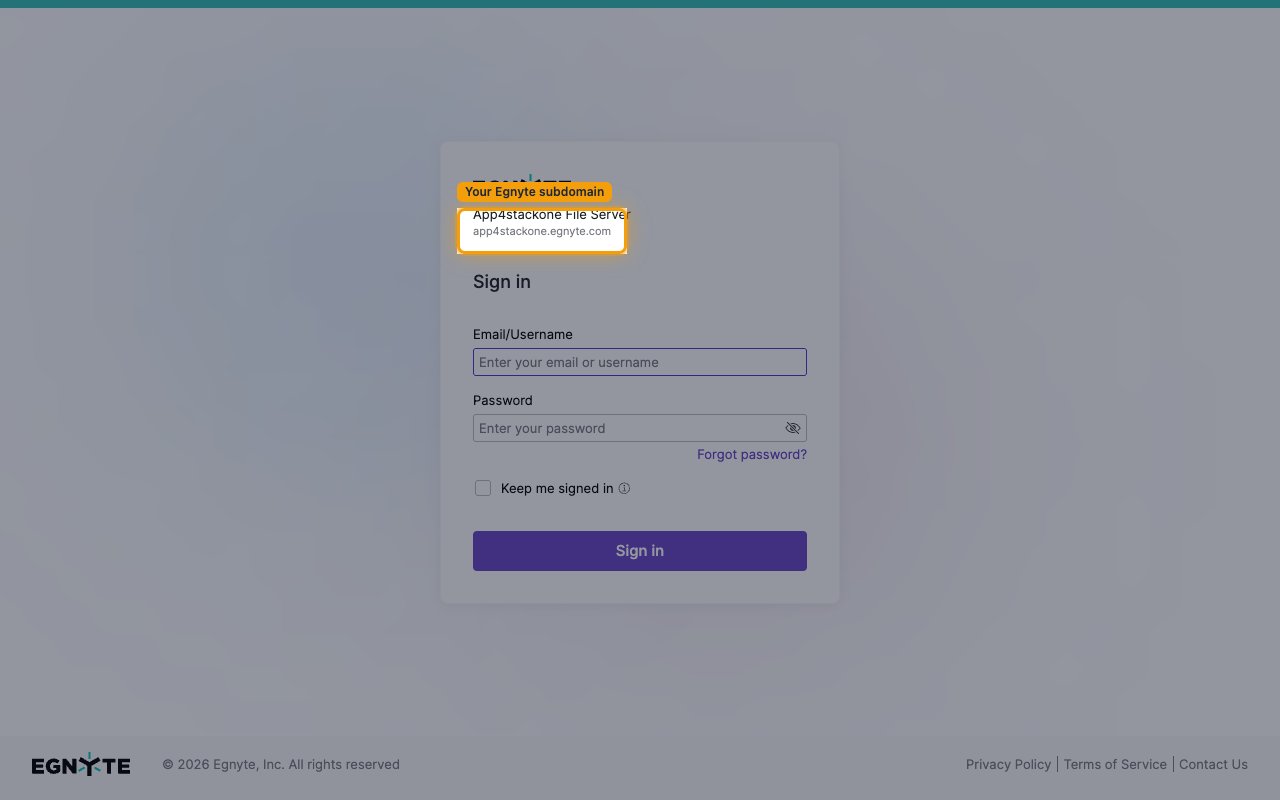
On the Egnyte Sign in page (and in the browser address bar) you will see the workspace URL. The part before .egnyte.com is the Egnyte Domain. For example, if the sign-in page shows app4stackone.egnyte.com, the Egnyte Domain is app4stackone.
- Enter only the subdomain part — omit any scheme prefix, the
.egnyte.comsuffix, and any trailing path. - The domain contains only letters, numbers, and hyphens — no spaces or special characters.
- Trial domains are not eligible for the Egnyte Public API.
Enter the domain on the StackOne Linked Account
Paste the subdomain into the Egnyte Domain field on the StackOne Linked Account.
Prepare Domain Admin credentials for the password grant
The Resource Owner Password Credentials grant exchanges a Domain Admin’s username and password for a token pair. Prefer a dedicated integration user account so token revocation doesn’t disrupt individual admins, and rotate the credentials if they are ever exposed.
Confirm the account is a Domain Admin
Only Domain Admins can be exchanged for tokens with the required API scopes. In the Egnyte web UI, open Settings → Users & Groups, click Details on the user, open the Profile tab, and confirm User Type is Administrator — see Egnyte’s Change User Type guide to promote them if not.
Record the Domain Admin username and password
These are the web-UI sign-in credentials — not an email address and not an API key. Prefer a dedicated integration account so revoking the token doesn’t lock out a person.
- Username — the login username shown in Settings → Users & Groups.
- Password — the same one used to sign in to the Egnyte web UI. Reset it from the sign-in page if it isn’t known.
Enter the credentials on the StackOne Linked Account
Paste the Domain Admin username into the Egnyte Username field and the password into the Egnyte Password field. These values are sent as username and password in the grant_type=password request to /puboauth/token. If Egnyte returns a 403 INVALID_USERNAME_OR_PASSWORD error, retest with a password that has no special characters — Egnyte docs flag form-encoding edge cases here.
Linking the Account from the Hub
Navigate to the Hub
Fill out the fields
- Egnyte Domain
- Client ID
- Client Secret
- Egnyte Username
- Egnyte Password
- OAuth Scopes (Optional)
Connect
- Click Connect
- If applicable, the provider will redirect you to a sign-in or authorization page. Complete the provider’s authorization flow.
- Once authorization is successful, you will see a confirmation popup
If the account linking is successful, you will see the newly linked account on your Accounts page.
Next Steps
Webhooks setup
Configure receiving Events for Egnyte into StackOne.