

Prerequisites
The connector should already be set up, with a Connector Profile and a Linked Account. See Getting Started on the CircleCI connector page.Find your Project ID in CircleCI
CircleCI scopes every webhook to one project, so StackOne needs that project’s ID before it can create the subscription. It takes four clicks to find.
Open your organization
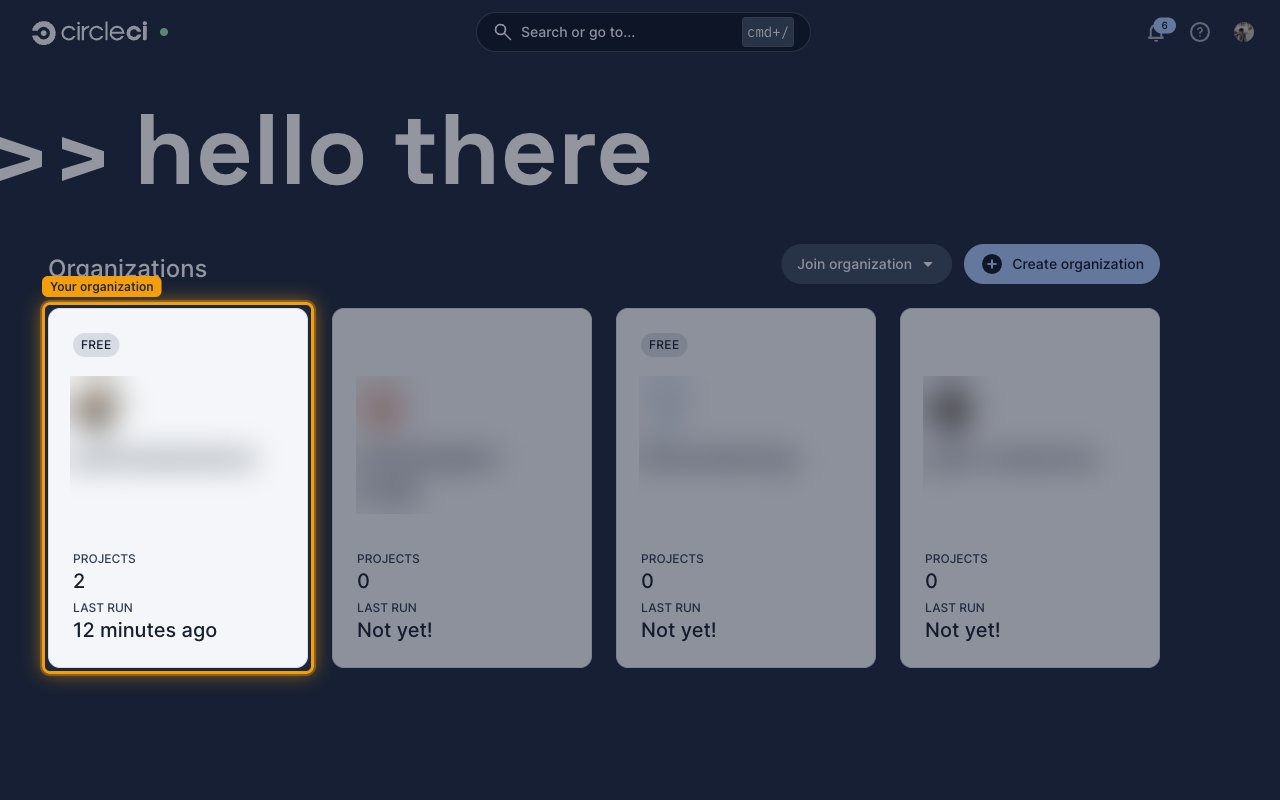
Sign in to CircleCI and select your organization on the Organizations page.
Open the project actions menu
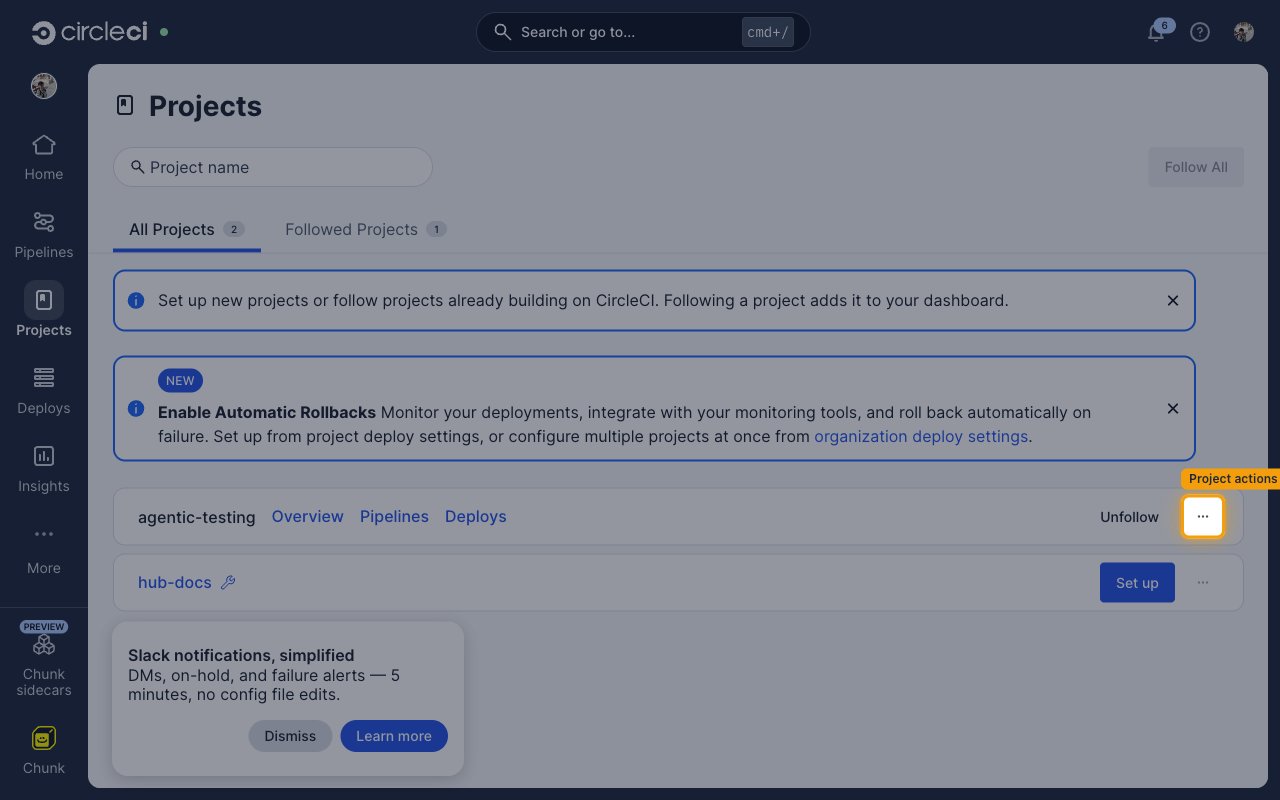
Open Projects in the left sidebar, find the project in the list, and select the actions button at the end of its row.
Select Project Settings
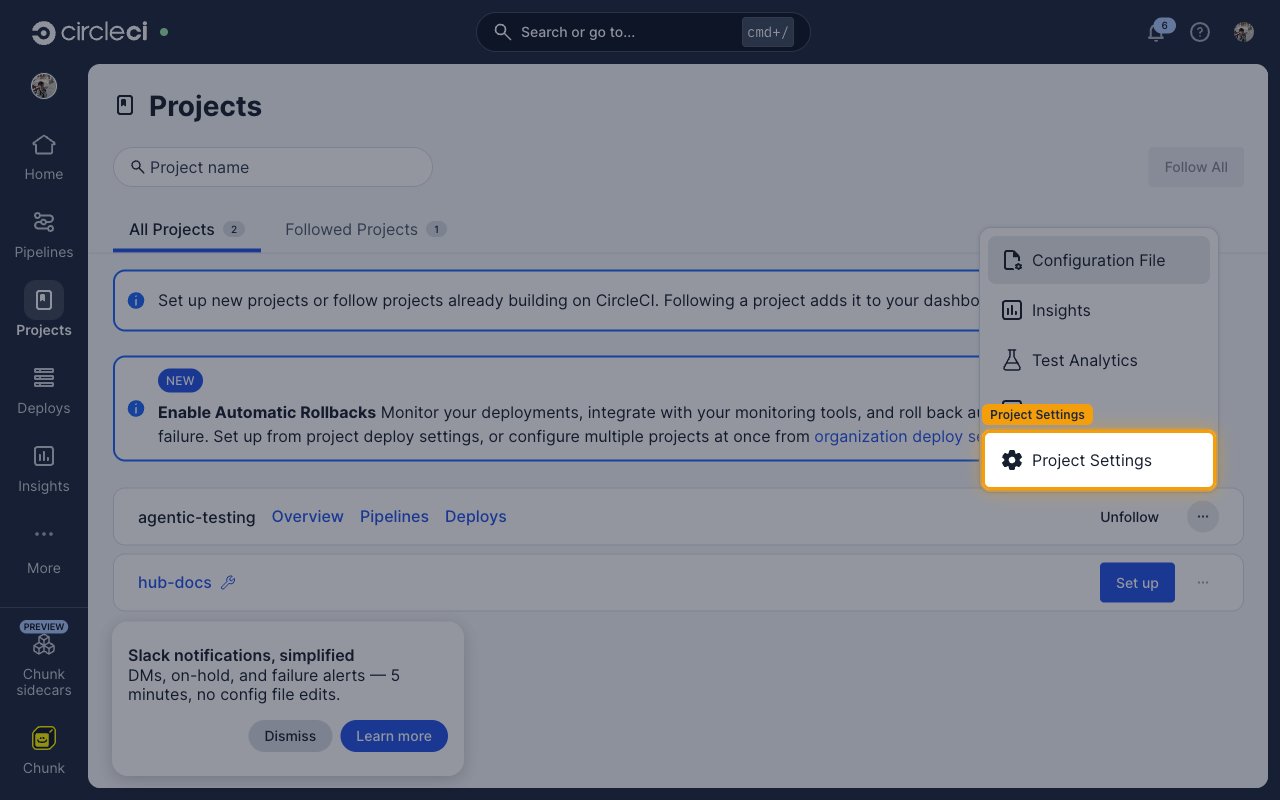
Choose Project Settings from the menu.
Copy the Project ID
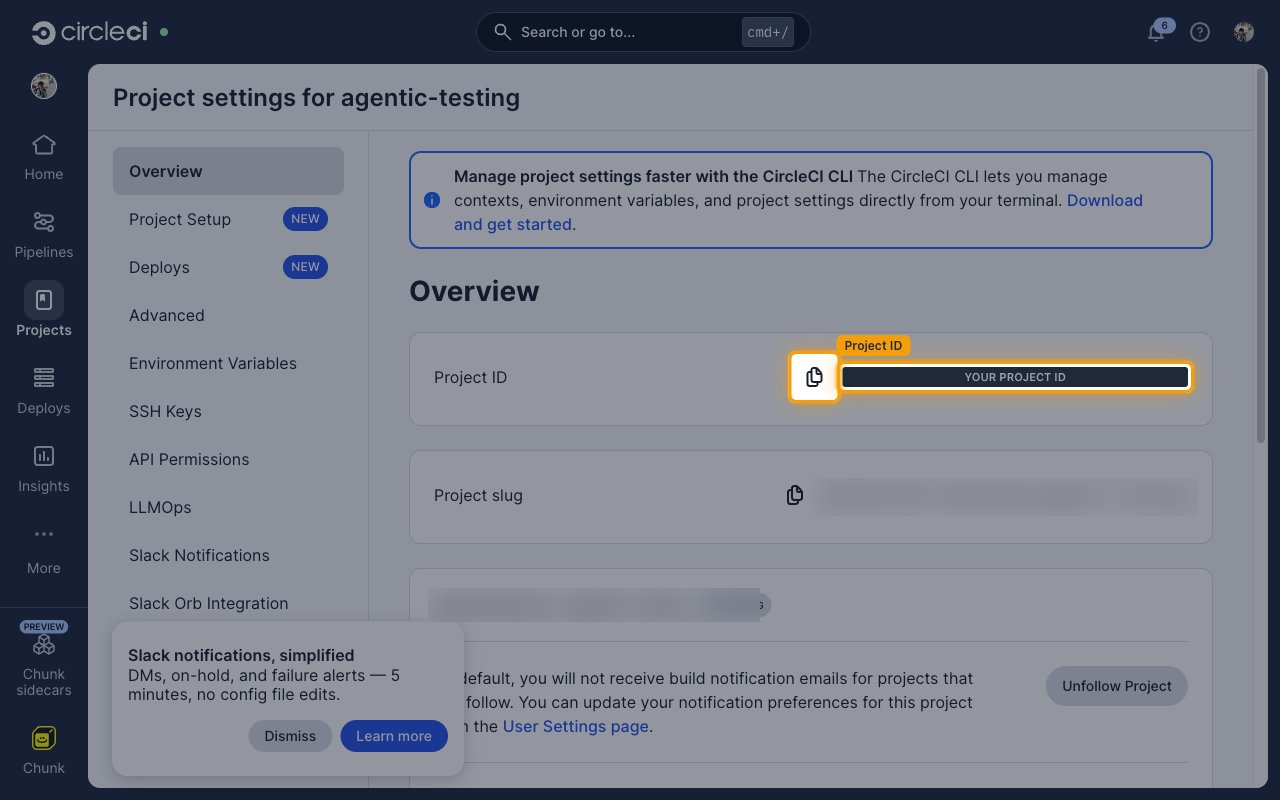
The Overview tab opens by default. Select the copy icon beside Project ID, then paste the value into Project ID on the StackOne connection.
- The value is a UUID — 32 hexadecimal characters in five dash-separated groups.
- Project slug is shown directly below it. That is a different value, and it is not what StackOne needs here.
Set a webhook signing secret
The signing secret is not something you look up in CircleCI — you choose it. CircleCI stores whatever you provide and uses it to sign every webhook it sends, so your receiver can confirm the request really came from CircleCI.
Choose a value and enter it on the connection
Generate a long random string and enter it as Webhook Signing Secret on the StackOne connection. Any strong random value works — there is no format CircleCI requires.
- Keep a copy if you intend to verify signatures yourself. CircleCI never shows the secret again once it is stored.
- CircleCI signs each delivery with it and sends the result in the
circleci-signatureheader. - Treat it like a password — anyone holding it can forge requests that look genuine.
Let StackOne create the webhook
Once the Project ID and signing secret are set, no further configuration is needed in CircleCI. StackOne creates the webhook when the account is connected and deletes it when the connection is removed.
Check the webhook was created
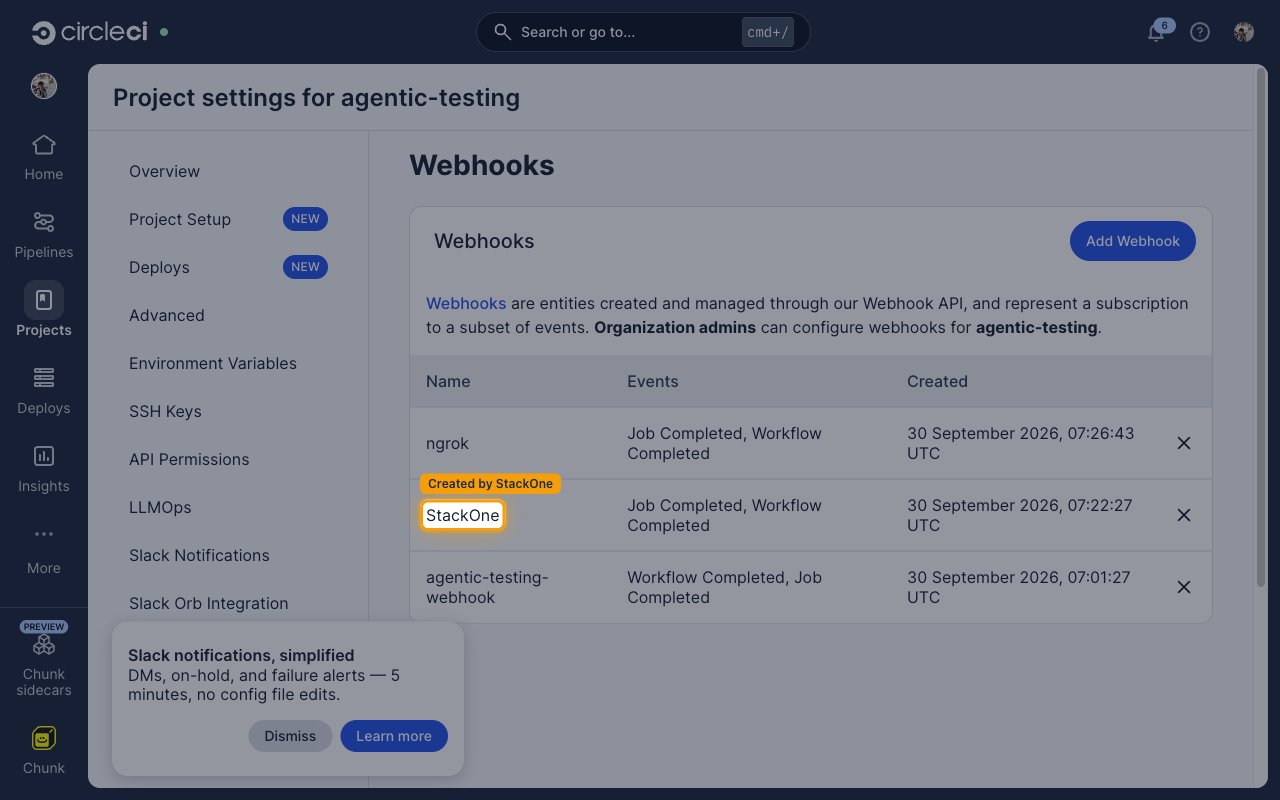
Open Project Settings > Webhooks. A webhook named StackOne appears in the list, subscribed to Job Completed and Workflow Completed. Leave it alone — StackOne manages its whole lifecycle, and deleting it by hand stops events reaching StackOne.
- The address StackOne registered is shown read-only as Native Webhook URL on the linked account, which is useful when checking a delivery or raising a support request.
Available webhook events
The following CircleCI events are delivered. Only events selected in StackOne are included in the subscription — CircleCI sends nothing for events that are not subscribed.
Enable pipeline execution events
Both events fire on completion, not when work starts.
- Workflow Completed (
workflow-completed) — Fired when a workflow finishes. Carries the workflow outcome along with the pipeline, project and organization it belongs to. - Job Completed (
job-completed) — Fired when an individual job finishes. Carries the job outcome along with its workflow, pipeline, project and organization.