

Prerequisites
The connector should already be set up, with a Connector Profile and a Linked Account. See Getting Started on the AD Manager connector page.Retrieve the Native Webhook URL
The Native Webhook URL is generated once an account has been linked.
- Open the linked account in StackOne.
- Copy the value from Native Webhook URL.
- The URL ends with a per-connection
?token=that identifies your account, so treat it like a secret and paste it in full.
Creating the webhook template
A webhook template defines the request ADManager Plus sends to StackOne.
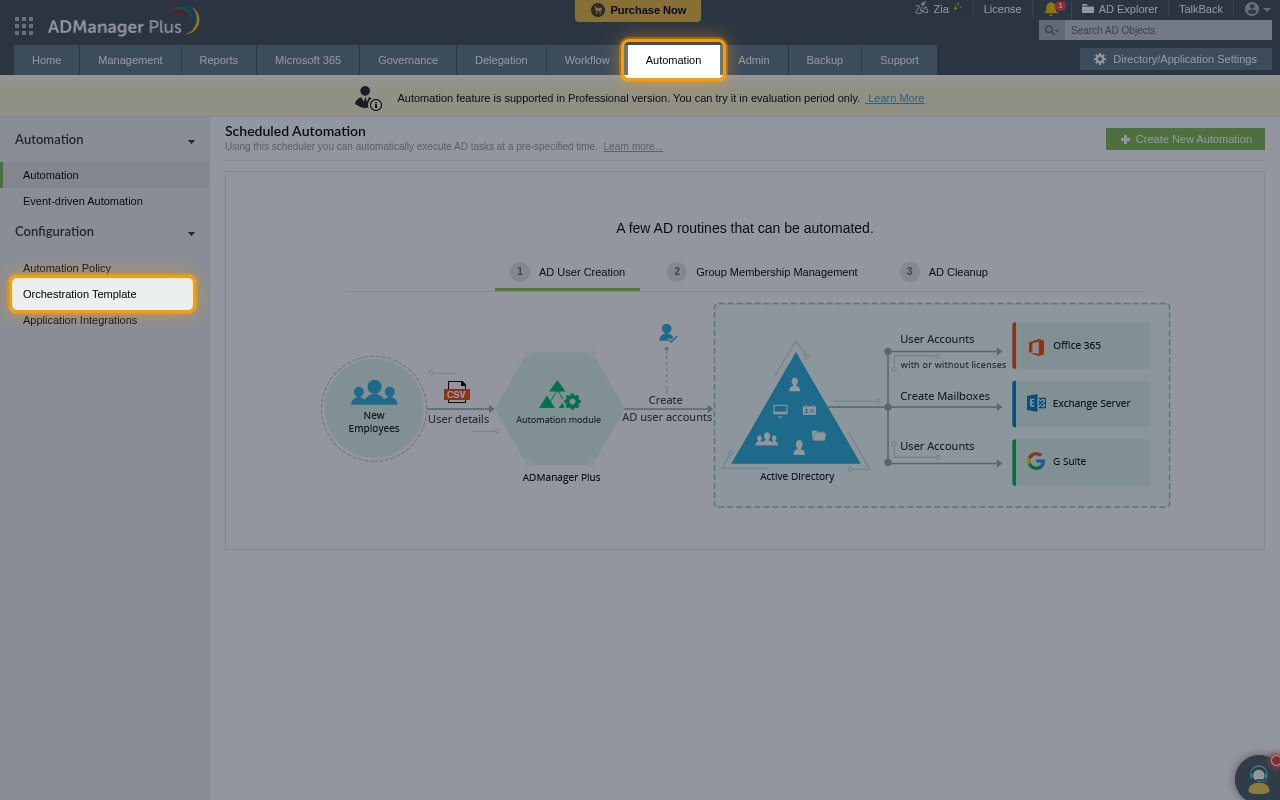
Open Orchestration Template
Sign in to the ADManager Plus web console as an admin, open the Automation tab and, under Configuration, click Orchestration Template.
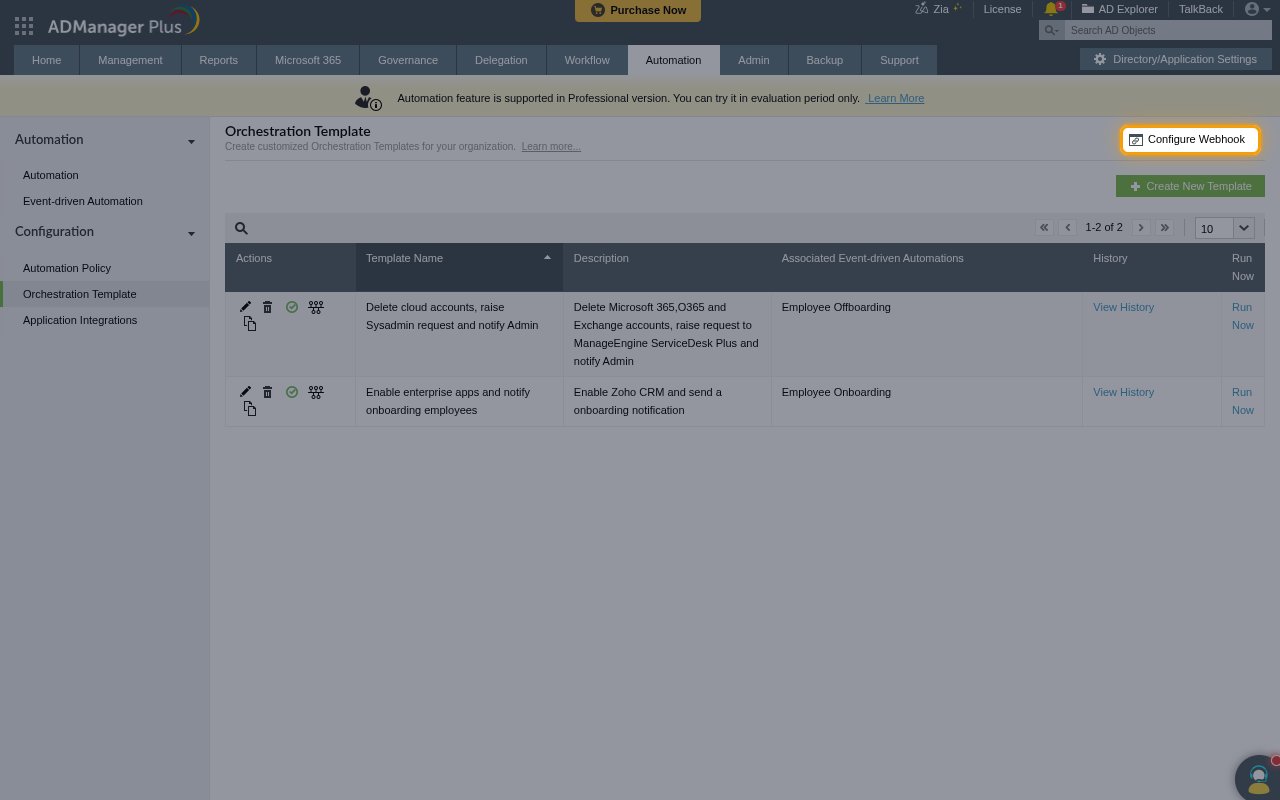
Open Configure Webhook
On the Orchestration Template page, click Configure Webhook.
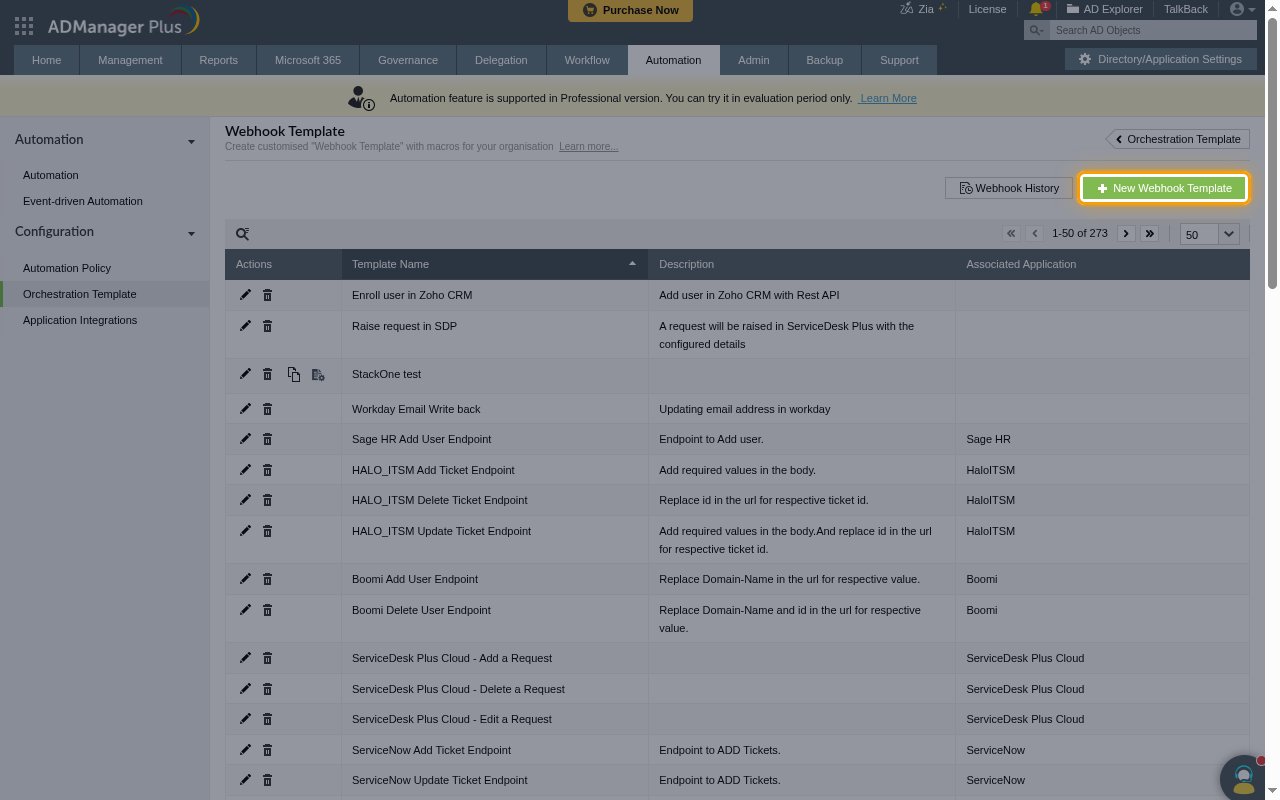
Create a new webhook template
On the Webhook Template page, click New Webhook Template.
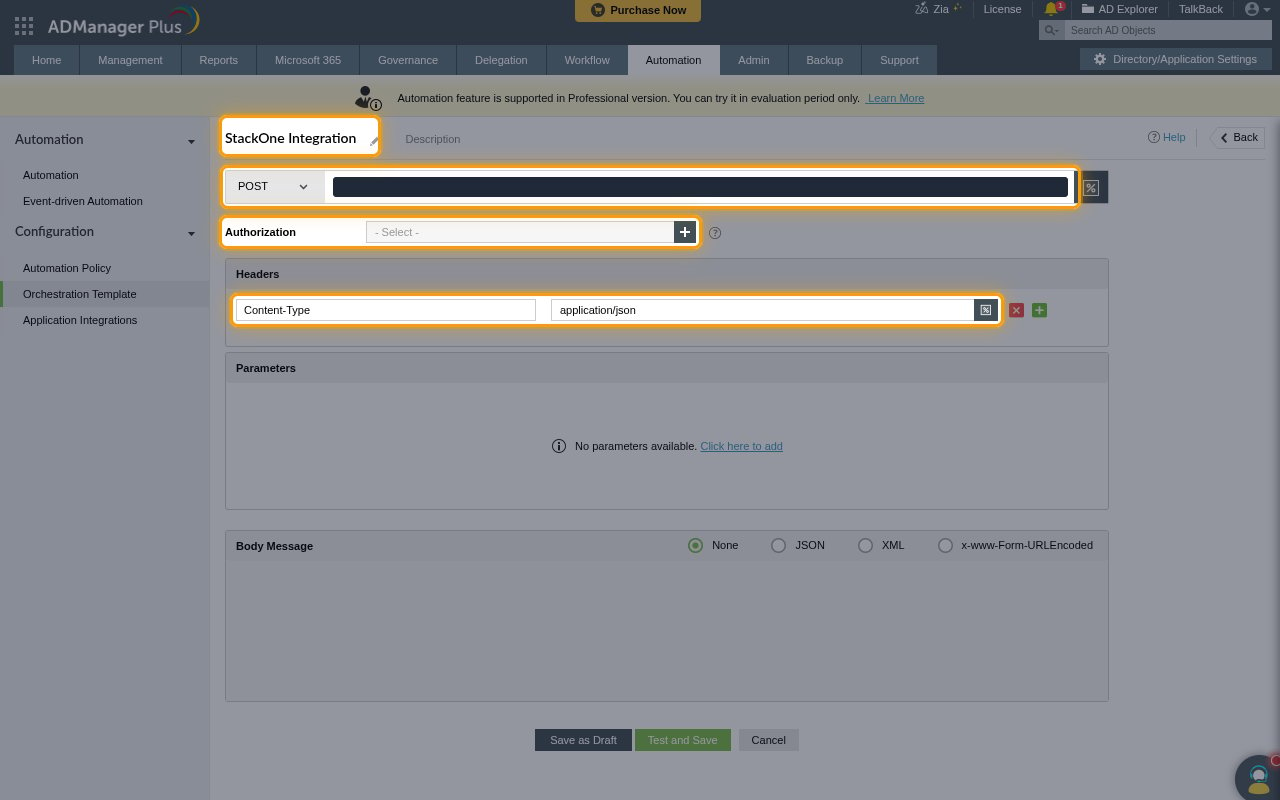
Set the name, URL and header
Fill in the request details.
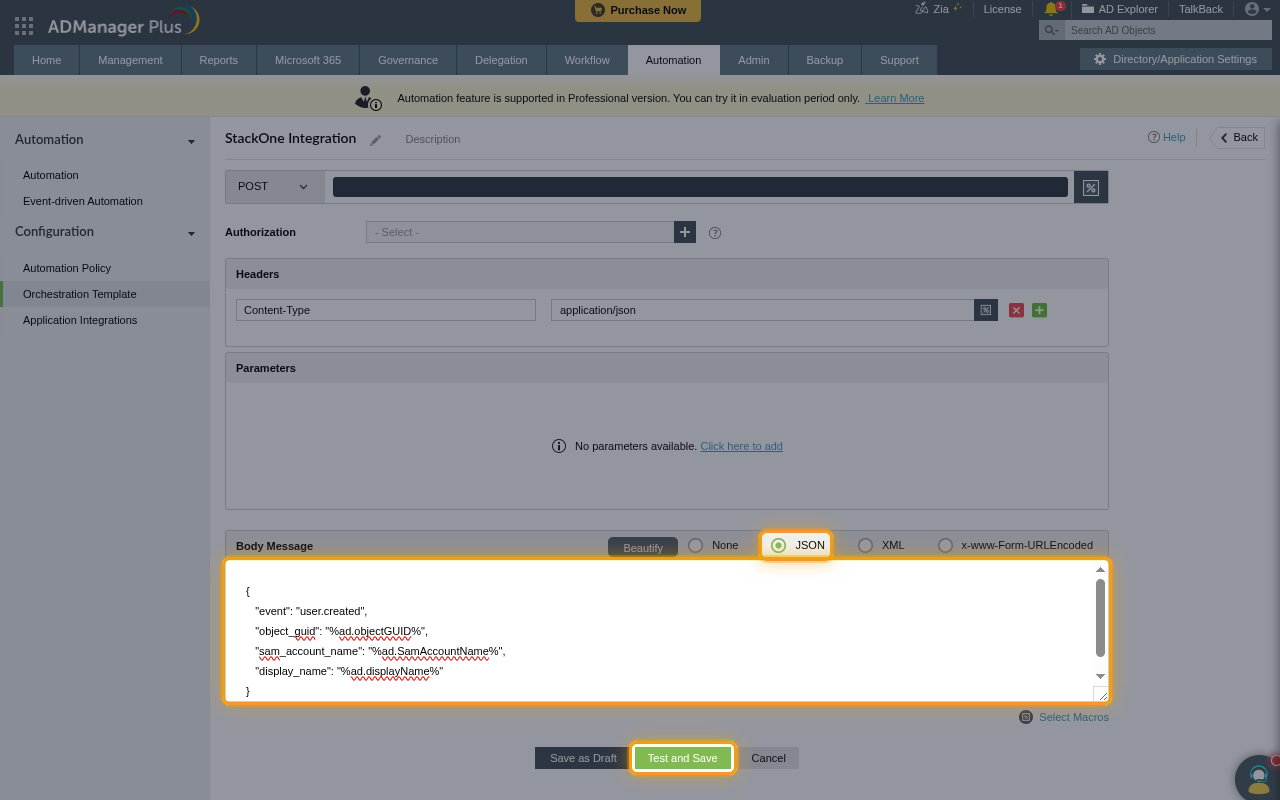
- Click Untitled Webhook Template and enter a name, for example
StackOne Integration. - Keep the method set to POST and paste the Native Webhook URL into Enter a URL.
- Leave Authorization set to - Select -. The token in the URL authenticates the request.
- Under Headers, click Click here to add, then enter
Content-Typeas the Header name andapplication/jsonas the Header value.
Add the JSON body
Under Body Message, select JSON and enter the event body. Body Message defaults to None, which sends an empty body, so StackOne receives an event with no data. Type % in the body to pick macros, and include an object_guid so the event carries the AD object id, for example:
- Click Test and Save.
Testing and saving the webhook
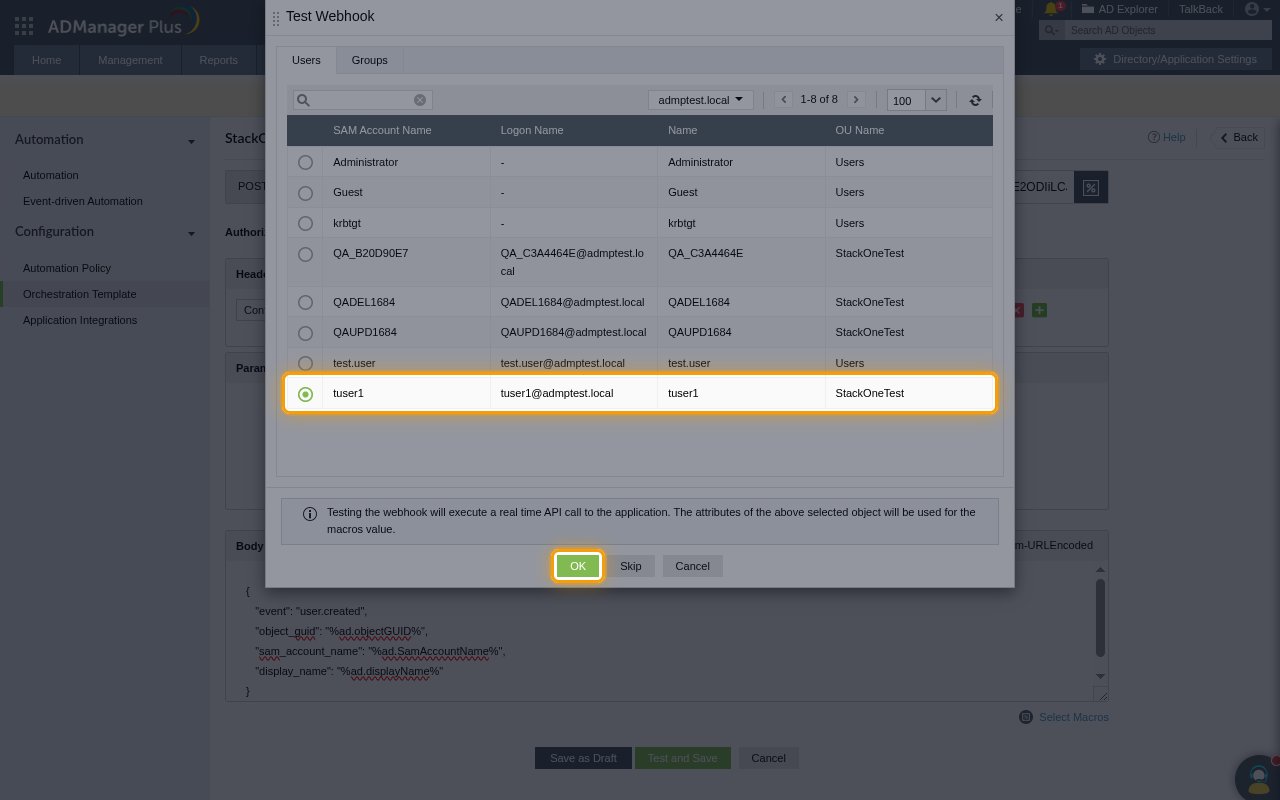
Test and Save sends a real request to StackOne using the attributes of an object you pick.
Pick a test object
In Test Webhook, select a user on the Users tab and click OK, then click Yes to confirm the API call.
Check the result and save
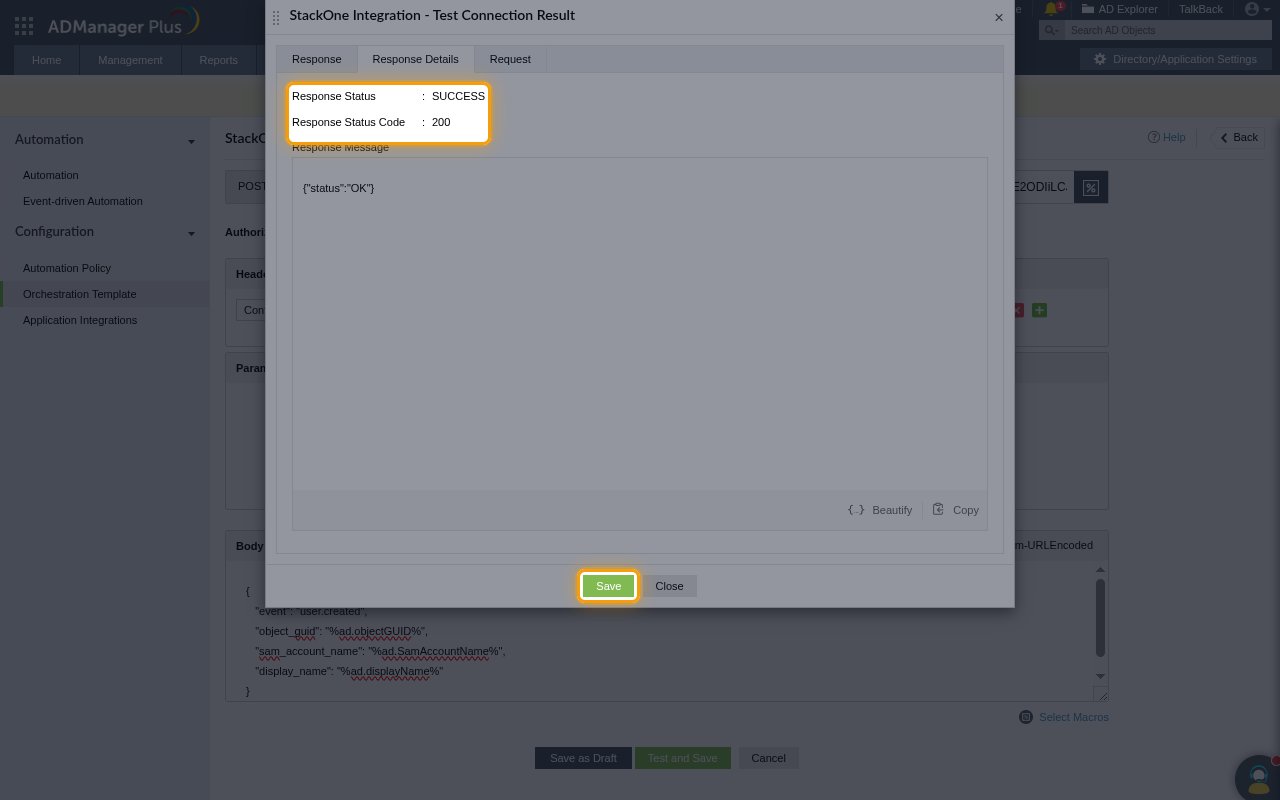
In the test result, open Response Details and confirm Response Status is SUCCESS and Response Status Code is 200, then click Save.
Triggering the webhook from AD events
An event-driven automation runs the webhook whenever the chosen AD action happens in ADManager Plus.
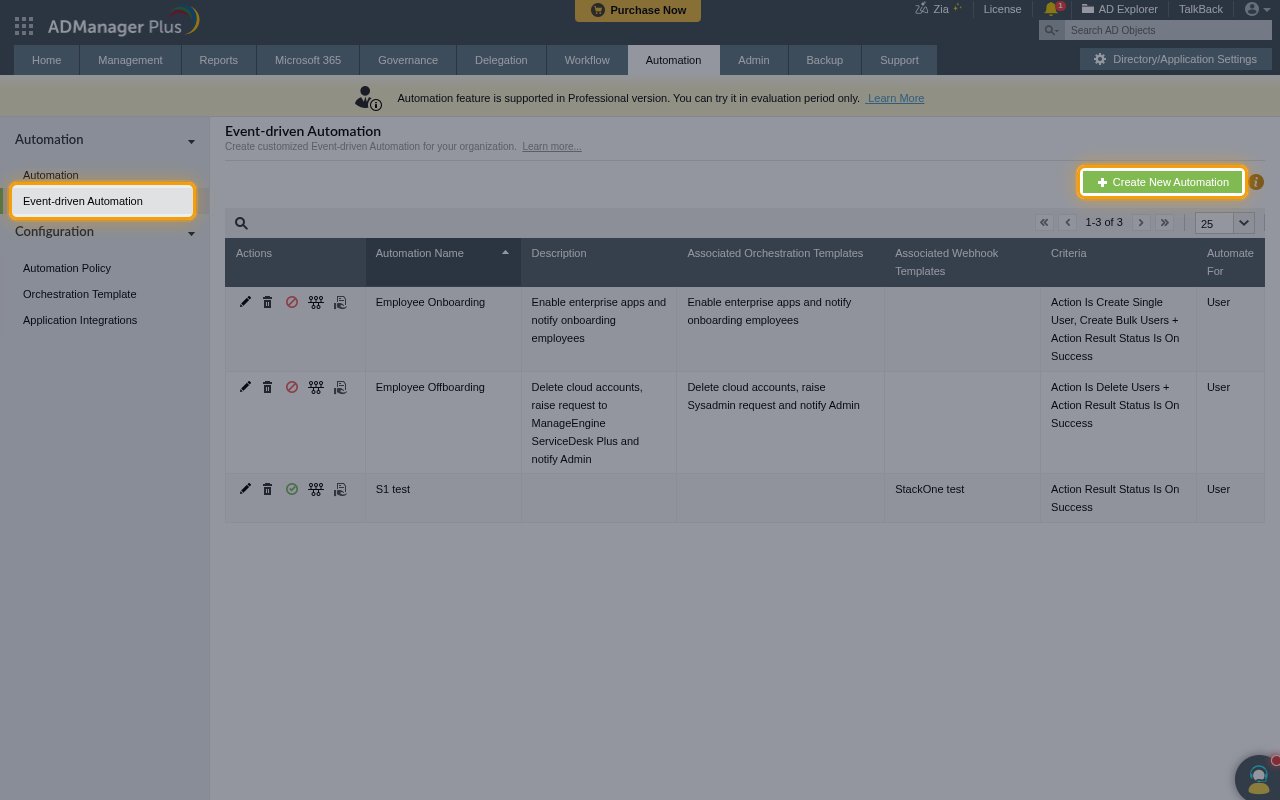
Create an event-driven automation
Under Automation, click Event-driven Automation, then click Create New Automation.
Select the webhook template
Click the + next to Templates, open the Webhook tab in Select Templates, tick your webhook template and click OK.
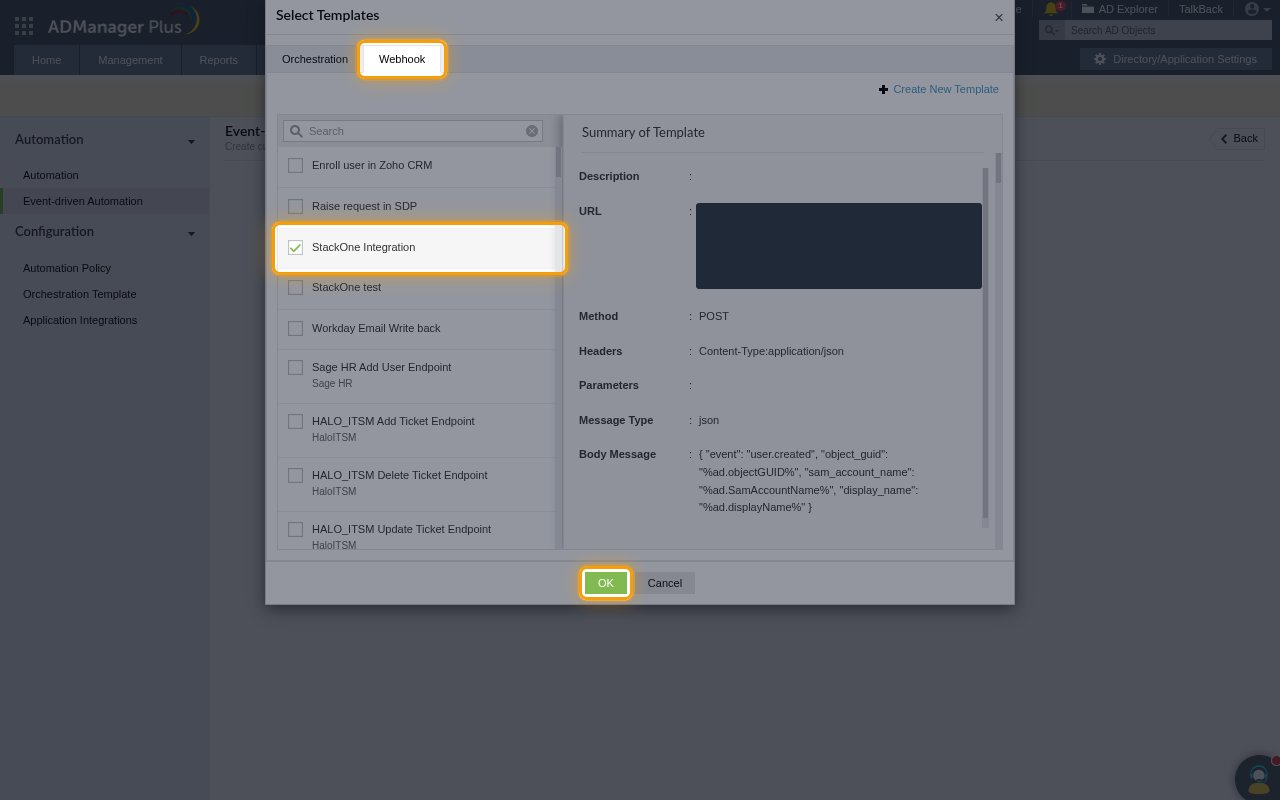
Configure and save the automation
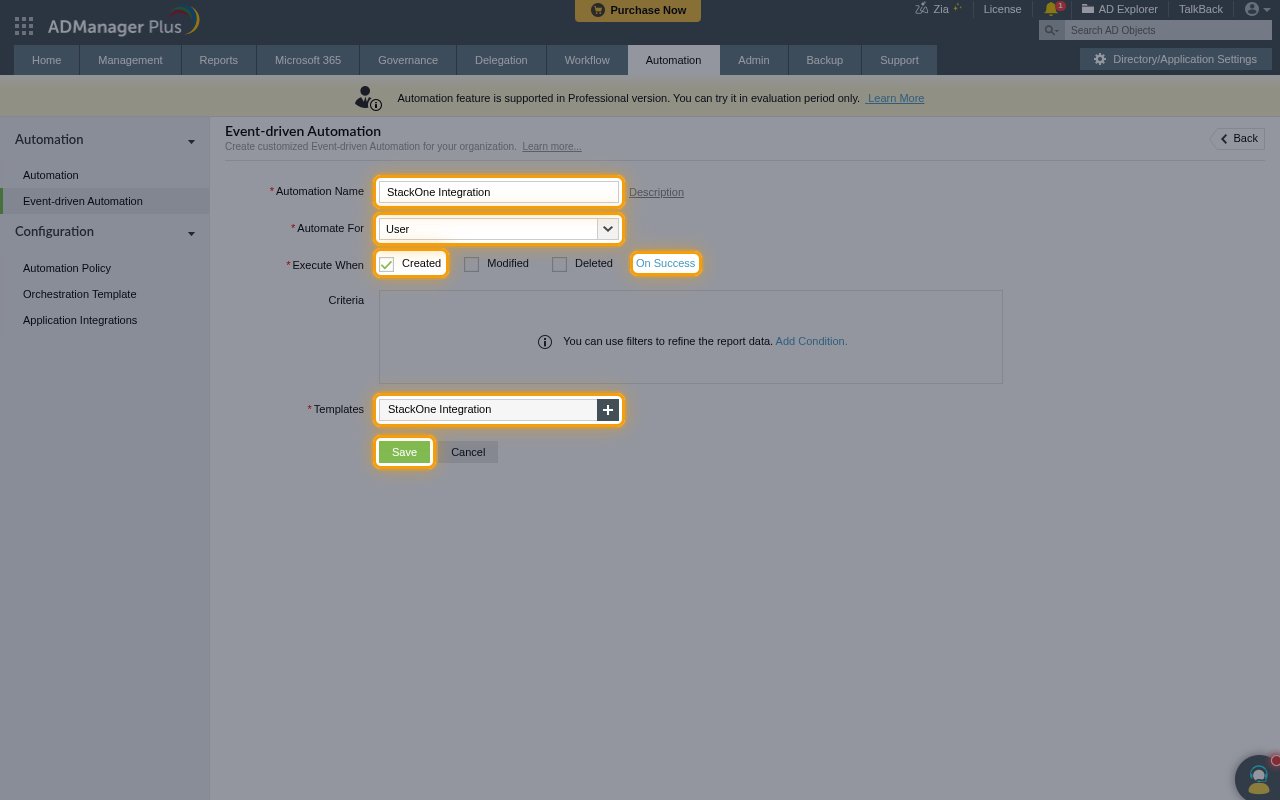
Complete the automation and click Save.
- Automation Name: a name, for example
StackOne Integration - Automate For: User or Group
- Execute When: tick Created, Modified and/or Deleted, and use On Success to choose which outcomes fire it
- Optionally add Criteria to limit which objects trigger the webhook.
- Use one automation per action, with a matching
eventvalue in its webhook body, if consumers need to tell creates, updates and deletes apart.
Available webhook events
StackOne receives every delivery from your ADManager Plus webhook templates as a single event type.
AD Manager events
Events sent by ADManager Plus outbound webhooks.
- AD Manager Event (
admanager.event) — Fired when an ADManager Plus webhook template posts to the Native Webhook URL. The event data is the JSON body you configured, and itsobject_guidbecomes the event’s record id
Delivery format
Details of how ADManager Plus delivers events to StackOne.
One event per request
Each webhook execution sends one POST request with the body defined in the template, so StackOne receives one event per request. ADManager Plus does not sign webhook requests; the token in the Native Webhook URL identifies the account.